

在中国货币史中,自明末至清、民年间,即十六世纪末至二十世纪初叶,伴随日益扩大的中外贸易,先是以银元为代表的外国货币纷纷涌向中国,从流通于东南一隅到席卷中国全境,从中外贸易的支付手段跃为中国货币的主流形式,对明末清初的中国社会带来了前所未有的冲击,直至清光绪时期才自铸各种银元与之抗衡,但是终究不能抵御外国银洋的陆续涌入,实际上自清嘉庆以后至民国时期,外国银币牢牢控制着中国的货币流通市场。
墨西哥银圆,又叫做“墨银”或“鹰洋”,后讹为“英洋”。是指1821年墨西哥独立后使用的新铸币,它是从1823年开始铸造的。鹰洋大体分为两种,1897年以前的花边鹰洋和 1898年以后的直边鹰洋。晚清民国年间,外国银元输入中国者,属墨西哥鹰洋最多。据清朝宣统二年(1910)度支部调查统计,当时中国所流通的外国银元约有十一亿枚,其中有三分之一是墨西哥鹰洋。
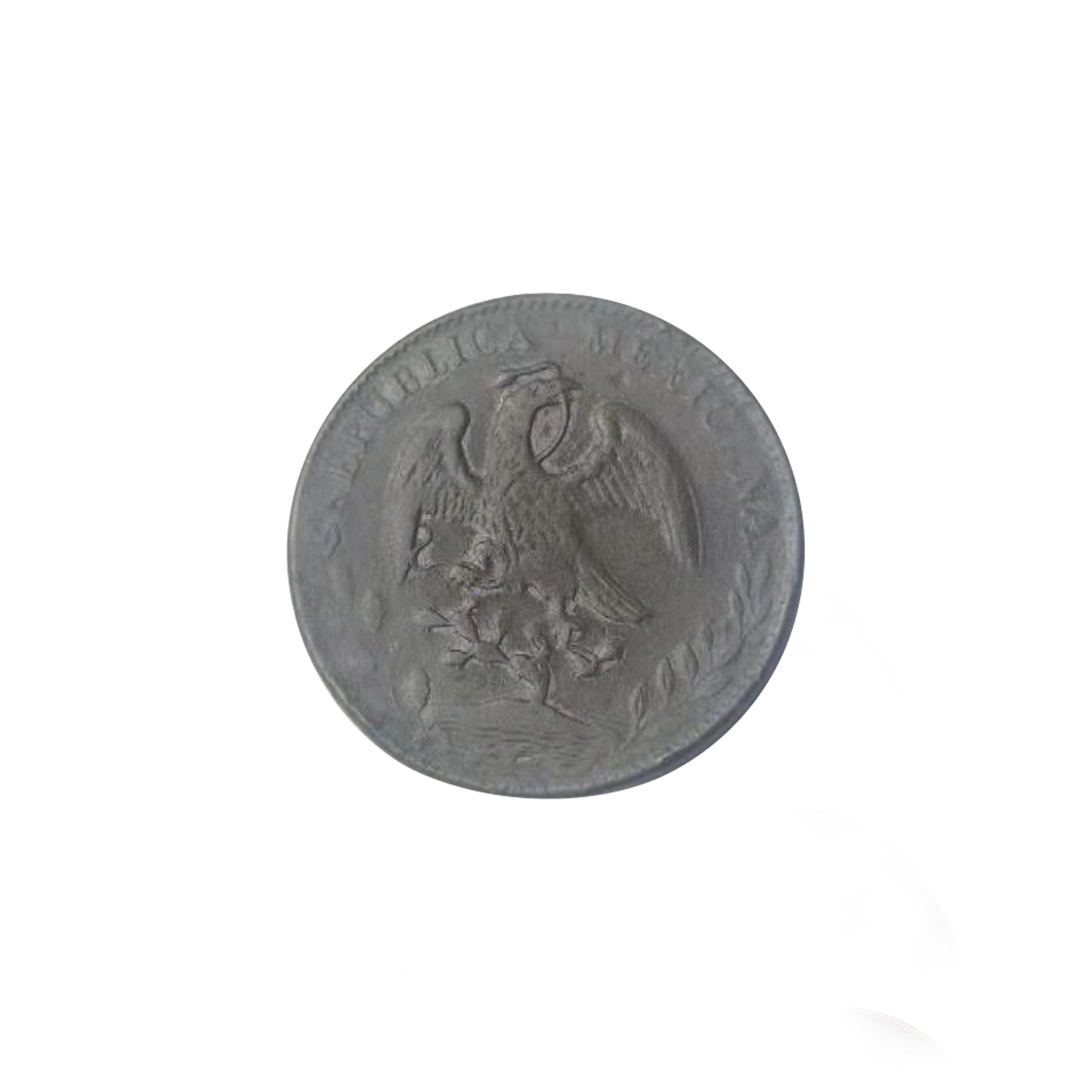
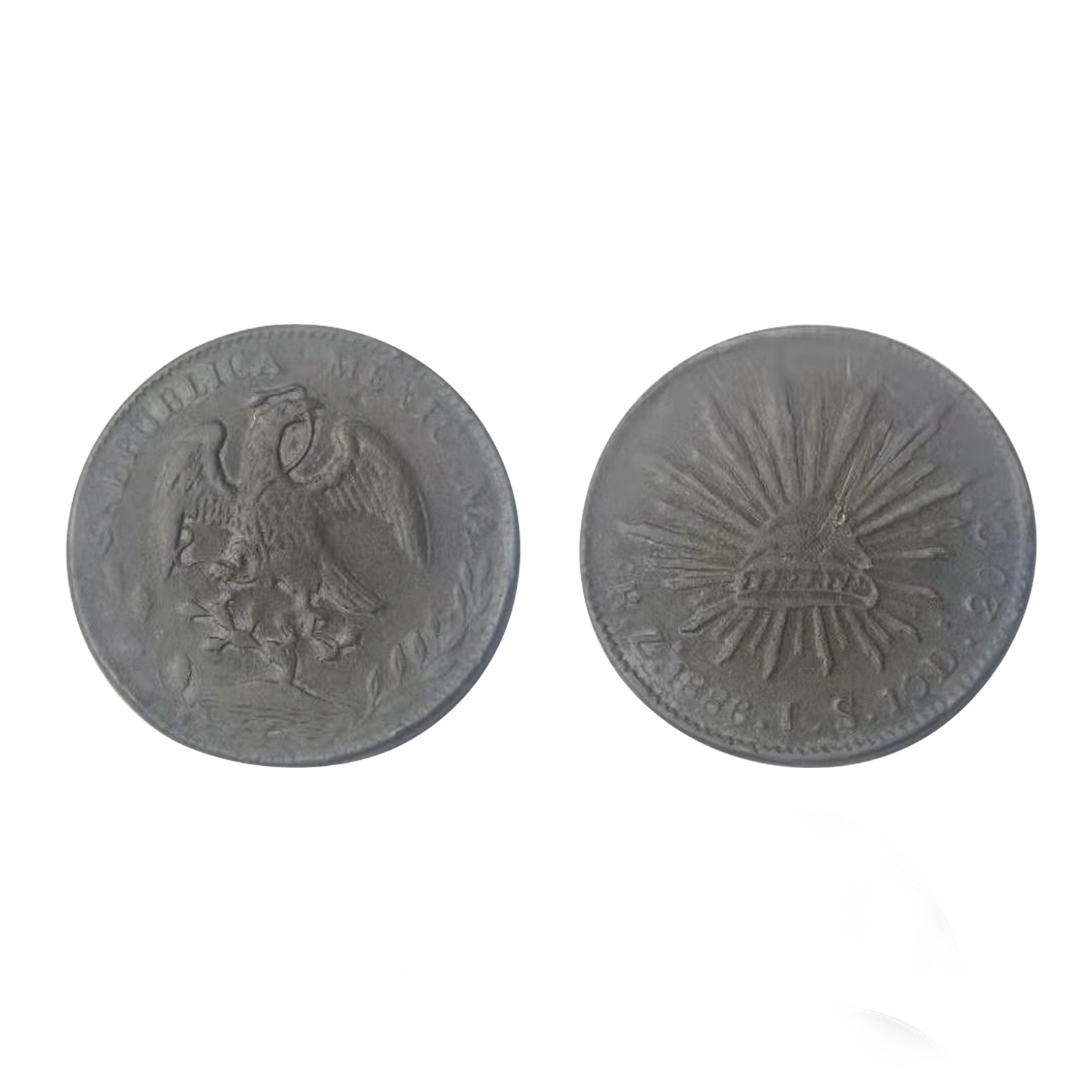
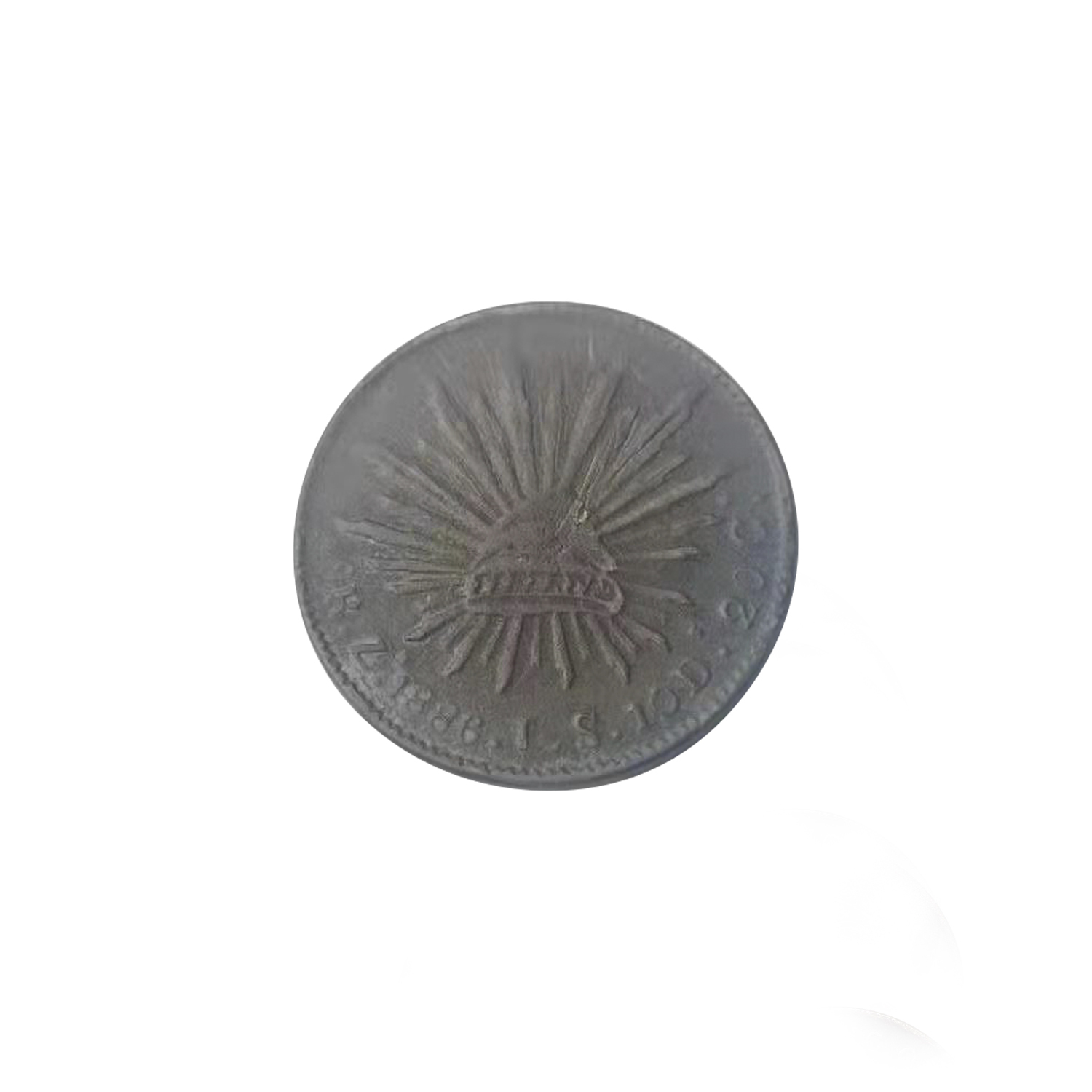
此枚墨西哥鹰洋币正面是一展翅雄鹰,嘴叼长蛇(花边鹰洋蛇尾与鹰翅相连,直边鹰洋蛇尾与鹰翅不相连),单腿立在仙人掌(国花)上,边缘上方书西班牙文“REPUBLIKAMEXIKANA(墨西哥共和国)”。背面中央为一顶自由软帽。帽檐书有西班牙文“LIBERTAD(自由)”字样。帽周围放射长短不一的光柱(花边鹰洋与直边鹰洋光柱数也不相同,花边鹰洋自由帽顶部的3支光柱中间一支较短,直边鹰洋中间一支较长)。图案象征着力量、忠诚、和平和自由。鹰洋银币自1823年开铸,到1905年停铸,历时83年,其发行时间之长,这世界罕见。此枚鹰洋币品相完好,钱文轮廓的清晰程度好,具有很高的历史价值、艺术价值和收藏价值。
In the history of Chinese currency, from the end of Ming Dynasty to Qing Dynasty, that is, from the end of 16th century to the beginning of 20th century, with the increasing trade between China and foreign countries, foreign currency represented by silver yuan swarmed to China, from circulation in the southeast corner to sweeping the whole territory of China, from the means of payment of Chinese and foreign trade to the mainstream form of Chinese currency, which brought great impact on the Chinese society in the end of Ming Dynasty and the beginning of Qing Dynasty It was not until the Guangxu period of the Qing Dynasty that all kinds of silver coins were made to fight against the unprecedented impact, but they could not resist the influx of foreign silver. In fact, from the Jiaqing period of the Qing Dynasty to the period of the Republic of China, foreign silver coins firmly controlled China's currency market.
Mexican silver dollar, also known as "Mexican Silver" or "Eagle ocean", was later mistaken as "British ocean". It refers to the new coinage used after the independence of Mexico in 1821. It began to be minted in 1823. There are two kinds of eagles: lace Eagles before 1897 and straight Eagles after 1898. During the period of the late Qing Dynasty and the Republic of China, the number of foreign silver dollars imported into China was the largest. According to the survey and statistics of the second year of Xuantong (1910) of the Qing Dynasty, there were about 1.1 billion foreign silver dollars in circulation in China at that time, one third of which was the Mexican Eagle ocean.
On the front of the coin is a winged eagle with a long snake in its mouth (the laced tail of the eagle is connected with the eagle's wings, while the straight tail of the eagle is not connected with the eagle's wings), standing on one leg on a cactus (the national flower), with the Spanish word "republikamexikana" written on the top of the edge. In the center of the back is a free bonnet. The brim book has "liberty" in Spanish. The number of light pillars of different lengths radiates around the cap (the number of light pillars of lace eagle is also different from that of straight eagle, the middle of the three light pillars on the top of lace eagle is shorter, and the middle of straight eagle is longer). The pattern symbolizes strength, loyalty, peace and freedom. It took 83 years for Yingyang silver coin to be minted from 1823 to 1905. Its long issuing time is rare in the world. This Yingyang coin is in good condition and has a clear outline. It has high historical value, artistic value and collection value.