

教育不能等待基金专访联合国主管人道主义事务副秘书长汤姆·弗莱彻
Education Cannot Wait Interviews Tom Fletcher, Under-Secretary-General for Humanitarian Affairs and Emergency Relief Coordinator
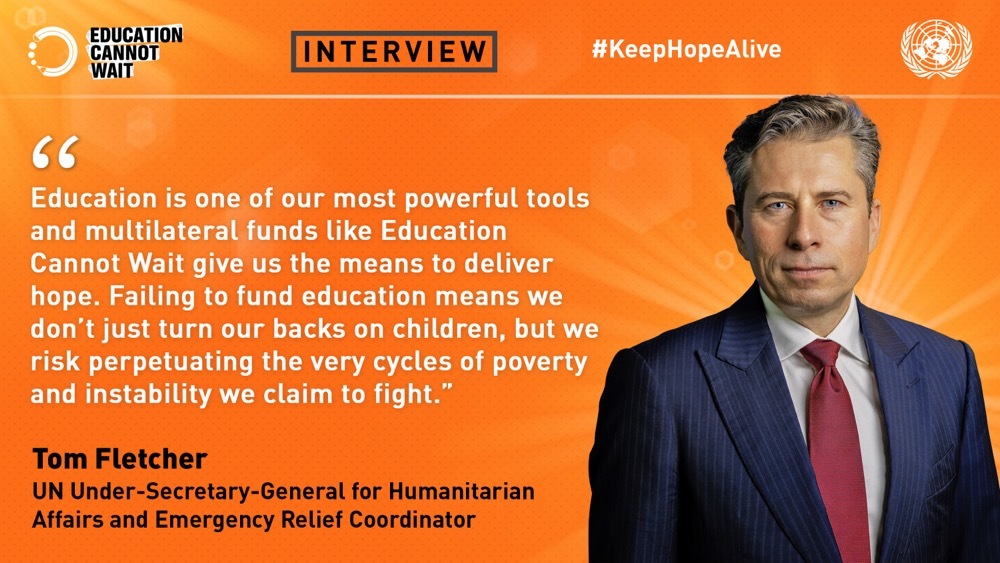
汤姆·弗莱彻自2024年11月18日起就任联合国主管人道主义事务副秘书长兼联合国人道主义事务协调厅紧急救济协调员。
此前,弗莱彻曾任牛津大学弗特福德学院院长(2020-2024)及牛津大学学院会议副主席(2022-2024)。他还曾担任英国驻黎巴嫩大使(2011-2015)及三任英国首相的外交政策顾问(2007-2011)。
弗莱彻曾于2015至2019年出任全球教育商业联盟 (Global Business Coalition for Education)战略总监及英国创意产业联合会主席(2015-2020)。在2011年,弗莱彻获颁圣米迦勒及圣乔治勋章。
在非洲、中东和欧洲的外交生涯中,他长期与联合国保持密切合作,包括于2017年牵头为联合国秘书长撰写一份关于技术发展的专题报告。其著作包括《The Naked Diplomat》(2016)、《在多变世界中的十大生存技能》(2022),以及小说《The Ambassador》(2022)和《The Assassin》(2024)。汤姆弗莱彻还为《金融时报》《展望》及《外交政策》等刊物撰稿,并主持BBC关于民主主题的纪录片。
弗莱彻拥有现代史文学硕士学位(牛津大学,1998年)和现代史文学学士学位(牛津大学,1997年)。他曾担任纽约大学(2015-2020年)和阿联酋外交学院(2016-2019年)的客座教授。他能说流利的英文和法文,并能将阿拉伯文和斯瓦希里语作为工作语文。
Tom Fletcher is the United Nations Under-Secretary-General for Humanitarian Affairs and Emergency Relief Coordinator, OCHA. He started his official duties on 18 November 2024.
Prior to taking up this role, Fletcher was the Principal of Hertford College at Oxford (2020-2024) and Vice Chair of Oxford University’s Conference of Colleges (2022-2024). He was British Ambassador to Lebanon (2011-2015) and Number 10 Foreign Policy Adviser to three UK Prime Ministers (2007-2011).
Fletcher previously served as Global Strategy Director of the Global Business Coalition for Education (2015-2019) and as chair of the UK Creative Industries Federation (2015-2020). He was awarded a CMG in 2011.
Fletcher has worked closely with the United Nations during his diplomatic career in Africa, the Middle East and Europe, including leading a report on technology for the UN Secretary General (2017). He is the author of 'The Naked Diplomat' (2016), 'Ten Survival Skills for a World in Flux' (2022), and two novels, 'The Ambassador' (2022) and 'The Assassin' (2024). He has written for the Financial Times, Prospect and Foreign Policy Magazine, and presented a BBC series on democracy.
Fletcher holds a Master of Arts degree in Modern History (Oxford, 1998). He was Visiting Professor at New York University (2015-2020) and the Emirates Diplomatic Academy (2016-2019). He is fluent in English and French, and has a good working knowledge of Arabic and Swahili.
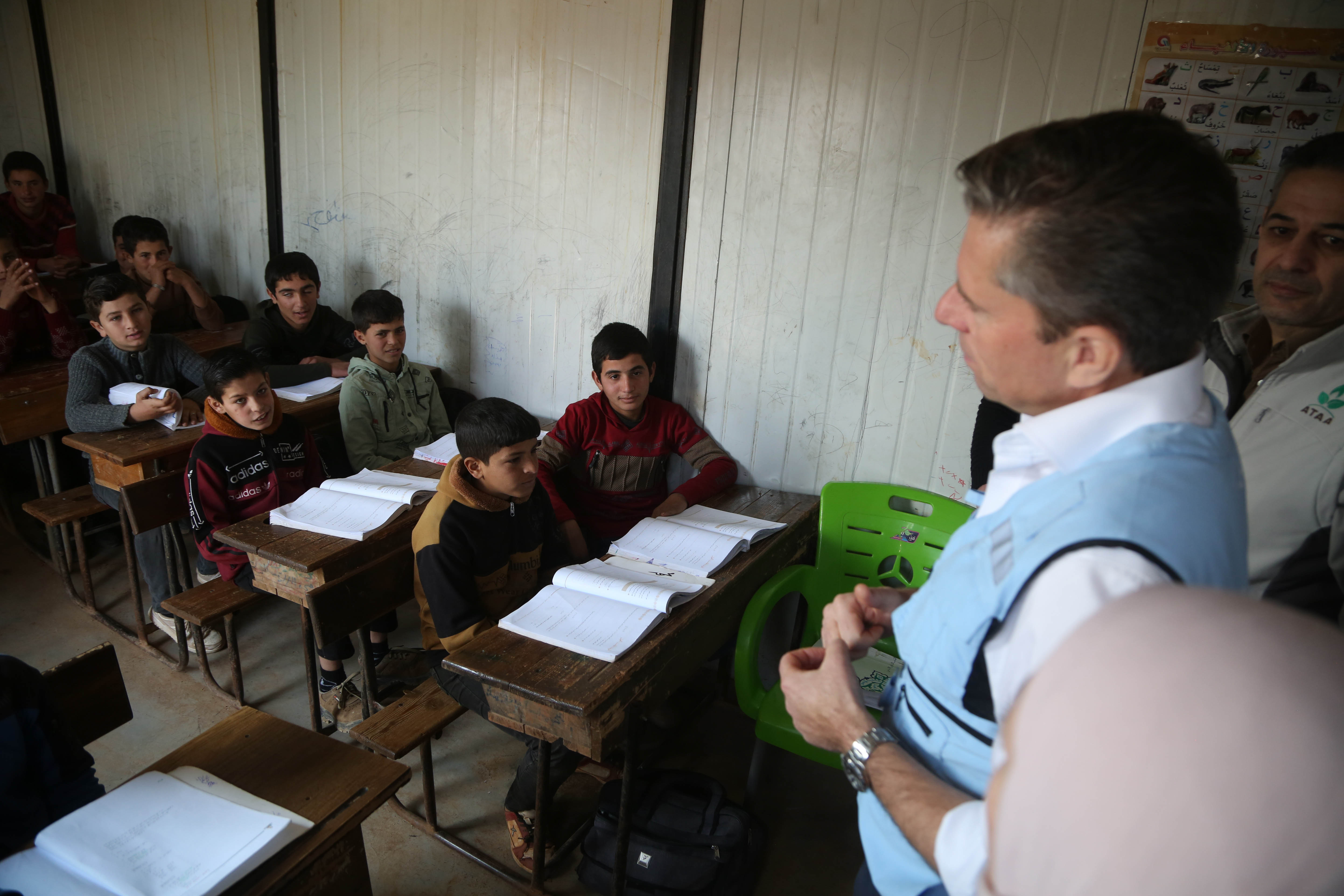
专访内容:
教育不能等待(ECW):您认为教育能如何更好的保护平民、保障人权并督促各方遵守国际人道法?尤其是针对全球2.34亿名受危机影响而亟需教育支持的儿童的教育。
汤姆·弗莱彻:在人道主义危机中,教育是首当其先的需求,而非事后考量或可研后处理的事项。在我所去过的地方,我目睹了教育是如何在混乱中为儿童提供常态感、安全感和希望。学习是抵御战争与灾难威胁的盾牌。在校接受教育的儿童被武装团体招募、遭受剥削或受到伤害的可能性相对较小。而且,从好的方面来看,教育能够为儿童培育和平共处、尊严、相互尊重以及遵守普惠规则与法律的价值观。
ECW: How can education – especially for the 234 million crisis-affected children in urgent need of education support – better strengthen efforts to protect civilians, ensure human rights and foster adherence to international humanitarian law?
Tom Fletcher: Education is a frontline necessity in humanitarian crises – not an afterthought or something that can be dealt with later. Everywhere I go, I see how education provides children with a sense of normalcy, safety and hope amid the chaos. Learning is a shield against the threats and trauma of war and disaster. A child in school is less likely to be recruited by armed groups, exploited or harmed – and at its best, education instills values of peaceful coexistence, dignity, respect for each other, and for the agreed rules and laws that benefit everyone.
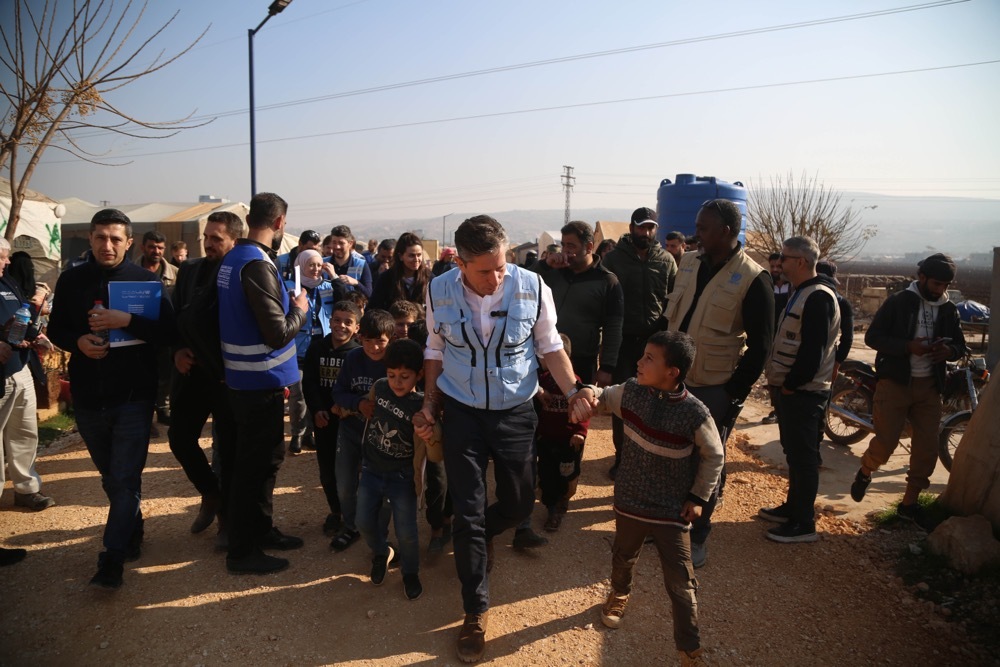
ECW:作为学者、外交官和人道主义工作者,您深知教育的变革力量。如今,面临危机不断加剧,资金日益紧张,各优先事项相互冲突的情况,为何公共和私营部门捐助者们仍必须要将教育视为拯救生命的干预措施而非次要需求?若无法通过像“教育不能等待”基金等多边基金维持资金,这将对深处重灾区,深处危机的儿童产生什么后果?
汤姆·弗莱彻:我们深知教育能稳定社区、保护儿童并播撒和平的种子。 失去教育不仅意味着停课,更将导致一代人的迷失。在加沙地带,约65.8万名学龄儿童无法接受正规教育,因为其九成校舍已毁于战火。这是最深重的悲剧。由于无学可上,这些儿童更加脆弱。他们的人权受到损害,他们的未来悬而未决。
然而,我们也正面临着严峻的资金短缺,因此,我们正在对整个人道主义体系进行重构。其核心将围绕三项精简的理念:缩小规模、贴近服务对象、坚决保护平民。教育正是此重构过程中最有力的工具之一,而像"教育不能等待"这样的多边基金 — 正是因为萨拉·布朗和戈登·布朗(后者也是该基金创始人)的远见、勇气、韧性和领导力,才使我们得以播撒希望。如果我们未能持续为教育提供资金支持,那不仅意味着我们背弃了孩子们的未来,更有可能加剧我们长久以来竭力抗争的贫困与动荡循环。
ECW: As a professor, diplomat and humanitarian, you know education's transformative power. Today, with crises escalating, funding contracting and priorities competing, why must public and private donors see education as a life-saving intervention, not a secondary need? What are the consequences if we fail to sustain funding through multilateral funds like Education Cannot Wait, especially for crisis-affected children in the hardest-hit contexts?
Tom Fletcher: We know that education stabilizes communities, protects children and plants the seeds of peace. Without it, we don’t just skip lessons – we lose generations. It is the deepest tragedy that in a place like Gaza, some 658,000 school-aged children are without formal education because nine out of 10 of their schools are damaged or destroyed by the war. Without a school to go to, these children are more vulnerable, their human rights are undermined, and their futures hang in the balance.
But we are also facing a brutal funding crunch and we are reimagining the entire humanitarian enterprise. At the heart of this humanitarian reset will be three simple ideas: we will be smaller, closer to those we serve and robust in the protection of civilians. Education is one of our most powerful tools in this endeavour, and multilateral funds like Education Cannot Wait – thanks to the vision, courage, tenacity and leadership of Sarah and Gordon Brown, the latter also ECW’s founder – give us the means to deliver hope. Failing to fund education means we don’t just turn our backs on children, but we risk perpetuating the very cycles of poverty and instability we claim to fight.
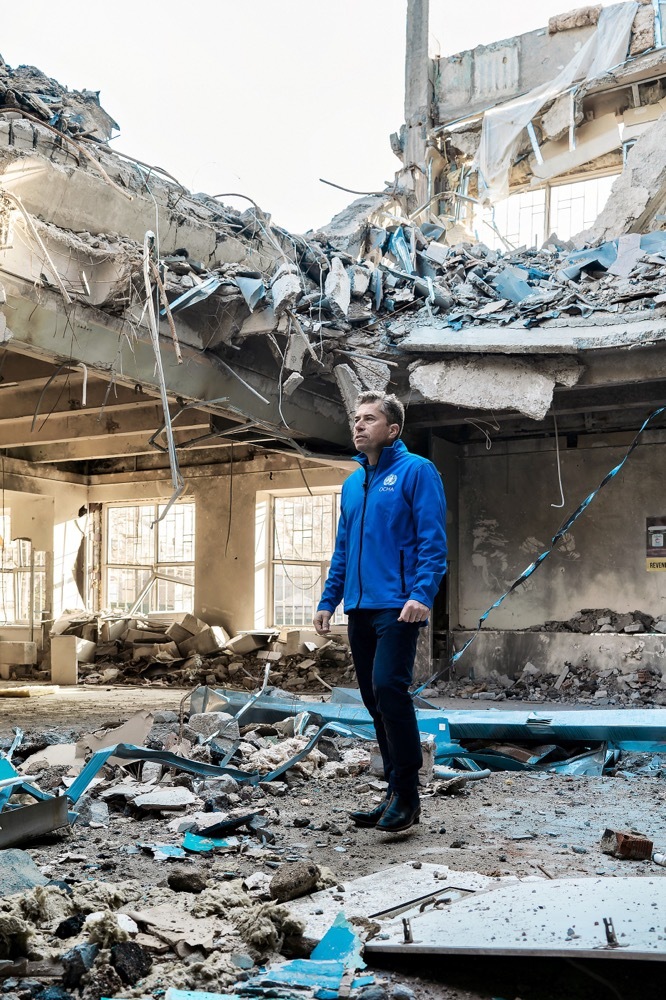
ECW:联合国人道事务协调厅主导着应对苏丹、乌克兰、加沙及刚果民主共和国等地危机的全球行动。为何教育在人道主义危机中至关重要?教育能如何推进和平、安全与经济发展?
汤姆·弗莱彻:在受冲突影响的国家中,三分之一儿童(约1.03亿名)失学,是全球失学率的三倍(来源:救助儿童会,2024年12月27日)。弥合这一教育鸿沟至关重要:教育能够促进理解,帮助年轻人远离极端主义思想。长远来看,教育为女孩和男孩们提供建设未来的工具,从而得以推动经济发展。这也是为什么即是在战争中,教室仍是最有力量的场所,它得以让孩子们重获希望、尊严与人生目标。
在我亲历的每场人道危机中,民众获得安全后最先寻求的就是教育。这是疗愈的起点,复苏的根基。教育是化解绝望与分裂的良药,它帮助年轻人重新找回他们在这个世界中的立足之地。
ECW: The United Nations Office for the Coordination of Humanitarian Affairs (UN-OCHA) drives global efforts to respond to humanitarian crises in Sudan, Ukraine, Gaza and the Democratic Republic of the Congo, among others. Why is education crucial in humanitarian crises, and how does it foster peace, security and economic development for all?
Tom Fletcher: In conflict-affected countries, one in three children – approximately 103 million children – are out of school, which is three times the global rate (Save the Children analysis 27 Dec 2024). Addressing this educational gap is essential: Education promotes understanding and helps young people turn away from the pull of extremist ideologies. In the long run, education drives economic progress by giving girls and boys the tools to build their own futures. That is why, even amidst a war, the classroom can be the most powerful place – a space where children can rediscover hope, dignity and purpose.
In every humanitarian crisis I’ve seen, once people find safety, education is among the first services they seek. It’s where healing begins. It’s where recovery takes root. Education is the antidote to despair and division because it teaches young people how to reclaim their place in the world.
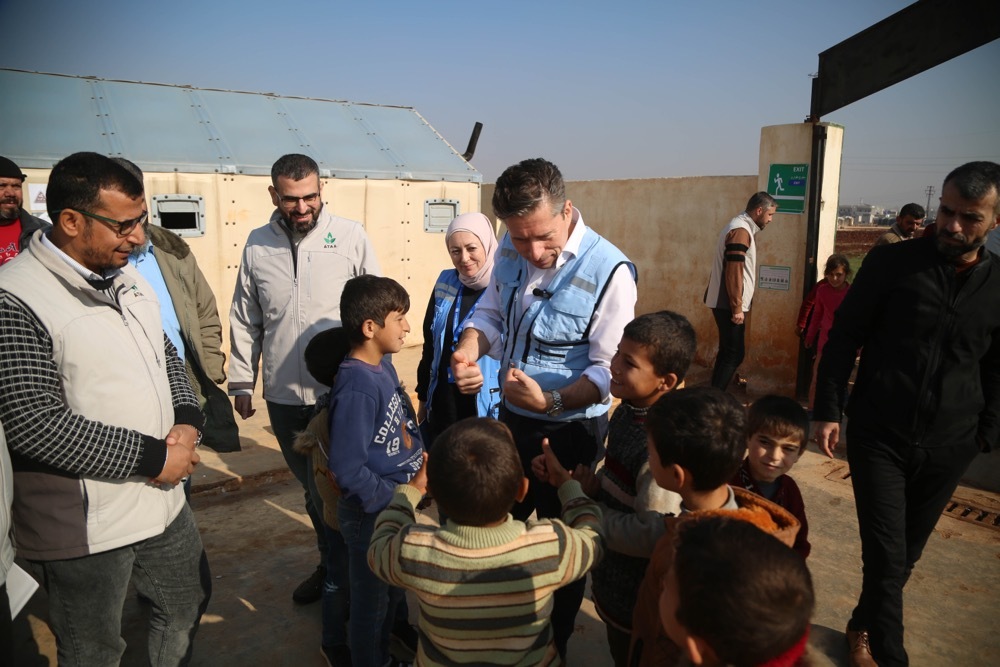
ECW: 联合国人道主义事务协调厅通过其人道主义协调体系,在支持ECW对紧急情况和长期危机中的教育投资方面发挥着关键作用。这一体系与联合国难民署的难民协调角色相辅相成,对于在危机中高效、切实的提供优质教育至关重要。为何联合国人道主义事务协调厅与联合国难民署的协调体系至关重要?如何进一步增强其作用?
汤姆·弗莱彻:协调机制绝非官僚程序的表面功夫,而是让我们用有限资源拯救更多生命的关键。与联合国难民署及众多合作伙伴一道,我们构成了人道主义协调响应中的骨干力量,以支持前线同仁在最危急时刻触达当地群众。但我们必须,也可以做得更好。这意味着要将决策权交给最了解当地社区的合作伙伴、简化流程以避免重复工作,并大力培育地方应对能力。我们的核心理念应是:能本地化就本地化,只有在必要时才选择国际介入。唯有如此,我们才能确保紧急情况下的教育得以及时落地,同时真正契合我们所服务社区的实际需求。
ECW:众所周知"阅读塑造领袖",阅读能力对每个儿童的教育都至关重要。哪三本书对您个人或职业生涯的影响最为深刻?
汤姆·弗莱彻:
《Ministry of the Future》,作者:Kim Stanley Robinson
《丝绸之路》(The Silk Roads),作者:Peter Frankopan
《对手团队》(Team of Rivals),作者:Doris Kearns Goodwin
ECW: UN-OCHA plays a key role in support of ECW investments in education in emergencies and protracted crises through its humanitarian coordination system which, alongside UNHCR’s refugee coordination role, is essential to the efficient, effective delivery of quality education in crises. Why are the UN-OCHA and UNHCR coordination systems crucial, and how can they be further strengthened?
Tom Fletcher: Coordination isn’t a bureaucratic nicety – it’s how we save more lives with the resources we have. Alongside UNHCR and our many partners, we form the backbone of a coordinated humanitarian response – to support our frontline colleagues' efforts to reach people in their hour of greatest need. But we can and must do better. This means handing over decision-making power to partners on the ground who know their communities best, streamlining processes to reduce duplication and investing in local capacity. Our mantra must be: Local where possible and international only when necessary. That’s how we can ensure that education in emergencies arrives quickly in a way that truly meets the needs of the communities we serve.
ECW: We all know that ‘readers are leaders’ and that reading skills are key to every child’s education. What are three books that have most influenced you personally and/or professionally?
Tom Fletcher:
“Ministry of the Future” by Kim Stanley Robinson
“Silk Roads” by Peter Frankopan
“Team of Rivals” by Doris Kearns Goodwin