

当地时间6月30日~7月2日,2025世界运河古镇、精品景区交流互鉴活动在荷兰羊角村举行。这是世界运河历史文化城市合作组织(WCCO)两大品牌活动——“世界运河古镇合作机制”与“运河城市精品景区合作机制(CCSC)”首次联合出海举办。接下来,让我们一起走进这场盛会,全方位回顾其精彩瞬间与重要成果,感受中外运河文化交流合作的无限魅力与广阔前景。
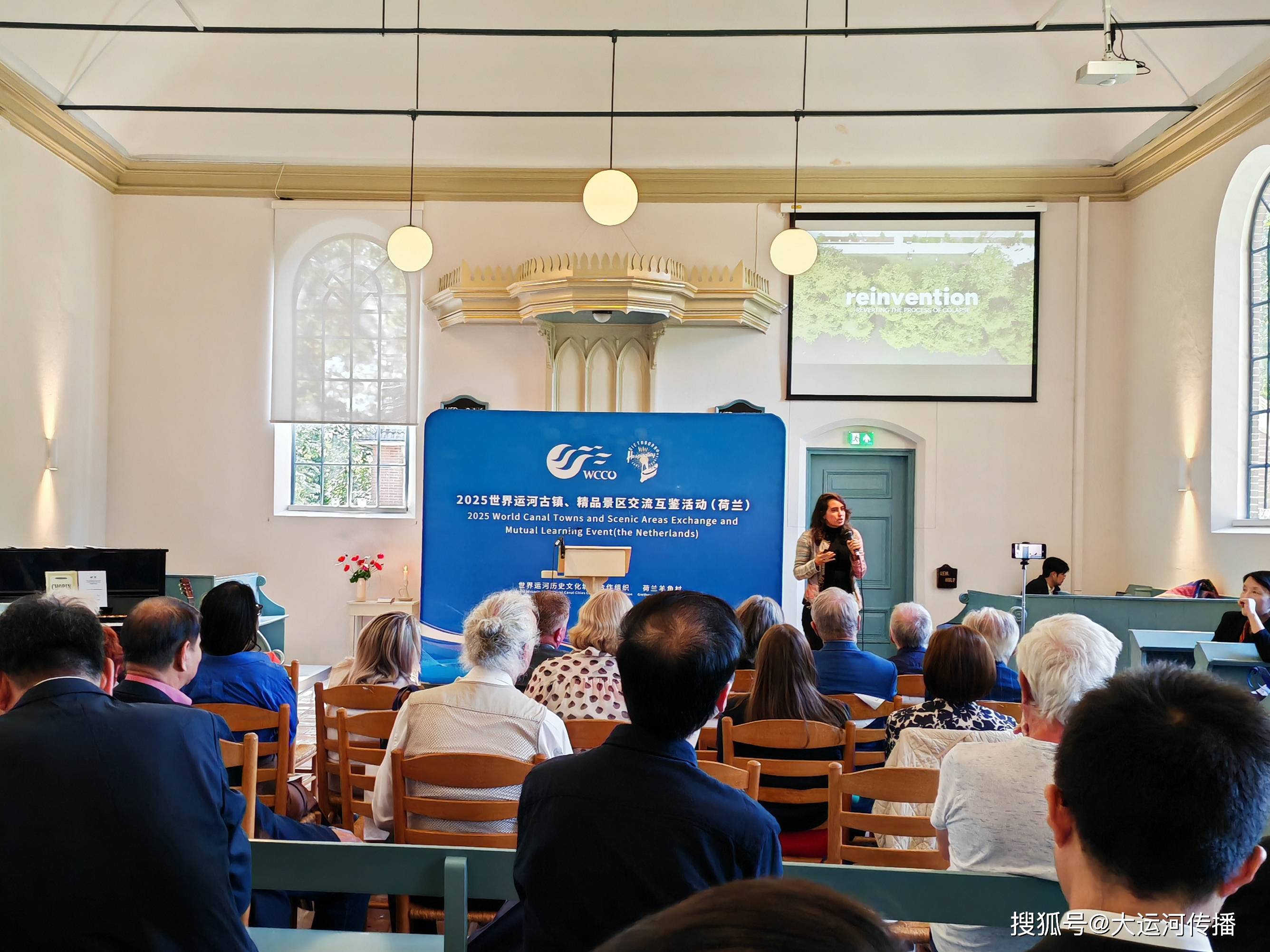
第一阶段 领导致辞 专家演讲
致辞环节
中国驻荷兰大使谈践
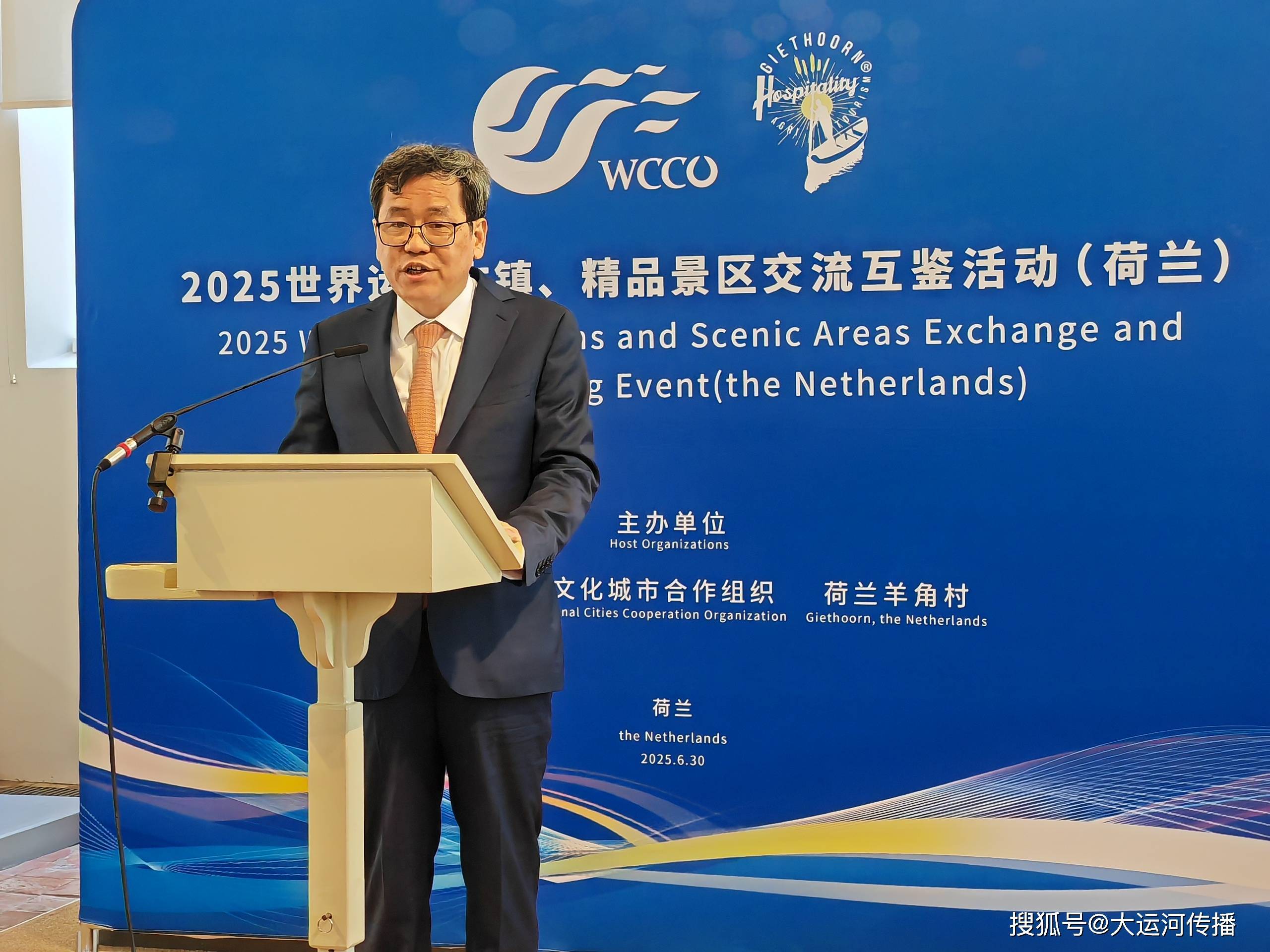
最近荷兰成了世界焦点。五天前的6月25日,海牙举办了北约峰会;今天6月30日,羊角村迎来了这场运河盛会。我选择出席后者——经济文化合作与人文交流更具根本性,民心相亲远比军事同盟重要。中国治水贯穿五千年文明史,有一条闻名世界的大运河,对中华民族的发展和安全具有战略意义。今天中方参与者来自大运河沿线南端的浙江省,北端的首都北京,以及自己的家乡扬州——这座长江与运河交汇的城市,也是WCCO总部所在地。
各位朋友,女士们、先生们:
(开场问候)
大家下午好!
衷心感谢中荷爱三国组织者和参与者的辛勤付出,很荣幸与各位共聚于此。
(运河主题)
朋友们,
这是一场关于水、关于运河的聚会。
水是生命之源、力量之源。我们各国人民都通过治水用水塑造了家园与文明,展现出非凡韧性。
荷兰以围海造田、运河网络和水管理系统闻名。威廉-亚历山大国王在本世纪初即位前,曾担任联合国秘书长水与卫生顾问委员会主席。荷兰还发起并主办了2023年联合国水事会议。
爱尔兰与荷兰相似,拥有极具经济、生态和历史价值的水系网络。
在中国,治水贯穿五千年文明史,甚至决定着王朝兴衰。
爱尔兰有大运河,中国也有一条始建于1400年前、全长1800公里的大运河,对国家发展安全具有战略意义:
其一,这条南北走向的运河连通了长江(6300公里)、黄河(5500公里)等自西向东的主要水系,构成中国最重要的水网;
其二,它将南方的粮食与水源输送至北方。长江下游丰水多产,被誉为“鱼米之乡”,恰似西方所称“流淌奶与蜜之地”。
大运河是经济命脉,长城用于防御,而运河始终滋养着北方发展。时至今日,它仍在航运灌溉中发挥作用。长城与大运河共同铸就中华文明,后者意义甚至更为深远。
今天中方参与者均来自大运河沿线:南端浙江省、北端首都北京,以及我的家乡扬州——这座长江与运河交汇的城市,正是WCCO总部所在地。长江三角洲水网密布,见证着人水共生的智慧。
(国际合作)
朋友们,
亚当•斯密在《国富论》中指出:“良好的道路、运河和通航河流能降低运输成本,使偏远地区与城镇周边同等受益,实乃最伟大的进步。”
运河除运输价值外,更蕴含经济、政治、军事、生态、文化、旅游等综合价值,是文明对话的载体。本月10日,我们刚庆祝了首个联合国“文明对话国际日”。
(签证便利)
各位来宾,
作为中国驻荷兰大使,我全力支持运河古镇国际合作。这关乎各国历史荣光,更承载民心相通使命。
中国已对荷兰、爱尔兰等国实施单方面免签政策,荷爱公民可免签赴华30天,从事商务、探亲、旅游等活动。期待更多中国游客探访爱尔兰、荷兰与羊角村,也欢迎更多荷爱朋友登长城、游运河。
让我们携手打造更多“运河之桥”,扬帆共进!
谢谢!
Dear friends, ladies and gentlemen,
(Greetings)
A very good afternoon to you all!
Recently, the NL has become the centre of the world.
5 days ago, June the 25th, The Hague hosted the NATO Summit.
Today, June the 30th, Giethoorn, is hosting this Canal Event.
I didn’t go to the former. I choose to come to this one.
Economic and cultural cooperation, people-to-people exchange are more fundamental. Affinity of people is more important than military alliance.
I wish to express my sincere thanks to colleagues and friends from China, the NL, and the Ireland for the organization and participation.
It is really my great pleasure to join you.
(Water, Canal)
Dear friends,
This event is about water, about canal.
Water is life, water is power.
Our peoples have shaped their land and lives by harnessing and harmonizing with water, demonstrating perseverance.
The NL is well-known for its polder model, canals, and water management projects. His Majesty Alexander Williams was the Chair of the United Nations Secretary-General’s Advisory Board on Water and Sanitation early this century before his coronation. The NL initiated and sponsored the UN 2023 Water Conference.
In Ireland, like the NL, there is a complex water network of rivers and canals, of high economic, biological and historical importance.
In China, water management has been part of its age-old history, making or breaking many Chinese dynasties.
I have learned that Ireland has a Grand Canal.
In China, we also have a Grand Canal, constructed 1400 years ago, 1800 km long. It was of strategic significance to China’s development and security.
First, taking a north-south course, the Grand Canal links major rivers like the Yangtze River, 6,300 km long, and the Yellow River, 5,500 km long, both running from west to east given China’s topography, forming the most important river systems in China.
Second, the Grand Canal ferried food and water from the south to the north.
In South China, with the abundance of water, people can farm fish and grow rice, that’s why the low reach of Yangtze River is called the land of fish and rice, the Chinese equivalent to the land of honey and milk in the West.
The Grand Canal was the economic artery, of utmost importance for the security and prosperity of China.
The Great Wall was to for defense.
The Grand Canal was for development, to support the northern part of China in both peace time and war time. Today, it is still playing an economic role in shipping and irrigation.
China has the Great Wall, also the Grand Canal. The latter is as significant as the former, if not more.
For today’s event, the Chinese participants are all from the Grand Canal areas.
They are from Zhejiang Province, the southern end of the Grand Canal; from the capital city Beijing, the northern end; and from Yangzhou, my hometown.
The city of Yangzhou is located at the intersection of the Yangtze River and the Grand Canal,
That’s why the WCCO is headquartered in Yangzhou. :
There are many canals in the Yangtze River delta, the low land part in China with a lot of rainfalls.
(International and Bilateral Cooperation)
Dear friends,
Adan Smith said in his Wealth of Nations that, I quote: “good roads, canals and navigable rivers, by diminishing the expense of carriage, put the remote parts of the country more nearly upon a level with those in the neighbourhood of the town. They are upon that account the greatest of all improvements”, unquote.
In addition to the transportation value, canals are also of great economic, political, military, biological, cultural and tourist value.
Canal is closely related with our economy, culture, history.
It is part of our national identity,
Early this month, on the tenth of June, we celebrated the first United Nations "International Day for Dialogue Among Civilizations".
(Visa free)
Ladies and gentlemen,
As ambassador of China to the NL, I fully support the historic and cultural canal cities cooperation. It is about the pride of our countries -- historical, beautiful.
It is to bring our people closer.
We have been working hard to promote people-to-people connectivity.
China has introduced the visa free policy for countries including the NL and Ireland.
Dutch and Irish people can visit China without visa for a duration of 30 days, for business, official business, family business, tourism.
This is China’s unilateral arrangement. We are opening wider.
I hope more Chinese visitors to the Ireland, the NL and Giethoorn.
I hope more Irish and Dutch visitors to China, to scale the Great Wall, go boating on and swimming in the Grand Canal.
We will build more bridges and boats for the canals. Let’s join hand.
Thank you.
WCCO副主席张福堂
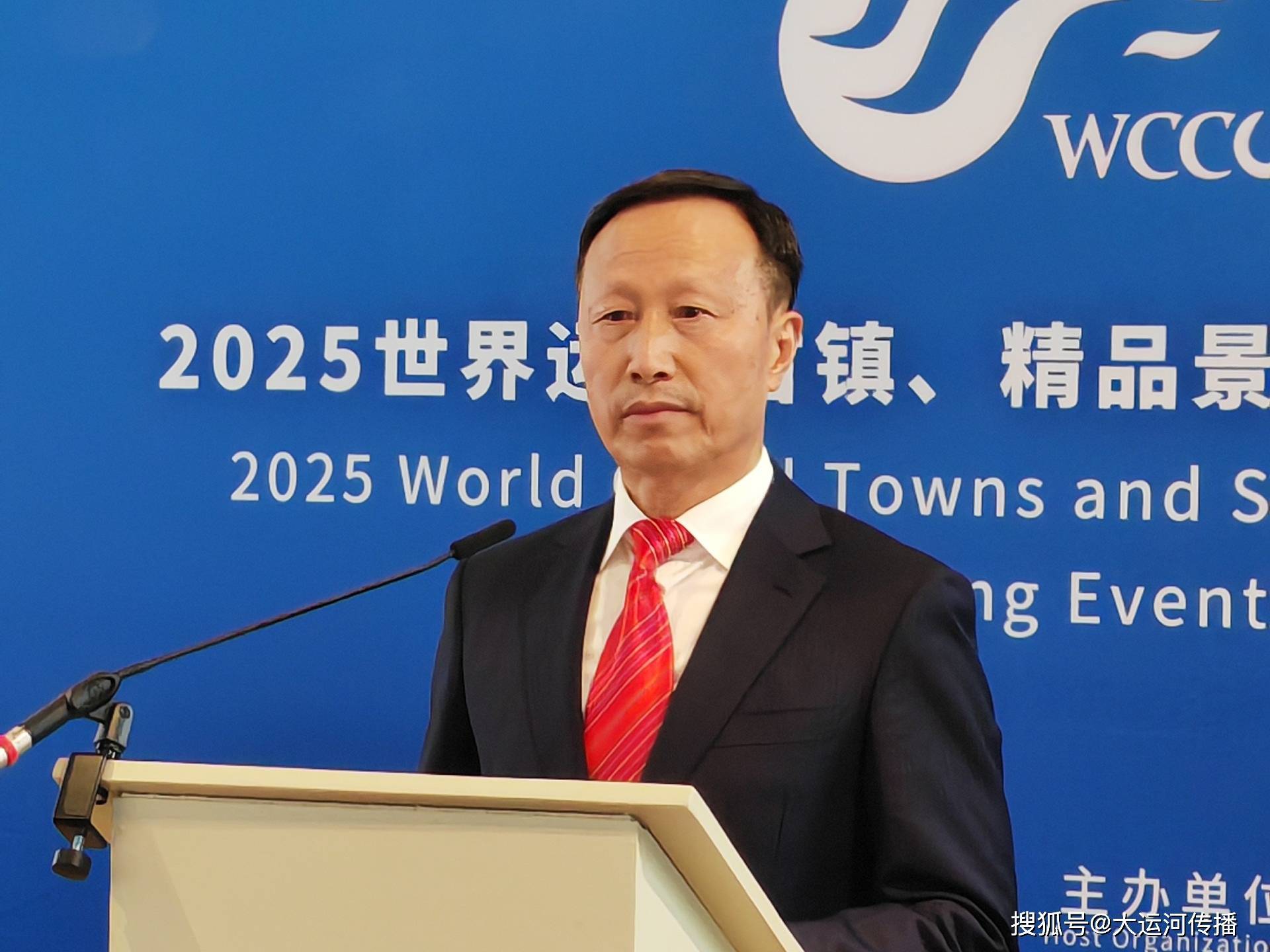
张福堂在发言中谈到,WCCO网络已汇聚全球6大洲214个会员城市与机构。依托世界运河古镇合作机制与运河城市精品景区合作机制,成立八年来促成了50多个项目的合作,得到了联合国教科文组织、联合国开发计划署等国际机构的支持,为运河城市的发展提供了有力支持。当前,全球运河城市面临着气候变化、文旅转型等共同挑战。而作为轮值主席单位,羊角村在水资源管理、低碳旅游等领域的创新,值得各国借鉴。
尊敬的各位领导、各位嘉宾,女士们、先生们、朋友们:
大家好!
很高兴与来自全球运河城市的朋友们相聚在羊角村——这座以芦苇屋顶、运河水系编织而成的生态典范小镇。值此2025世界运河古镇、精品景区交流互鉴活动召开之际,我谨代表世界运河历史文化城市合作组织(WCCO),向活动联合主办方荷兰羊角村及所有合作伙伴表示衷心感谢,向远道而来的各位嘉宾致以诚挚欢迎!
WCCO始终以“搭建世界运河城市交流合作的桥梁,打造中国国际性社会组织建设的典范”为宗旨。自2007年起打造的“世界运河城市论坛”,已连续举办17届,2022年升级为中国国家级机制性平台,成为联结中外运河文明的核心枢纽。2024年论坛首出国门落地巴拿马,并将中国扬州的茶艺、木偶等非遗技艺与“茶和天下”雅集相结合,在巴拿马运河畔搭建起中巴文化对话的“水上桥梁”,为两国文旅合作开辟了新路径。
目前,WCCO网络已汇聚全球6大洲214个会员城市与机构。同时,我们依托世界运河古镇合作机制与运河城市精品景区合作机制,成立八年来促成了50多个项目的合作,得到了联合国教科文组织等国际机构的支持,为运河城市的发展提供了有力支持。我们发布的《世界运河辞典》《中国大运河蓝皮书》《世界运河古镇绿色发展报告》,不仅为学术研究提供支撑,更将中国大运河“活态保护”经验推向世界。特别是联合国可持续发展目标(SDG)运河评估指标体系的构建,让运河治理与全球发展议程实现了精准对接。这些成果不仅推动了全球运河治理的标准化进程,更在具体实践中催生出诸多优秀案例。今天的羊角村便是典范——这里禁行机动车却连通世界,以电动“耳语船”守护水质,用芦苇建筑传承技艺,将生态保护与生活美学完美融合,为全球运河古镇提供了“可持续发展的羊角村方案”。
当前,全球运河城市面临着气候变化、文旅转型等共同挑战。今年4月中荷签署的文化合作备忘录,为我们深化务实合作提供了新契机。作为轮值主席单位,羊角村在水资源管理、低碳旅游等领域的创新,值得各国借鉴;中国古镇在非遗活态传承、文化空间再造上的探索,亦愿与世界分享。正如中国扬州古运河畔的船娘歌声与荷兰羊角村运河上的天鹅鸣声,不同文明在水脉相连中交响,必能谱写出保护与发展的和谐乐章。
各位同仁,运河是流动的历史,更是通向未来的纽带。WCCO愿继续发挥平台优势,让每一座运河古镇成为文明互鉴的窗口。期待今天的研讨能催生更多“羊角村—扬州式”的合作佳话,让运河不仅承载历史记忆,更承载起人类对美好人居的共同向往!
最后,预祝本次活动圆满成功!祝各位嘉宾在羊角村的时光,如运河水般清澈美好,情谊如芦苇般坚韧长青!
谢谢大家!
Distinguished leaders, guests, ladies and gentlemen, friends: Good day!
It is a great pleasure to gather with friends from canal cities around the world in Giethoorn, a model eco-town woven by reed-thatched roofs and tranquil waterways. On the occasion of the event, on behalf of the WCCO, I would like to express heartfelt thanks to the co-hosts of the event, Giethoorn, and all partners, and extend a warm welcome to all distinguished guests who have traveled far!
WCCO has always been committed to the mission of "building a bridge for exchange and cooperation among world canal cities and creating a model for the construction of China's international social organizations". The World Canal Cities Forum created since 2007 has been held for 17 consecutive sessions. In 2022, it was upgraded to a national-level event in China, becoming the core hub connecting Chinese and foreign canal civilizations. The 2024 forum made its inaugural overseas debut in Panama, combining intangible cultural heritage arts from Yangzhou, China—such as tea ceremony and puppetry—with the "Tea for Harmony" cultural gathering. By the Panama Canal, it built a "floating bridge" for China-Panama cultural dialogue, paving a new path for bilateral cultural and tourism cooperation.
Today, WCCO’s network unites 214 member cities and institutions across six continents. Through our World Ancient Canal Town Cooperation Mechanism and World Canal City Quality Scenic Area Cooperation Mechanism, we have facilitated over 50 collaborative projects in eight years. These efforts, endorsed by UNESCO and other international organizations, provide robust support for global canal cities' development. The Concise English-Chinese Dictionary of World Canals, Blue Book of China Grand Canal, and Green Development Report on World Ancient Canal Townswe released not only provide support for academic research but also introduce the "living protection" experience of China Grand Canal to the world. In particular, the construction of the indicator system to assess UN 2030 SDGs progress of canal cities has enabled canal governance to precisely align with the global development agenda. These achievements have not only promoted the standardization process of global canal governance but also given birth to many excellent cases in specific practices. Today, Giethoorn stands as a model — a car-free village that stays globally connected, where electric "whisper boats" protect water quality, reed-thatched roofs preserve traditional craftsmanship, and ecological conservation blends seamlessly with living aesthetics. It offers the world’s canal towns the "Sustainable Giethoorn Solution."
Currently, global canal cities are facing common challenges such as climate change and cultural tourism transformation. The cultural cooperation memorandum signed between China and the Netherlands in April this year has provided a new opportunity for us to deepen practical cooperation. As the rotating president, Giethoorn's innovations in water resource management, low-carbon tourism, and other fields are worth learning from; China's ancient towns are also willing to share with the world their explorations in the living inheritance of intangible cultural heritage and the reconstruction of cultural spaces. Just as the singing of boatwomen by the ancient canal in Yangzhou, China, and the chirping of swans on the canal in Giethoorn, different civilizations symphonize in the connection of water veins, and they will surely compose a harmonious movement of protection and development.
The canal is a flowing history and a bridge to the future. As WCCO, we will continue leveraging our platform to turn every ancient canal town into a window for cultural exchange. May today’s discussions inspire more collaborations like “Giethoorn-Yangzhou”—where canals carry not just memories of the past, but also humanity’s shared vision for a better future.
To conclude, I wish this event a great success! May your time in Giethoorn be as serene as its waters, and may our bonds endure like its reeds.
Thank you all!
爱尔兰前总理、WCCO名誉主席布莱恩·考恩
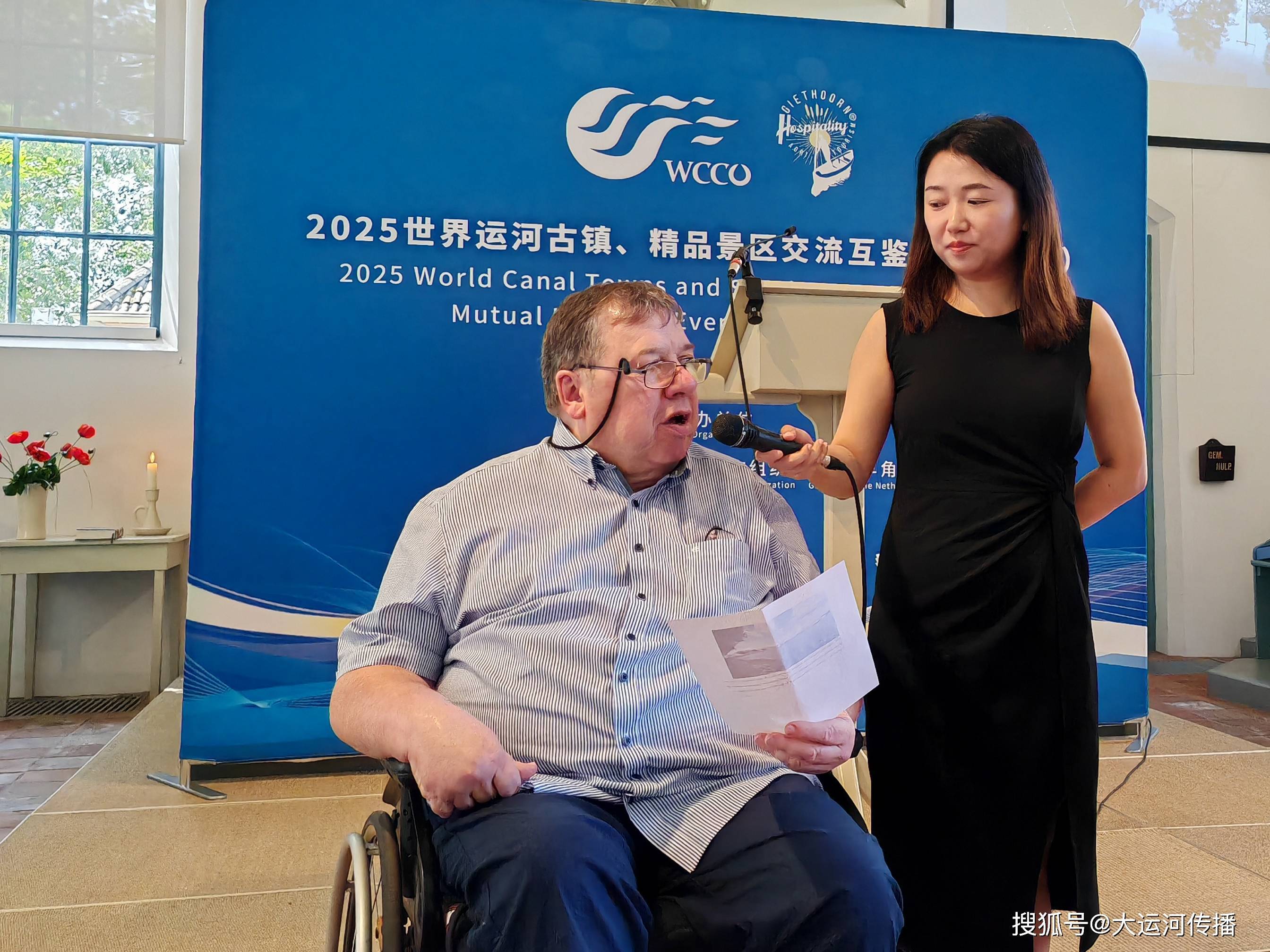
布莱恩·考恩表示,爱尔兰的大运河,与中国京杭大运河,虽规模不同,却各具千秋。京杭大运河堪称世界伟大水道之一,这条两千多年前开凿的水道彰显着中国辉煌的历史文化。布莱恩·考恩说,他始终建议欧洲友人赴华时,一定要领略壮美的京杭大运河,尤其不要错过大运河的原点、WCCO的总部所在地扬州。
It is a great pleasure for me to attend this World Canal Towns and Scenic Areas Exchange in this beautiful city of Giethoorn.
I haven’t been to this area of The Neitherlands previously, but now I understand why your former Prime Minister and my good friend Mark Rutte used to talk so glowingly about this northern part of your wonderful country.
It’s been an honour for me to be Vice President of WCCO and to have made a number of trips to your world headquarters at Yangzhou on the Grand Canal. Please give my regards and those of my colleague Frank Fahey, to your wonderful Diplomat and Ambassador, Madam Deng.
The Grand canal is truly one of the great waterways of the world and it shows the great history and culture of China, having been built over 2000 years ago. I would certainly advise people from Europe to visit China to take in the wonderful Grand Canal and visit Yangzhou in particular.
In Ireland our canals and waterways played a major role and bringing about peace in Northern Ireland after 30 years of violence. A new canal was built joining the Erne Sysrem of lakes and rivers in Northern Ireland to the Shannon river and lakes in Southern Ireland.
Waterways Ireland was established as part of the Good Friday Agreement in 1999, which led to peace in Ireland. The establishment of the cross-border organisation as part of that historic agreement showed the significance that the British and Irish Governments and the political parties in Northern Ireland placed on the future ability of the inland waterways to bring social and economic prosperity to the region.
Waterways Ireland is responsible for over 1,000km of inland navigable waterways and operates both in Ireland and in Northern Ireland. The navigations for which it is responsible include:
1. The Barrow Navigation
2. The Erne System
3. The Grand Canal
4. The Lower Bann Navigation
5. The Royal Canal
6. The Shannon Erne Navigation
7. The Shannon
The river Shannon is the longest river in the UK and Ireland. It has an international reputation as one of the most attractive cruising locations in Europe. It is joined to Dublin through Tullamore by the Grand Canal.
This picture shows how we have combined rivers and canals to give us a wonderful necklace of waterways throughout Ireland.
Tullamore
I live in the beautiful town of Tullamore.
When the Grand Canal reached Tullamore in the Summer of 1798 the town was transformed virtually overnight from a modest provincial centre to bustling hub, being a natural trading location along the canal. This led to the establishment of the famous Irish Whiskey Tullamore Dew.
Tullamore became the terminus of the canal for a number of years until it was determined how the line should be continued to the Shannon leading to the development of the Tullamore Harbour. Many leisure facilities have been developed and we have re-branded the area as "Grand Canal Dock Tullamore".
One of Tullamore’s great attractions Tullamore Dew Visitors Centre is located in the 1897 bonded warehouse on the canal bank at Bury Quay.
Today we have one of the most modern whiskey distilleries in the world, distilling Tullamore Dew, which is now distributed all over the world.
It all started with the building of the Grand canal in 1798.
So we have our Grand canal in Ireland and you have your Grand Canal in China.
Little and Large.
Let’s continue to grow this great relationship between Giethoorn,The Netherlands, Yandzhou, China and Tullamore, Ireland
Thank you.
能在羊角村这座美丽的城市参加世界运河城镇与景区交流活动,我深感荣幸。
虽然此前未曾造访荷兰北部地区,但此刻我终于明白,贵国前首相、我的好友马克•吕特为何总是如此热情洋溢地盛赞这片土地。
作为世界运河历史文化城市合作组织(WCCO)副主席,多次到访贵组织位于京杭大运河畔的扬州秘书处令我倍感荣耀。请代我及同事弗兰克•费伊向贵国杰出的外交官邓女士转达问候。
京杭大运河堪称世界伟大水道之一,这条两千多年前开凿的水道彰显着中国辉煌的历史文化。我始终建议欧洲友人赴华时,一定要领略壮美的京杭大运河,尤其不要错过扬州。
在爱尔兰,我们的运河与水系曾为终结北爱尔兰长达三十年的暴力冲突、实现和平发挥过重要作用。新修建的运河将北爱尔兰的厄恩湖河水系与南爱尔兰的香农河湖水系连为一体。
作为1998年《贝尔法斯特协议》的重要组成部分,爱尔兰水道局的成立推动了和平进程。这个跨境机构的设立,彰显了英国与爱尔兰政府及北爱各政党对内陆水道未来促进地区社会经济繁荣的高度重视。
爱尔兰水道局现管理着逾1000公里通航水域,其管辖范围包括:
巴罗航道
厄恩水系
大运河
下班恩航道
皇家运河
香农-厄恩航道
香农河
香农河作为不列颠群岛最长的河流,以欧洲最具魅力的游船胜地享誉国际。通过大运河经塔拉莫尔与都柏林相连。
(展示图片)
这张图片展现了我们如何将河流与运河编织成贯穿爱尔兰全境的"水道项链"。
塔拉莫尔
我居住在美丽的塔拉莫尔镇。1798年夏,当大运河通抵塔拉莫尔时,这座小镇几乎一夜之间从普通行省中心蜕变为运河沿岸的繁华商贸枢纽,由此孕育了举世闻名的爱尔兰威士忌——塔拉莫露。
在确定如何将运河延伸至香农河的数年间,塔拉莫尔作为运河终点站发展起港口设施。如今我们已将该区域重新规划为"塔拉莫尔大运河码头",配套建设了大量休闲设施。
塔拉莫尔露游客中心作为当地重要景点,坐落于伯里码头运河畔1897年建成的保税仓库内。(展示图片)
现今我们拥有全球最现代化的威士忌蒸馏厂,生产的塔拉莫露已销往世界各地。
这一切都始于1798年大运河的开凿。
爱尔兰有大运河,中国有京杭大运河。
虽规模不同,却各具千秋。
让我们继续深化荷兰羊角村、中国扬州与爱尔兰塔拉莫尔三地间的美好情谊。
谢谢!
内河航道国际组织前主席、WCCO专家顾问大卫·爱德华兹-梅
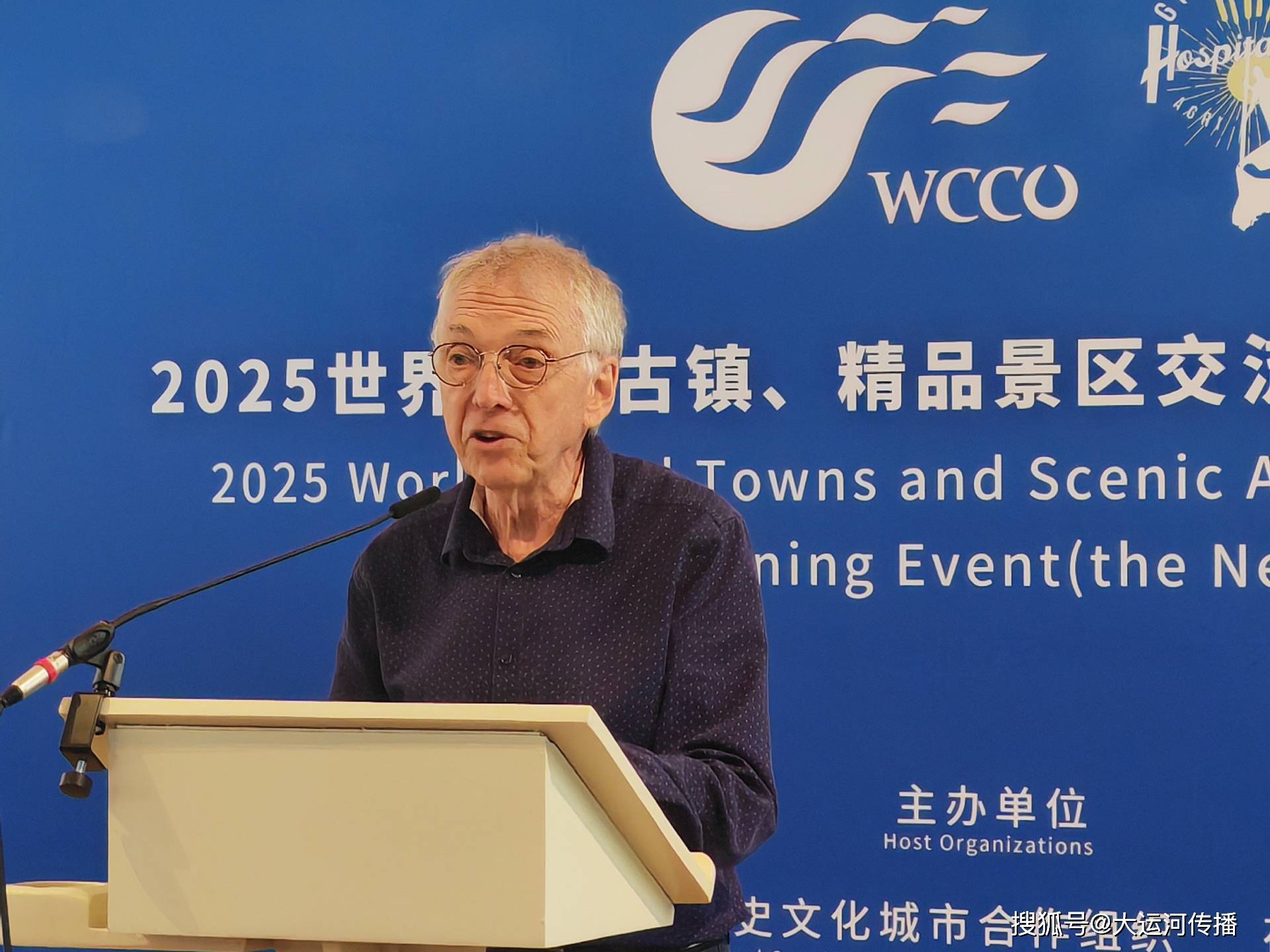
大卫·爱德华兹-梅在演讲中提醒人们注意,过度旅游对步行路线的压力已有充分案例佐证。羊角村让游客划船进村,既能缓解主要步行路线的通行压力,又能促进可持续旅游发展。他提出“私人船只运营”的视角,希望启发中国及世界同行突破“池塘泛舟”的休闲模式,探索更深入的水道文化参与方式。
First of all I would like to congratulate our hosts Giethoorn and the WCCO for having engaged many years ago the mechanism of cooperation between canal sites – from cities to towns to local areas of scenic beauty and cultural interest.
Today's conference is a very meaningful occasion for me as former president of Inland Waterways International, and personally as a visitor and admirer of the canals and canal cities in both the Netherlands and China, as of course in all other parts of the world.
My first visit to the Netherlands was in a hire boat from Sneek in Friesland in 1971. That's 54 years ago. This was the route we took, which included Giethoorn on the way back from Amsterdam to Sneek.
I chose to stay on a boat also for today's event, for a purpose: to draw attention to the way of life on the water, in a world apart. In this case Alida is a historic boat belonging to Jim Miller, a member of DBA The Barge Association, which campaigns for favourable conditions for long-distance navigation through the waterways of the UK and continental Europe. This boat in Giethoorn, which you will have the opportunity to visit later today, represents a category of tourist that is critically important in the densely-populated Netherlands, because it generates movements on the waterways, hence with no impact on road traffic (except where traffic has to be stopped to raise bridges).
Cultural appropriation of the waterways of the nation and the eastern provinces is a key objective on China's Grand Canal, many sections of which are inscribed in the UNESCO World Heritage List. The intention of Central and Provincial Governments is to bring the population to the waterside, for people to literally soak up the heritage, the atmosphere, and to treasure the unique water environment. Such is the case of the Canal Walk initiative, which was first tried during the World Canals Conference in Yangzhou in September 2019, and has expanded vastly since then.
Visiting canal sites and cities on the water adds a valuable dimension, which is immersion in this unique environment, and hence participation in navigation, the prime function of waterways of all dimensions. Dimensions are a critical factor in managing navigation. A fascinating aspect of the waterways in our countries (China, Vietnam and many European countries) is precisely the marked contrast in dimensions between the waterways serving the national and regional economy, with high-capacity barges and push-tows (thousands of tonnes per unit) and the countless smaller waterways which serve as capillaries in the body of the network, some big enough to carry freight in barges of a few hundred tonnes, others, like the canals in Giethoorn, open only to light craft, often limited to electric or human-powered craft only.
A classic example of immersion in waterway culture that means taking three separate boats depending on the waterway dimensions is the visit to the Little Three Gorges. Tourists transfer first from the big Yangtse River cruise ship to a medium-sized passenger boat to enter the small winding tributary of the Yangtse, then into small pirogue-type boats to row up the stream and see how loads were towed from the bank in history.
Here in Giethoorn, a specific service to boatowners mooring in the marinas (along the main canal to the left of the map below) could be small boat rental for rowing into the village. This serves sustainable tourism in the village by reducing the pressure on the main walking route, crossing many canals, as shown on this map: the Molenweg.
The pressure on major tourist sites brought by mass tourism on walking routes is well-known and well documented, critical examples being Venice, with the recently enforced entry fee for day visitors, and Simione on Lake Garda in Italy, where pedestrian traffic across the narrow bridge was brought to a standstill. This is why every effort should be made, in our opinion, to get people to take to the water in electric or human-powered boats, to approach these sites from the water. This is an area where it could be extremely useful to compare experience and fine-tune the actual arrangements encouraging 'slow waterborne tourism' around such sites.
By coincidence, I have just attended a boat rally organised by DBA The Barge Association on a UNESCO World Heritage canal site, the Canal du Centre in Belgium. The case of this canal and its management as a tourist attraction is relevant to our assembly today in Giethoorn. One would have thought that the UNESCO label and the uniqueness of the historic boat lifts, combined with the grandeur of the modern lift, would bring automatic success. Sadly, this is not the case. The engineer in charge of the Canal du Centre reported on visits, in two separate categories:
- private boats navigating through the canal
- land visitors taking the tours and boat excursions organised by the operator of the site.
Regular tourists are welcomed by a public association created by Hainaut Province (the size of a county in China!) called Voiesd'eau du Hainaut. In 1999 they took over all the assets of a private association that had run the attraction in multiple dimensions from the early 1980s. That association, the Compagnie du Canal du Centre, was attracting close to 100 000 visitors per year when it was wound up. Voiesd'eau du Hainaut has seen this figure drop to barely 25 000. As a result, it is now itself ceasing its activity, so that the Walloon Ministry of Public Works, who are completing a massive €38 million restoration of the historic lifts, now has to put out a call for tenders for a new operator!
For the boats, it is a similar, sad story of decline: 780 boats passed through the historic canal in 2000, before an accident at Lift No. 1 forced closure for many years; now it is barely 180 boats per year. There is not time today to develop all the reasons for this, but I wanted to present this cautionary tale about an emblematic canal site simply NOT WORKING as it should!
The angle of private boat usage developed during my presentation is also put forward to encourage our Chinese partners to think 'outside the box' and imagine how citizens could gradually be encouraged to 'take to the water' in a more meaningful way than just 'boating on a pond' for a quick recreational fix. The quick fix is indeed one of the recent suggestions by Voiesd'eau du Hainaut for visits to the historic lift No. 1, as shown here
The beauty of the Barge Association model - also supported by Inland Waterways International - is that it brings to the canal and these emblematic structures vessels that are similar to those for which the canal was built and completed in 1917. There cannot be sustainability in the idea of allowing small electric boats to go up and down this lift, as if it were a theme park attraction.
Naturally, I am open to discussion on all aspects of this specific 'boating angle' of canal tourist site management!
I would also like to report, in concluding, that Inland Waterways International has just been granted international NGO status by the UN's Economic and Social Council. This was notified to us on June 20!
国际协作的重要性——沉浸式水道文化体验
首先,我要感谢主办方羊角村(Giethoorn)和世界运河历史文化城市合作组织(WCCO)多年来推动运河城镇及景区合作机制所做的努力。
作为国际内河航道组织(IWI)前主席,同时作为一名运河爱好者,我曾到访过荷兰、中国以及世界各地的许多运河城市,今天的会议对我而言意义重大。
1971年,我首次到访荷兰,从弗里斯兰省的斯内克(Sneek)租船出发,途经羊角村返回,这条航线令我印象深刻。54年后的今天,我特意选择住在船上参加活动,旨在唤起人们对水上生活方式的关注。这艘名为Alida的船属于英国驳船协会成员Jim Miller,该协会致力于推动欧洲内河长途航行的便利化。在荷兰这样的人口稠密国家,此类水上旅游能有效分流陆路交通压力(除非需要升起桥梁让行)。
中国大运河的多个河段已被列入联合国教科文组织世界遗产名录,其核心目标之一是通过“运河漫步”等倡议,让民众亲水近水,感受文化遗产与独特的水环境氛围。2019年扬州世界运河大会首次试行这一项目,如今已广泛推广。
探访滨水运河遗址与城市,能带来一种独特的沉浸式体验——亲身参与航运活动,这正是各类水道最本质的功能。水道尺度的差异是航运管理的关键要素。在中国、越南和众多欧洲国家的水道网络中,最引人入胜之处恰恰在于其鲜明的尺度对比:既有服务于国家及区域经济、可通行千吨级驳船与顶推船队的大型航道,又有如同毛细血管般密布的支线水道——部分可承载数百吨货驳,而像羊角村这样的运河则仅限轻型船只通行,多采用电动或人力驱动的小舟。
以小三峡为例,游客需依次换乘三种船只:先由长江游轮转乘中型客船进入支流,再换乘传统木舟溯溪而上,亲身体验历史上纤夫拉船的运输方式,堪称水道文化沉浸式体验的典范。
在羊角村,我们可为停泊在主运河码头(地图左侧所示)的船主提供小舟租赁服务,让游客划船进村。这既能缓解主要步行路线Molenweg的通行压力(该路线需多次跨越多条运河),又能促进可持续旅游发展。
过度旅游对步行路线的压力已有充分案例佐证:威尼斯近期开始征收游客进城费,意大利加尔达湖的锡尔苗内窄桥也因人流拥堵瘫痪。因此,我们应当全力推动游客改乘电动或人力船只从水路游览。在这方面,各国“慢行水上旅游”的经验交流与方案优化尤为重要。
巧合的是,我最近刚参加了驳船协会(DBA)在比利时中央运河(联合国世界遗产)组织的船队集会。该运河的旅游管理现状对本次羊角村会议具有参考价值——尽管拥有世界遗产头衔、历史船闸与现代升船机等独特资源,其运营却陷入困境。负责工程师提供的数据显示:
私人通航船只:2000年780艘,现降至180艘/年
陆地游客量:从1999年前的年均10万骤降至2.5万
比利时埃诺省成立的运营机构Voiesd'eau du Hainaut即将停止运作,瓦隆尼亚公共工程部在耗资3800万欧元修复历史船闸后,不得不重新招标运营商。
我提出私人船只运营的视角,是希望启发中国同行突破“池塘泛舟”的休闲模式,探索更深入的水道文化参与方式。驳船协会模式(国际内河航道组织也支持)的精髓在于:让符合1917年运河初建时航运特质的船舶继续航行,而非将历史船闸降级为电动游船的“主题公园设施”。
最后分享喜讯:国际内河航道组织已于6月20日正式获得联合国经社理事会认可的国际非政府组织地位!
荷兰旅游会议促进局目的地发展局局长阿努克·范·埃克伦
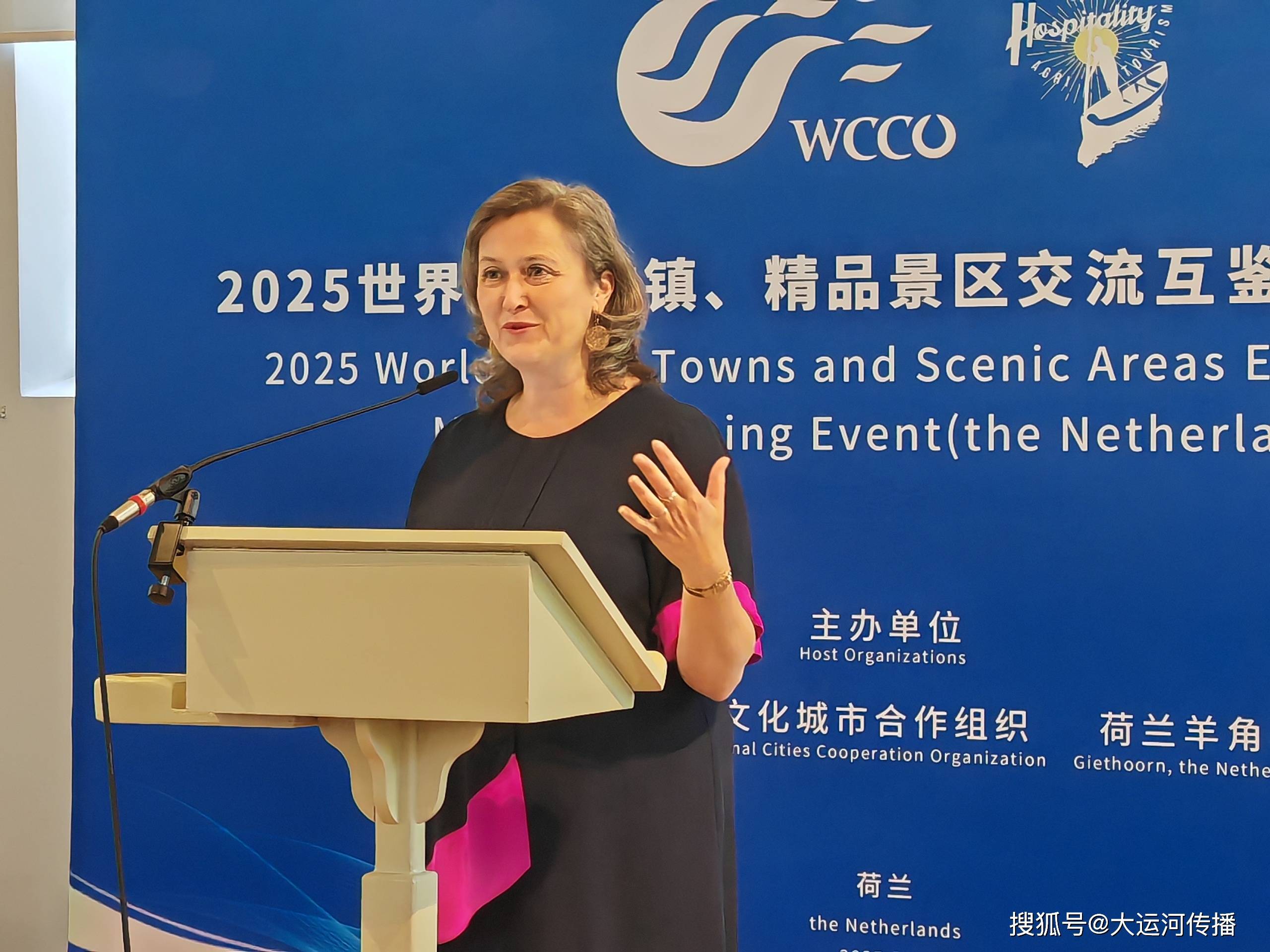
阿努克·范·埃克伦表示,目标到2030年旅游业将惠及每位荷兰公民。同时以可持续发展为核心,以旅游业推动多元发展,实现从目的地推广转向目的地管理。
主旨演讲
羊角村首席代表、顶力联合社团创始人及荷兰主席盖比·爱圣博格
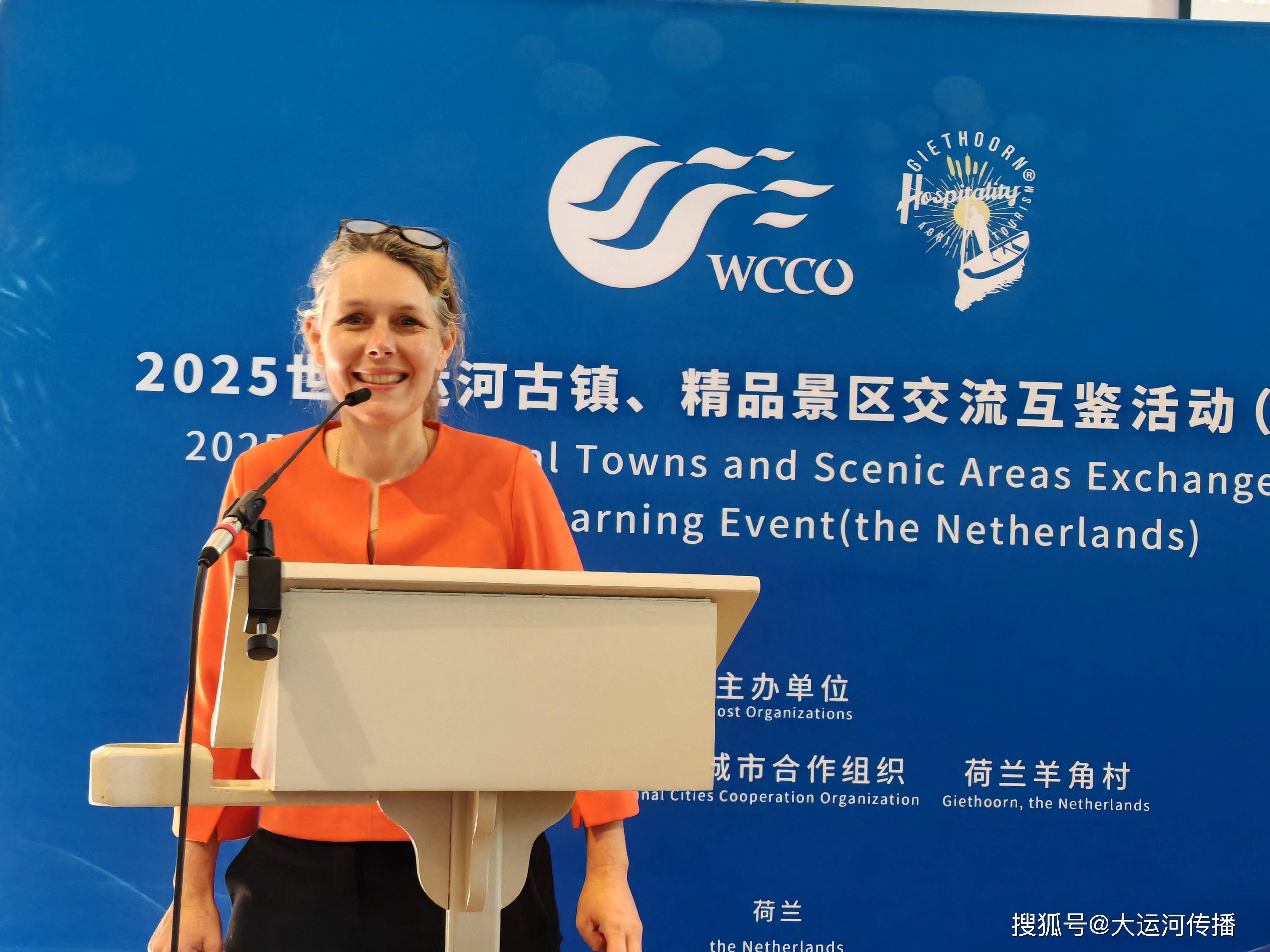
盖比•爱圣博格介绍,近年来,羊角村通过服务业激活地方活力,其国际吸引力建立在卓越运营与自然生态的紧密联系上。通过游客数据和客户洞察,打造最佳目的地。盖比·爱圣博格认为,这是一场持续性的服务方式,不仅连接了游客与当地人,而且实现了从休闲娱乐到“再创造学习”的过程。
爱尔兰前海洋和国家资源部长、WCCO专家顾问弗兰克·费依
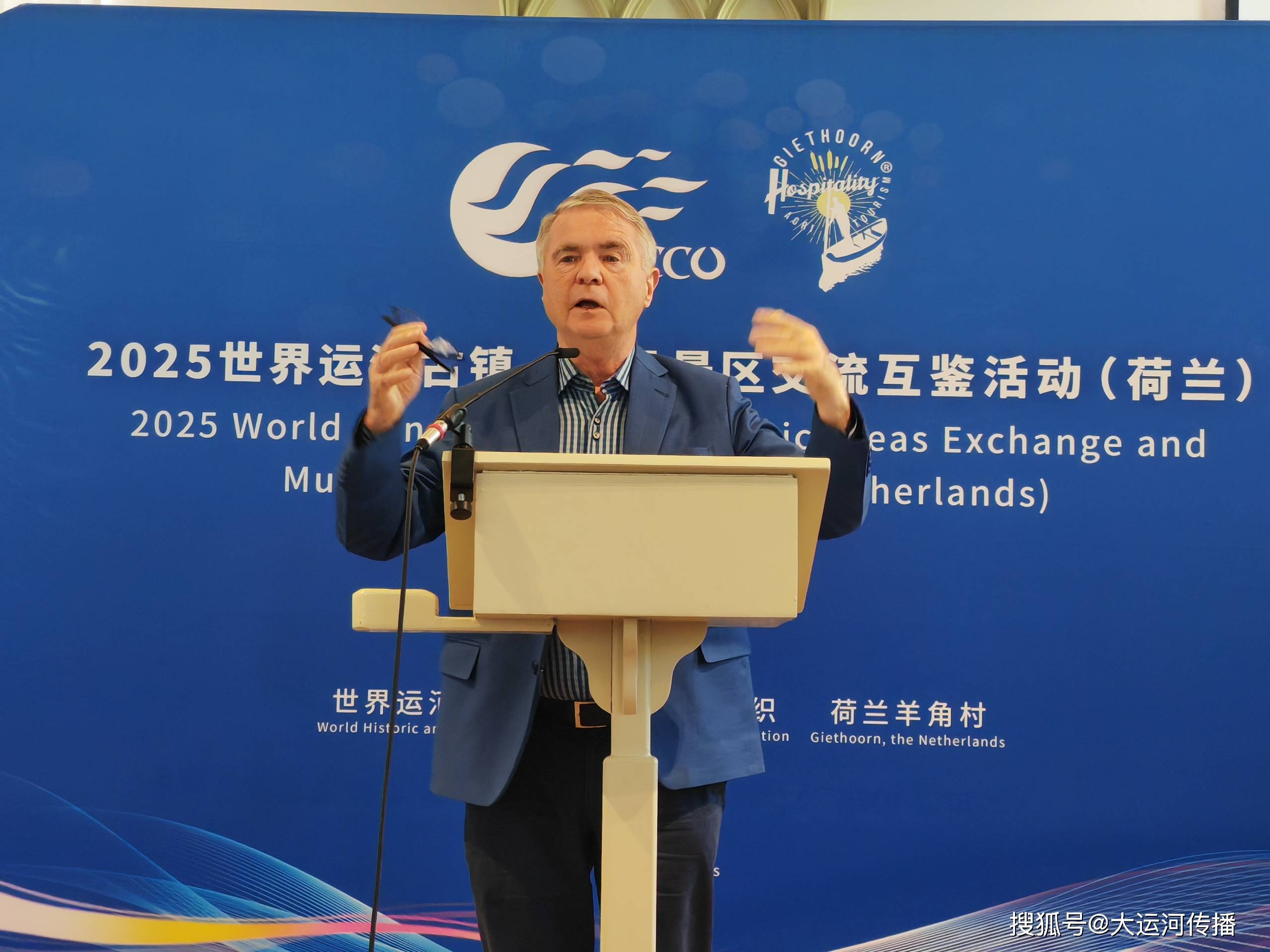
兰克·费依表示,焦水道及周边区域的旅游休闲潜力,与现有的“绿道”步行骑行系统形成联动。这种开发模式已引爆运河沿线活力,成为吸引国际游客的核心要素。爱尔兰未来将以旅游休闲产业为核心,在全国范围内催生新业态、构建新联结,振兴传统乡村聚居区。
Prime Minister, Chinese Ambassador to The Netherlands, Vice Chairman of WCCO, Mr David Edwards-May, distinguished guests, ladies and gentlemen.
It is an also a great pleasure for me to accompany our former Prime Minister Brian Cowen to attend this World Canal Towns and Scenic Areas Exchange in this beautiful city of Giethoorn.
As Prime Minister Brian has said, the Irish canals network had been established in the 18th and 19th centuries as a means of freight carriage with routes largely linking the main ports in cities such as Dublin with agricultural suppliers to the west and south. However the introduction of the railways and road transport saw the demise of the canals.
The establishment of Waterways Ireland in 1999 gave a new impetus to the maintenance and to the restructure of the canals network in Ireland and as the statutory function explains their use is now principally for recreational purposes.
Waterways Ireland successfully market and promote the inland waterways as a tourism and recreational resource for Ireland. They actively work with sporting, recreational and tourism bodies in promoting activities and events on and along the waterway and to encourage use within local communities in order to imbed the waterway into a natural way of life within rural Ireland.
We have now developed blueways along the canals with Walking and cycling trails.
So what of the future?
Government investment will be concentrated on the recreational and tourism potential of the waterways and their hinterlands. They link with our Greenway walking and cycle trails. This has led to an explosion of activity on our canals and it has proven to be the key attraction for foreign visitors to Ireland.
Cruise hire, angling, private boating and water related recreational activities, together with walking and cycling Greenway trails provide an estimated €500 million to the Irish economy.
So the future for Ireland’s canals and waterways is bright, concentrating on the recreational and tourism sector, generating new businesses and connections throughout the country from which local rural settlements were established.
Today the inland waterways continue to reach deep into the rural landscape of Ireland, and this is where they make most economic impact.This gives our visitors the most authentic experience of Ireland.
But coming to this beautiful city of Giethoorn, it is obvious we have a lot to learn.
I believe, as the Prime Minister and Ambassador have said there is so much to be gained from building relationships between our three countries, creating friendships, understanding cultures and in particular pushing back on the increasing hostilities that are becoming all to prevalent in our modern world.
I look forward to working with all of you in reaching this objective. I thank WCCO for initiating this conference, and I would also like to congratulate you, the representatives, on the important agreements you are about to sign.
尊敬的总理、中国驻荷兰大使、世界运河历史文化城市合作组织(WCCO)副主席大卫•爱德华兹-梅先生,各位尊贵的来宾,女士们、先生们:
能陪同爱尔兰前总理布莱恩•考恩来到羊角村这座美丽的城市参加世界运河城镇与景区交流活动,我深感荣幸。
正如考恩总理所言,爱尔兰运河网络始建于18至19世纪,最初作为连接都柏林等主要港口与西部南部农产品产区的货运通道。但随着铁路与公路运输的兴起,运河逐渐式微。1999年爱尔兰水道局的成立为运河网络的维护与重构注入了新活力,如今其法定职能已明确转向以休闲娱乐为主要用途。
爱尔兰水道局成功将内河航道打造为国家旅游休闲资源,积极与体育、休闲及旅游机构合作,策划水域及沿岸活动,推动社区参与,使运河自然融入爱尔兰乡村生活方式。我们现已开发出集步行与骑行道于一体的"蓝道"体系。
展望未来,政府投资将聚焦水道及周边区域的旅游休闲潜力,与现有的"绿道"步行骑行系统形成联动。这种开发模式已引爆运河沿线活力,成为吸引国际游客的核心要素。游船租赁、垂钓、私人游艇等水上休闲活动,结合绿道骑行徒步项目,每年为爱尔兰经济贡献约5亿欧元收益。
爱尔兰运河的未来蓝图清晰可见——以旅游休闲产业为核心,在全国范围内催生新业态、构建新联结,振兴传统乡村聚居区。如今这些深入田园腹地的水道,正持续释放着最大的经济效能,为游客提供最纯粹的爱尔兰体验。
但来到美丽的羊角村,我们深知仍有诸多待学之处。正如首相和大使所言,加强三国联系、增进文化理解、抵制当今世界日益蔓延的敌对情绪,将为我们带来巨大收益。我期待与诸位携手实现这一目标,感谢WCCO开展本次活动,也对你们各位代表即将签署重要协议表示祝贺。
第二阶段 案例分享 经验交流
嘉宾分享
扬州瘦西湖风景区管理处主任徐树强
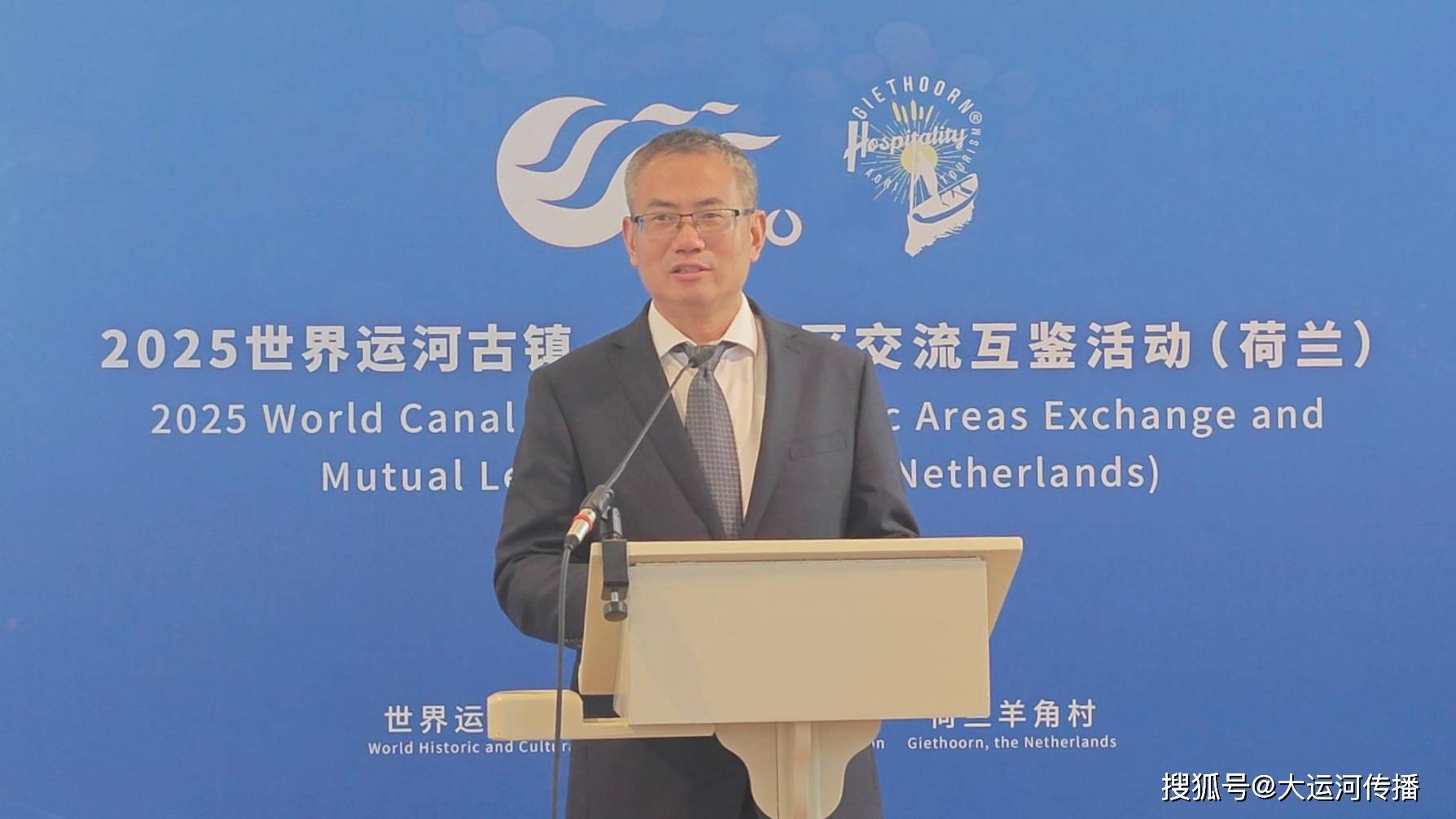
徐树强介绍,扬州与运河同生共长。发达的水运,成就了扬州千年“不夜城”的繁华。坐落于扬州主城区的瘦西湖风景区,游览面积1.68平方公里,不仅是扬州极具历史文化价值的瑰宝、“第一名片”,也代表着中国园林建造艺术高峰,是世界文化遗产大运河遗产点当中唯一一个景观遗产。
以运河之美融汇中外风情
尊敬的各位领导、各位嘉宾:
大家下午好!非常高兴来到有着“荷兰威尼斯”之称的美丽小镇羊角村,与大家共襄文旅盛举,共谱运河发展新篇。首先,我谨代表瘦西湖风景区对莅临本次活动的各位领导、各位来宾表示衷心的感谢!
扬州市位于长江与京杭大运河交汇处,拥有2500多年的建城史,既是唯一与中国古代大运河同生共长的原点城市,又是大运河保护与申遗的牵头城市。坐落于扬州主城区的瘦西湖风景区,游览面积1.68平方公里,不仅是扬州极具历史文化价值的瑰宝、“第一名片”,也代表着中国园林建造艺术高峰,是世界文化遗产大运河遗产点当中唯一一个景观遗产。
在这里,我们诚邀各位嘉宾、各位朋友到扬州、到瘦西湖来走走看看,让我们一起赏四季风光、寻历史文脉、品生活之趣,亲身感受“Find China in Yangzhou(扬州最中国)”的独特魅力。
让我们泛舟湖上,开启一段赏心悦目的自然之旅。瘦西湖是运河的支流,一个“瘦”字,恰到好处地点出它别具一格的神韵。瘦西湖的河道狭长,最宽处也不过数十米,两岸的景观临水而建,园林有大有小,建筑有聚有散,形成了统一连续的水上园林空间,宛如一幅徐徐展开的中国传统山水画长卷。可以说,瘦西湖是大运河进入中国南方地区后最能体现地域审美价值的文化景观。您乘坐游船穿梭其中,抬头看到的是天,低头看到的是碧绿的湖水,一步一景,移步换景,真正地做到回到历史、回归自然。
让我们漫步园林,开启一段穿越千年的文化之旅。扬州既是古运河的原点城市,也是隋唐的金融中心,更是历代文人墨客争相吟咏的胜地,承载着深厚的历史文化。大运河、盐商、诗词等文化元素熠熠生辉;扬派盆景、清曲、古琴等非遗经典,更是在这样的人文环境中孕育成长起来。游览于瘦西湖景区,您既可以在熙春台品味经典的扬州清曲、杖头木偶,领略扬州曲艺、技艺风采;也可以在扬派盆景博物馆观摩大师的盆景剪扎,欣赏“一寸三弯,枝无寸直”的妙趣;还能够在白塔晴云、美食街坊欣赏扬州剪纸、绒花、面塑等民间绝活,感受一场场传统文化与现代创意相结合的文化盛宴。
让我们追光逐影,开启一段如梦如幻的夜间之旅。扬州与运河同生共长。发达的水运,成就了扬州千年“不夜城”的繁华。瘦西湖“二分明月忆扬州”唐诗主题沉浸式夜游,将绚丽灯光与传统园林结合,让您在唯美的夜色中,领略别样的精彩与韵味。仰望天空,300架无人机在瘦西湖上空组成光影矩阵,重现出五亭桥、白塔等经典景点,空中光影与地面实景交相辉映,带来更加立体的视觉震撼;漫步园内,长达3.5公里的核心游览线上,随处可见科技光影与古装演艺,完美再现了传说中的大唐盛景;身着汉服,游览其中,与“李白”“杜牧”等唐代诗人对月和诗、吟经诵典,古诗词中“最中国”的意境与韵味跃然眼前。
最后,再次欢迎各位嘉宾、各位朋友来扬州做客,领略园林的诗意风光,探寻运河的悠长魅力,体验古城的历史风韵,我们在扬州等您来!
The Beauty of the Canal:
A Fusion of Chinese and Foreign Charms
Distinguished guests,
Good afternoon! It is a great pleasure to be here in the beautiful village of Giethoorn, known as the "Venice of the Netherlands," to join you in celebrating this grand cultural and tourism event and to explore new chapters in canal development. First of all, on behalf of the Slender West Lake Scenic Area, I would like to extend our heartfelt gratitude to all the guests present today.
Yangzhou is located at the confluence of the Yangtze River and the China Grand Canal, boasting a history of over 2,500 years. It is not only the origin city that grew alongside the ancient Grand Canal but also the leading city in application for the UNESCO World Heritage site. The Slender West Lake Scenic Area, situated in the heart of Yangzhou, covers 1.68 square kilometers. It is not only a treasure of immense historical and cultural value—Yangzhou's "top landmark"—but also represents the pinnacle of Chinese garden artistry. It is the only landscape heritage site among the Grand Canal's World Heritage sites.
Hereby, we sincerely invite all guests and friends to visit Yangzhou and the Slender West Lake. Let us admire the scenery of the four seasons, trace the threads of history, and savor the joys of life, experiencing firsthand the unique charm of "Find China in Yangzhou."
Let us embark on a boat ride and begin a delightful journey into nature.The Slender West Lake is a tributary of the Grand Canal, and the word "slender" perfectly captures its distinctive charm. The lake's waterways are narrow, with the widest point spanning only a few dozen meters. The landscapes along its banks are built close to the water, featuring gardens of varying sizes and structures that are both clustered and scattered, creating a unified and continuous waterside garden space—like an unfolding traditional Chinese landscape painting. It can be said that the Slender West Lake is the cultural landscape that best embodies the regional aesthetic values of the Grand Canal as it flows into southern China. As you glide through the lake on a boat, you’ll see the sky above and the emerald waters below, with every step offering a new view, truly transporting you back to history and nature.
Let us stroll through the gardens and begin a cultural journey through millennia. Yangzhou is not only the origin city of the ancient canal but also the financial center of the Sui and Tang dynasties, as well as a celebrated destination for literati and poets throughout history, carrying profound historical and cultural significance. Elements like the Grand Canal, salt merchants, and poetry shine brightly, while intangible cultural heritages such as Yangzhou-style bonsai, Qingqu opera, and guqin music have flourished in this rich cultural environment. At the Slender West Lake, you can enjoy classic Yangzhou Qingqu opera and rod puppetry at Xichun Terrace, appreciate the artistry of Yangzhou-style bonsai at the Bonsai Museum, and admire folk crafts like paper-cutting, velvet flowers, and dough figurines at White Pagoda in Clear Clouds and the Gourmet Street. Each experience is a cultural feast where tradition meets modern creativity.
Let us chase the light and shadows and begin a dreamlike nighttime journey. Yangzhou grew alongside the canal, and its thriving water transport made it a bustling "sleepless city" for millennia. The Slender West Lake’s "Moonlight Over Yangzhou" immersive night tour, themed around Tang poetry, combines dazzling lights with classical gardens, allowing you to experience its unique charm under the enchanting night sky. Look up, and you’ll see 300 drones forming a luminous matrix in the air, recreating iconic sights like the Five Pavilion Bridge and the White Pagoda, blending aerial light shows with ground scenery for a stunning visual spectacle. Stroll through the garden, and along the 3.5-kilometer core route, you’ll encounter a seamless fusion of technological light displays and Tang-era performances, vividly bringing the legendary splendor of the Tang Dynasty to life. Dressed in Hanfu, you can even recite poetry under the moon with "Li Bai" and "Du Mu," immersing yourself in the most quintessentially Chinese ambiance of classical verse.
Finally, we warmly welcome all guests and friends to visit Yangzhou, to admire the poetic beauty of its gardens, explore the enduring charm of the canal, and experience the historical elegance of this ancient city. We await your arrival in Yangzhou!
扬州市江都区邵伯镇人民政府镇长方学东
方学东介绍了大运河边上的一颗明珠——邵伯镇。他说,运河是人类改造和利用自然的伟大创举,是传承人类文明的不竭源泉,是促进古镇发展的重要动力。希望同羊角村等荷兰运河古镇加强合作,携手发展绿色运河、人文古镇,推动古镇可持续发展。
女士们、先生们:
我是中国江苏省扬州市江都区邵伯镇镇长方学东。今天,非常荣幸与大家齐聚美丽的运河小城羊角村,请容许我向大家介绍大运河边上的一颗明珠——邵伯镇。
邵伯镇位于大运河与长江、淮河两大水系交汇之处,总面积122.91平方公里,户籍人口近8万人,迄今已有1600多年的建镇历史。是世界文化遗产大运河重点保护区、中国历史文化名镇。
这里是运河遗产的保护典范。邵伯与扬州古城同龄,是中国历史文化名镇,邵伯明清运河故道、邵伯码头群、邵伯古堤、淮扬运河主线(邵伯段)等人文自然景观被列入大运河世界文化遗产保护名录,遗产点数量为大运河沿线各镇之最。邵伯古镇入选“长江百景”、扬州“运河十二景”之一,邵伯古镇景区获评国家4A级景区。
这里是运河水工的精华之地。邵伯缘水而建、因水而兴。自邗沟开凿到谢安筑埭治水直至当代航运复兴,留下了邵伯埭、邵伯船闸、自流灌溉渠等丰富的水工遗存,向世人展示着运河儿女适水、治水的人工智慧结晶。今天邵伯船闸依然是南北水上交通的中心枢纽,单日船舶通过量逾100万吨。
这里是运河水源的生态廊道。邵伯位于南水北调东线源头、江淮生态大走廊核心区,这里四水交错、五湖环绕。206平方公里的邵伯湖,景色优美,浩渺无际,素有“三十六陂帆落尽,只留一片好湖光”之美誉。渌洋湖,林涛起伏,鸟雀啁啾,是植物的王国,鸟类的天堂。
这里是运河美食的集聚天堂。邵伯美食,得邵伯湖水之鲜,融南北风味之特,集淮扬菜系之全,被中国烹饪协会授予“大运河美食文化传承基地”称号。“邵伯湖旅游龙虾节”享誉全国,“邵伯清水龙虾”获“中国名菜”称号;“邵伯绿菱”粉嫩爽口,为运河三宝之一,国家地理标志产品;邵伯香肠、牛肉、老鹅等特色小吃驰名四方,成为当地重点保护传承的非遗美食。
女士们、先生们:
运河是人类改造和利用自然的伟大创举,是传承人类文明的不竭源泉,是促进古镇发展的重要动力。我们希望同羊角村等荷兰运河古镇加强合作,携手发展绿色运河、人文古镇,推动古镇可持续发展。
在此,我们诚邀大家走进邵伯古镇,品尝运河美食,饱览水乡秀美风光,探寻运河精彩故事。
最后,预祝本次世界运河古镇合作机制论坛取得圆满成功!祝愿大家身体健康、工作顺利!
谢谢大家!
Gathering by the Canal, Sharing the Canal Dream
Ladies and gentlemen,
I am Fang Xuedong, Mayor of Shaobo Town, Jiangdu District, Yangzhou City, Jiangsu Province, China. Today, it is a great honor to gather with you in the beautiful canal town of Giethoorn and introduce to you a beautiful town along the Grand Canal—Shaobo.
Shaobo Town is located at the confluence of the Grand Canal, the Yangtze River, and the Huai River, covering a total area of 122.91 square kilometers with a registered population of nearly 80,000. With a history spanning over 1,600 years, it is a key protected area of the UNESCO World Heritage-listed Grand Canal and a renowned Chinese historical and cultural town.
Shaobo Town, is a model of canal heritage preservation. Shaobo, as ancient as Yangzhou itself, is a celebrated historical and cultural town. The Ming-Qing Dynasty canal course, Shaobo Wharf Complex, Shaobo Ancient Embankment, and the Huaiyang Canal (Shaobo Section) are all listed as part of the Grand Canal World Heritage, making Shaobo the town with the most heritage sites along the canal. It has been selected as one of the "Top 100 Scenic Spots Along the Yangtze River" and one of Yangzhou’s "Twelve Canal Landscapes," with its scenic area earning the prestigious national 4A rating.
In Shaobo Town, you will find the essence of canal engineering.Shaobo was built and thrived around water. From the excavation of the Han Ditch to Xie An’s water control projects and the revival of modern shipping, Shaobo has preserved remarkable hydraulic relics such as the Shaobo Dam, Shaobo Ship Lock, and gravity-fed irrigation channels, showcasing the wisdom of canal communities in adapting to and harnessing water. Today, the Shaobo Ship Lock remains a central hub for north-south waterway transport, handling over one million tons of cargo daily.
In Shaobo Town, you will experience the ecological corridor of the canal. Shaobo lies at the source of the eastern route of the South-to-North Water Diversion Project and the core of the Jianghuai Ecological Corridor, where four rivers intertwine and five lakes encircle. The vast 206-square-kilometer Shaobo Lake, with its breathtaking scenery, is praised as "where thirty-six sails fade into the horizon, leaving only the beauty of the lake." Luyang Lake, with its rustling forests and birdsong, is a kingdom of flora and a paradise for birds.
In Shaobo Town, we savor the culinary heaven of the canal. Shaobo cuisine, blessed with the freshness of Shaobo Lake, blends northern and southern flavors and represents the richness of Huaiyang cuisine. It has been honored as the "Grand Canal Culinary Heritage Base" by the China Cuisine Association. The "Shaobo Lake Lobster Festival" is renowned nationwide, with "Shaobo Clearwater Lobster" recognized as a "Chinese Famous Dish." The tender and crisp "Shaobo Green Water Chestnut" is one of the "Three Treasures of the Canal" and a national geographical indication product. Local delicacies like Shaobo sausages, beef, and braised goose are celebrated far and wide, becoming key protected intangible cultural heritage foods.
Ladies and gentlemen,
The canal is a magnificent feat of human ingenuity in transforming and utilizing nature, an endless source of civilization, and a vital force driving the development of ancient towns. We hope to strengthen cooperation with Dutch canal towns like Giethoorn to jointly promote green canals and cultural heritage, fostering sustainable development for these historic towns.
Here, we warmly invite you to visit Shaobo Town, to taste its canal delicacies, admire the picturesque water town scenery, and uncover the fascinating stories of the canal.
In closing, I wish the World Ancient Canal Towns Cooperation Mechanism Conference a complete success and everyone good health and great achievements in your work!
Thank you!
北京市通州区漷县镇榆林庄村委会主任郝洪恩
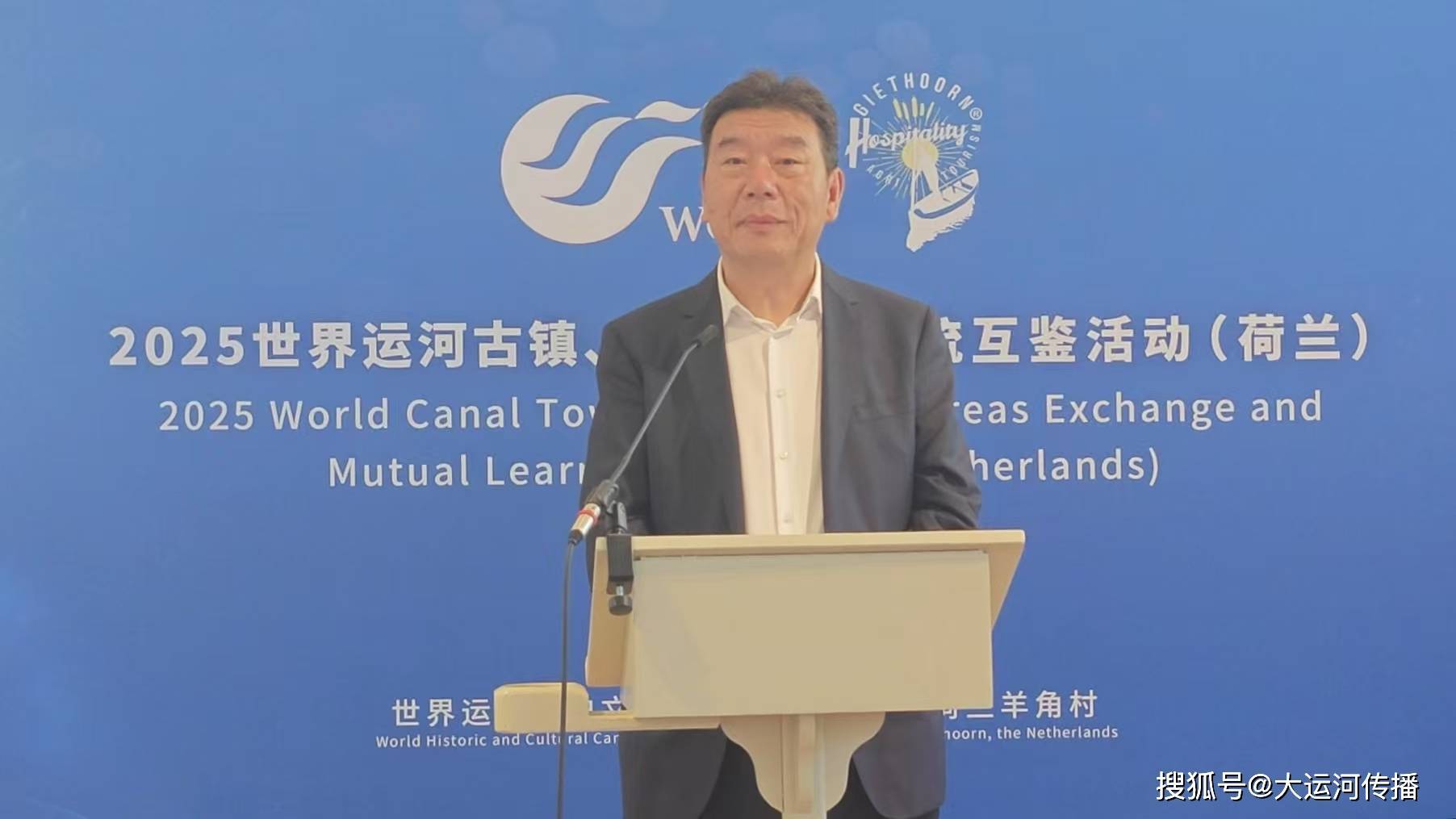
郝洪恩跟大家分享了漷县古镇与运河的故事。他提议,用“连接”缔结新同盟。建立“全球运河基因库”,保存各国传统工法DNA;设立“运河创客马拉松”,用AR技术复活古代水利场景;推广我们的“水质阶梯责任制”;开发跨国界“运河健康指数”评估系统等。
尊敬的各位嘉宾、女士们、先生们:
我是中国北京榆林庄村的村委会主任郝洪恩。
今天,我非常荣幸地向大家介绍我的家乡,北京市通州区漷县镇榆林庄村,跟大家分享漷县古镇与运河的故事,并以榆林庄为例,展示我们村是如何在现代社会中守护这份珍贵遗产的。
一、榆林庄北纬39°47'的文明印记
在京杭大运河1797公里的水脉上,榆林庄静静守望着北纬39°47'的坐标。
在榆林庄,不同年代的文物层层叠压在这片土地里。
如果你弯腰拾起一片明代的青花瓷片;那么,你脚下1.3米处还躺着元代的铁闸齿轮;9米深的土层中,战国榫卯正保持着完美的力学咬合;而11米深处的新石器陶片,正静静诉说着这片土地最初的文明曙光……
2023年,联合国教科文组织将这里誉为:"人类适应水环境的完整文明样本"。
二、六百年守护的家族传承
作为郝氏护堤家族的后代,族谱记载着,我的家族自明宣德年间(1426-1435)之前,便守护这段运河。
从我先祖郝大川在明朝宣德年之前受封"堤丞"一职开始,到我这辈至少已经传承了36代人,跨越600多年的历史长河。
而榆林庄的名字,从有文字记载以来,至今已经有730年的传承。
这份传承的延续性在历史文献中得到了充分印证:
从明朝的朱印到现代的监测系统,36代人的坚守让这份守护的承诺从未间断。
三、古今对话的生态智慧
1. 明代榆林防御阵法
在15世纪,榆林庄曾创造过独特的生物防洪体系——“榆林阵法”。
《漷县志•河防志》(万历二十三年/1595年)卷五载:"榆林庄堤植榆为阵,临水列三横,纵分五道,树八十丈一株,根络相勾连如罗网",一树可当十夫之力"。
2、天人合一的东方智慧:治水神器
十六世纪的治水神器,凝聚着天人合一的东方智慧。
金声玉振,道器相融。18.7cm铲头契合黄金分割,脊刻"疏而不伤"四字祖训。
如今,村民有了新的疏根铲,木把仍刻上了——“四时有序,疏而不伤”。
四、从家族契约到全民守护
1、守护运河不是选择而是我们的基因。
2、我们的"百年护河文牒"记载着:清代道光年间,村民自发订立"每户每年护堤三日"的乡约。
3、在榆林庄村,保护运河不仅是政府的责任,也是每一位村民的使命。
五、运河文明的全球对话(未来倡议)
我提议用三种“连接”缔结新同盟:
1、纵观古今
建立“全球运河基因库”,保存各国传统工法DNA。
设立“运河创客马拉松”,用AR技术复活古代水利场景。
2、连接上下游
推广我们的“水质阶梯责任制”。
开发跨国界“运河健康指数”评估系统。
3、连接人类与自然
六百年前,我的祖先在运河大堤上刻下一句话:“堤存则家在,榆茂则运长。”
今天我们将它化作跨国界的行动——
“丹青盘”——本盘取中国古代乾隆时期榆林治水古意,盘中榆树、榆钱取“余荫千秋”之吉寓。
今天,我以丹青重溯古法,以骨瓷为载体,融东方写意山水技法。祈愿东方生态智慧与欧洲水乡文明交相辉映,万古流长。
Distinguished Guests, Ladies and Gentlemen,
I am Hao Hong'en, Village Committee Director of Yulin Village in Beijing, China.
Today, it is my great honor to introduce my hometown—Yulin Village, Huoxian Town, Tongzhou District, Beijing—and share with you the story of the ancient Huoxian Town and the Grand Canal. Through Yulin Village, I will showcase how we preserve this precious heritage in the modern world.
I. The Imprint of Civilization at 39°47' N
Along the 1,797-kilometer Beijing-Hangzhou Grand Canal, Yulin Village quietly stands at 39°47' north latitude.
Beneath its soil, artifacts from different eras are layered like pages of history:
Pick up a Ming Dynasty blue-and-white porcelain shard, and beneath your feet at 1.3 meters lies a Yuan Dynasty iron lock gear.
At 9 meters deep, Warring States-era mortise-and-tenon joints remain perfectly interlocked.
And at 11 meters, Neolithic pottery fragments whisper of this land’s earliest dawn of civilization.
In 2023, UNESCO recognized this site as "a complete civilizational model of human adaptation to aquatic environments."
II. Six Centuries of Guardianship: A Family Legacy
As a descendant of the Hao family, our genealogy records that we have protected this stretch of the canal since before the Ming Xuande era (1426–1435).
From my ancestor Hao Dachuan, appointed "Dike Officer" in the Ming Dynasty, to my generation, this duty has passed unbroken through 36 generations—over 600 years. The name "Yulin Village" itself has endured for 730 years.
Historical records affirm this continuity:
From Ming-era vermilion seals to modern monitoring systems, 36 generations have stood as unwavering guardians of this sacred trust.
III. Ecological Wisdom: A Dialogue Across Time
1. The Ming Dynasty "Elm Defense Matrix"
In the 15th century, Yulin Village devised a unique biological flood-control system—the "Elm Matrix."
The Huoxian County Annals (1595) record:
"Yulin’s dikes plant elms in formation—by the water stand three beams, splitting the flow into five paths, spaced 80 zhang apart. Their roots interlock like nets, each tree equal to ten laborers’ strength."
2. Harmony of Nature and Humanity: The Water-Harnessing Tool
A 16th-century engineering marvel embodies Eastern philosophy:
Its 18.7cm spade follows the golden ratio, engraved with the ancestral motto: "Dredge Without Harm."
Today, villagers still use modern versions of this tool, its wooden handle inscribed: "Follow the Seasons, Dredge Without Harm."
IV. From Family Duty to Collective Guardianship
Protecting the canal is not a choice—it’s in our DNA.
Our "Century-Old Canal Pact" documents a Qing Dynasty (1820s) village covenant: "Each household guards the dike for three days yearly."
In Yulin, canal preservation is both a government mandate and every villager’s mission.
V. A Global Dialogue for Canal Civilization (Future Initiatives)
I propose three bridges to forge new alliances:
1. Bridging Past and Present
Create a “Global Canal Gene Bank” to preserve traditional engineering DNA.
Launch a “Canal Maker Marathon”, using AR to revive ancient hydraulic feats.
2. Linking Upstream and Downstream
Promote our “Water Quality Stewardship Ladder” system.
Develop a transnational “Canal Health Index.”
3. Uniting Humanity and Nature
Six centuries ago, my ancestors carved on the dike:
"While the dike stands, our home endures; while elms flourish, fortune lasts."
Today, we transform this into transboundary action:
The "Danqing Plate"—crafted in bone china, painted with Qing Dynasty techniques—depicts elms and seeds, symbolizing "legacies for millennia."
May Eastern ecological wisdom and European water-town heritage shine together for eternity.
比利时布瑞市代表马萨尔·玛格
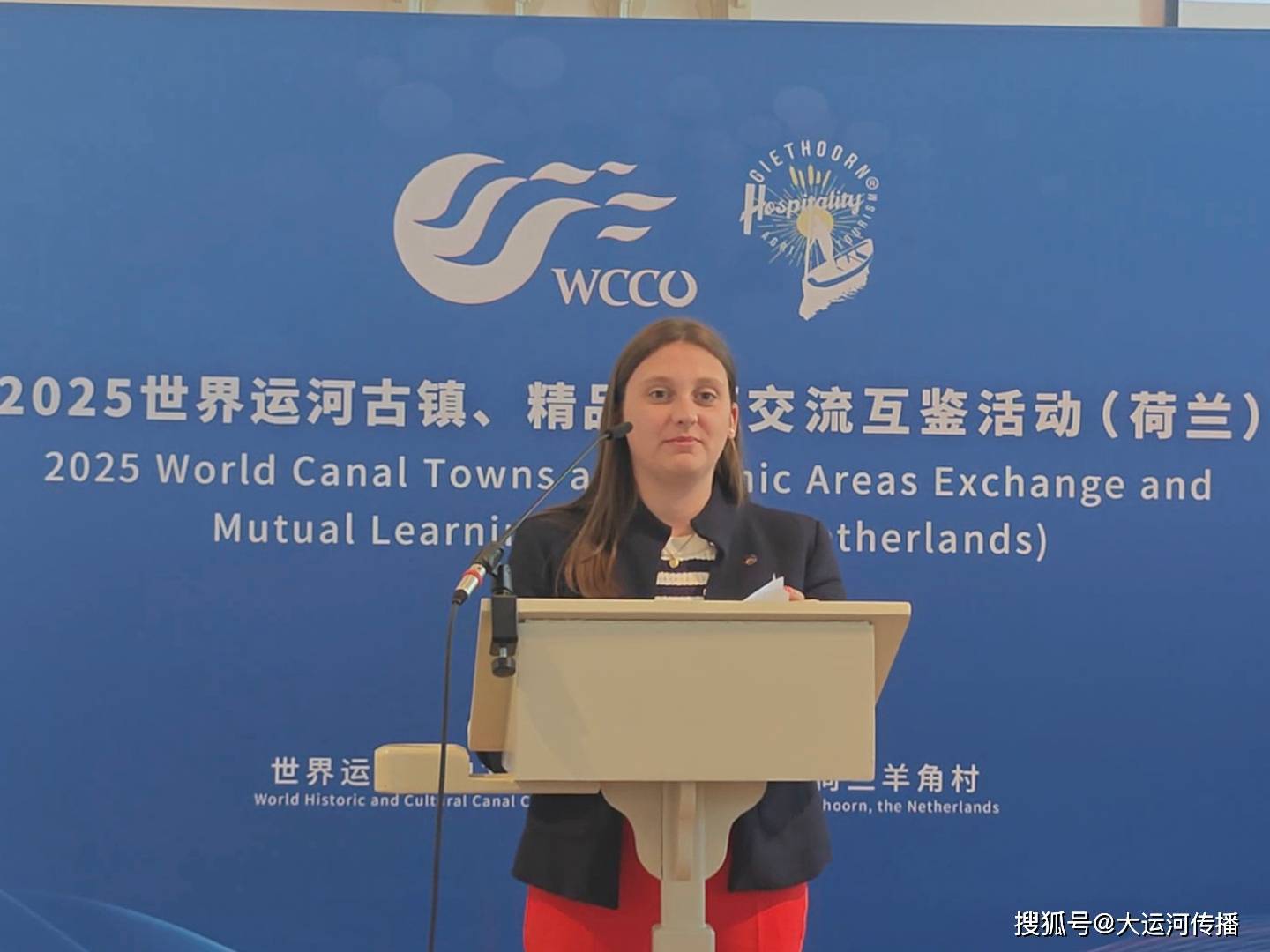
她表示,扬州大运河作为活态遗产,运送的不仅是货物,更是思想、诗篇与传说;林堡的水道虽静默,却是欧洲河轮旅游网的重要节点。在慢旅行时代,运河正成为探索世界的全新路径。试想一个“双城运河”计划:联合展览、数字叙事、生态游线路……这不仅能推广城市品牌,更将启迪世界珍视遗产、践行深度旅游。
Ladies and gentlemen, distinguished guests, dear friends,
My name is Margaux Massaux, and I speak today on behalf of my grandfather, Mr. Guy Hallet, who is here with us. Throughout my life, I’ve witnessed him forge strong ties with China—building bridges between Limburg, Yangzhou, and the People’s Republic.
To unite cultures and shape the future through the youth of our peoples: these are, in my eyes, the twin pillars of this conference.
It is an immense honor to address this partnership that transcends borders and cultures, steadfastly focused on the future.
I speak, of course, of the flourishing ties between Yangzhou—a historic city along China’s 1,794-kilometer Grand Canal, the world’s longest—and the dynamic cities of Limburg, Belgium. Let us also acknowledge the unwavering support of former mayors like our friend Jaak Gabriels (Bree), Jan Creemers (Maaseik), and Theo Schuurmans (Hamont-Achel).
Though separated by geography, our cities share common values: a deep respect for heritage and a joint vision of sustainable development for the well-being of our citizens.
Intercultural Cooperation: Learning from One Another
At the heart of this partnership lies intercultural exchange. In an interconnected world, such dialogue is not just valuable—it is essential.
Yangzhou, with over 2,500 years of history, embodies resilience and cultural richness. As a commercial hub along the Grand Canal, its legacy reflects openness and innovation.
Belgian cities, though smaller, take pride in their medieval roots while embracing modernity—preserving Limburg’s unique charm.
Through student exchanges, artistic collaborations, festivals, and city dialogues, we celebrate differences and discover common ground. A calligraphy exhibition in Bree, inspired by Yangzhou’s masters, is as meaningful as a tennis festival in Yangzhou, fueled by Limburg’s passion for the sport (thanks to champion Kim Clijsters).
This cooperation teaches future generations that global citizenship begins with curiosity, respect, and open dialogue.
Sustainable Development: A Shared Commitment
Yet friendship alone is not enough. Our cities must collaborate for a sustainable future—a moral duty and a practical necessity.
Yangzhou has made remarkable strides: restoring wetlands, reducing canal pollution, and integrating sustainability into urban planning. Limburg, too, leads in renewable energy, green mobility, and circular economies—proving even small towns can drive change.
By sharing best practices—in water management, ecotourism, or public transport—we strengthen our partnership not through competition, but collaboration.
Remember: sustainability isn’t just about the environment. It’s about clean air, accessible culture, safety, and pride in where we live.
A Better Life: From Policies to People
Ultimately, our goal—whether through cultural exchange or green transitions—is to improve lives. This means centering policies on people: making cities more inclusive, green, and responsive.
The joy of discovery is another reward: tasting new flavors, learning traditions, and exchanging stories. We’re not just signing agreements—we’re building friendships, connecting schools, artists, entrepreneurs, and citizens.
This proves diplomacy isn’t just for governments. It’s the daily work of communities opening doors and working together.
Canals and Tourism: A Shared Opportunity
Our partnership shines in the intersection of canals and tourism. Yangzhou’s UNESCO-listed Grand Canal is a living monument to ingenuity and cultural exchange—carrying not just goods, but ideas, poetry, and stories.
Limburg’s waterways, though quieter, are part of Europe’s river tourism network. In an era of slow, sustainable travel, canals are pathways to exploration.
Imagine a joint “Twin Canals” project: exhibitions, digital storytelling, and eco-tourism packages linking Yangzhou and Bree. This wouldn’t just promote our cities—it would inspire global audiences to value heritage and mindful travel.
Conclusion: A Future-Focused Partnership
Ladies and gentlemen, the story of Yangzhou and Limburg is still being written.
What we’ve achieved so far—across cultures, priorities, and distances—shows the extraordinary power of local international friendship.
In a world often divided by conflict or misunderstanding, our cities choose dialogue. Faced with environmental challenges, we choose action. Amid uncertainty, we choose cooperation.
Let us keep building this bridge with open minds, sincere hearts, and the conviction that together, we can truly create a better life.
Thank you.
尊敬的各位来宾、朋友们:
我是玛格。今天,我代表我的祖父盖伊•哈列特先生发言。他此刻就在现场。我亲眼见证了他用毕生精力搭建林堡省、扬州与中国之间的桥梁。
以文化联结文明,以青年共创未来——这正是本次会议的两大使命。
能在此见证这一跨越国界与文化的未来之盟,我深感荣幸。
扬州,这座坐落在1794公里京杭大运河畔的千年古城,与比利时林堡的活力之城正谱写动人篇章。我们也要感谢布瑞市雅克•加布里埃尔斯、马塞克市扬•克里默斯、哈蒙特-阿赫尔市西奥•舒尔曼斯等前市长们的鼎力支持。
虽远隔山海,我们却共享对遗产的敬畏之心,共持造福市民的可持续发展愿景。
文明互鉴:见自己,见天地
这份合作的核心是文明对话。在这个互联时代,这样的交流不仅珍贵,更不可或缺。
扬州2500年的历史长卷里,写满坚韧与包容。作为运河商埠,它的基因中镌刻着开放与创新。比利时的城市虽小,却在中世纪底蕴与现代精神间找到平衡,守护着林堡的独特魅力。
从学生交流到艺术联展,从节庆互动到城市对话:布瑞的扬州书法展意义非凡,扬州以网球冠军克里斯特尔斯为灵感的体育节同样精彩。这些合作让下一代懂得:成为世界公民,始于好奇、尊重与真诚对话。
绿色发展:同舟共济的担当
但情谊之外,我们更需务实行动。扬州修复湿地、治理运河污染的经验令人赞叹;林堡在可再生能源、绿色交通等领域的探索同样值得分享。无论是治水智慧还是生态旅游,我们的合作从来不是竞赛,而是共生。
请记住:可持续发展不仅是环保,更是让市民呼吸清新空气、享受文化滋养、安居乐业的承诺。
美好生活:从政策到人心
归根结底,无论是文化交流还是绿色转型,目标只有一个:让生活更美好。这意味着政策必须以人为本——让城市更包容、更宜居、更懂民心。
发现的喜悦同样珍贵:品尝异国风味、学习古老技艺、分享人生故事。我们签署的不仅是协议,更是学校、艺术家、企业家和市民之间鲜活的纽带。这证明:外交不仅是政府的事,更是普通人推开一扇门、伸出友善之手的日常。
运河与旅游:共生的机遇
我们的合作在"运河+旅游"中熠熠生辉。扬州大运河作为活态遗产,运送的不仅是货物,更是思想、诗篇与传说;林堡的水道虽静默,却是欧洲河轮旅游网的重要节点。在慢旅行时代,运河正成为探索世界的全新路径。
试想一个"双城运河"计划:联合展览、数字叙事、生态游线路……这不仅能推广城市品牌,更将启迪世界珍视遗产、践行深度旅游。
结语:未来已来
诸位,扬州与林堡的故事仍在续写。
我们已用行动证明:即使文化不同、地域遥远,城市间的友谊依然能创造奇迹。在这个充满分歧的世界,我们选择对话;面对环境挑战,我们选择行动;身处不确定性中,我们选择携手。
让我们继续以开放的心态、赤诚的信念搭建这座桥梁——因为唯有同心同行,方能抵达更好的未来。
谢谢大家!
荷兰瓦赫宁根都市食品产业集群管理合伙人彼得·斯梅茨
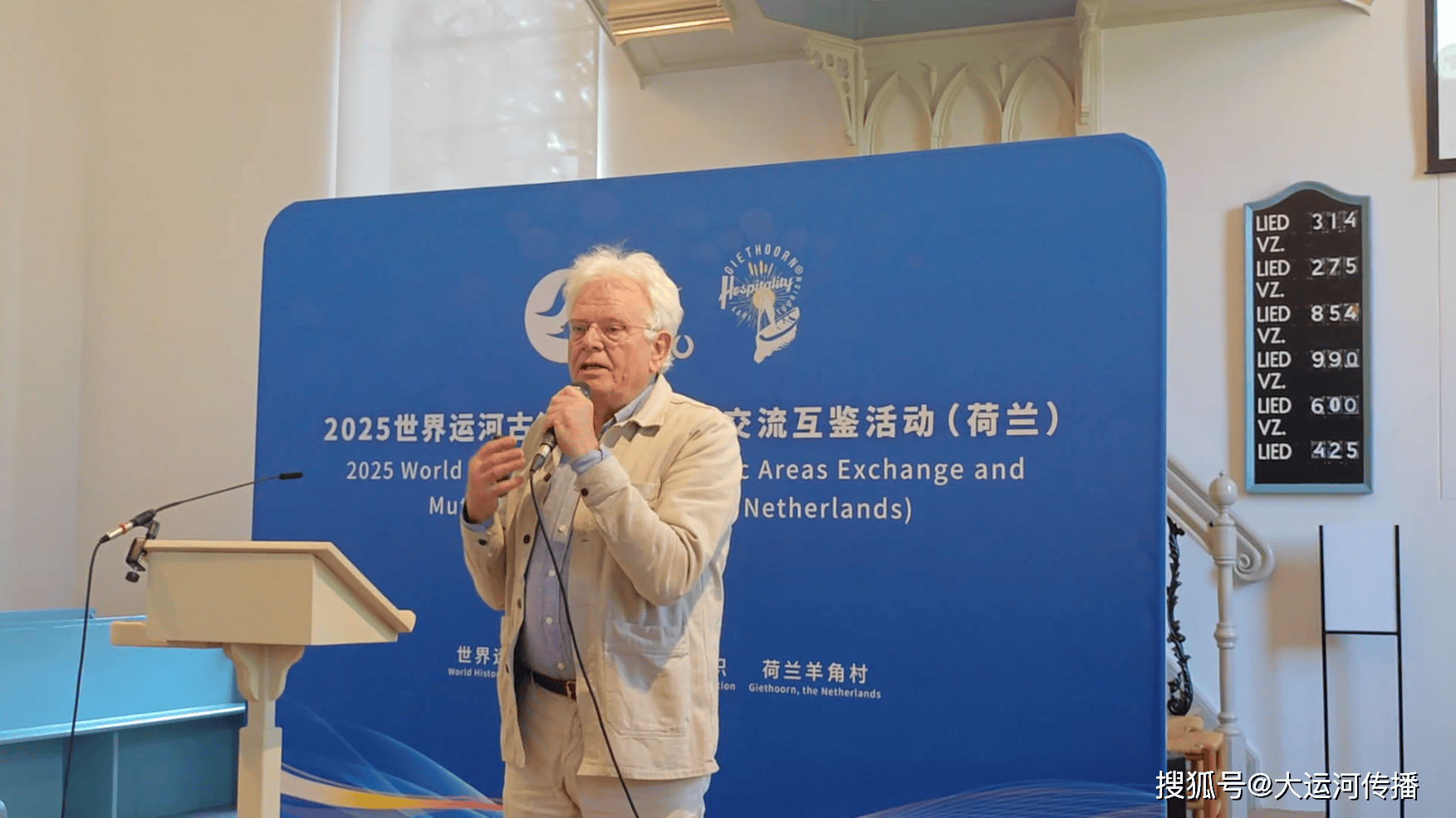
彼得•斯梅茨表示,运河不仅仅是水道,更是记忆、创造力与合作的血脉。正如河水滋养土地,知识交流滋养韧性。当地正在计划建设新运河或环湖工程,旨在解决生态问题,满足群众的日常生活需求等,打造新的运河文旅空间。
圆桌论坛
代尔夫特理工大学研究员、讲师法特玛·塔尼斯
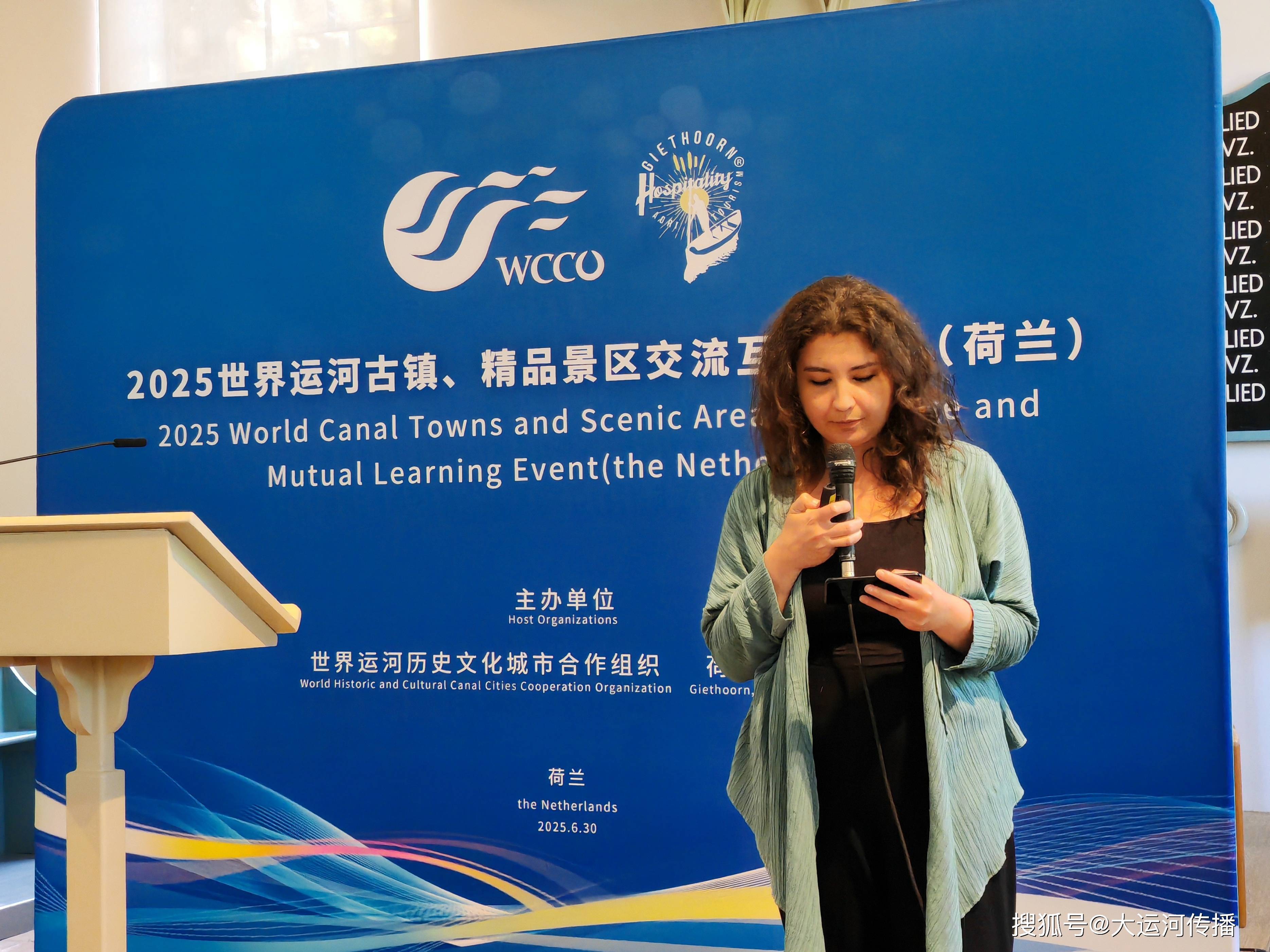
法特玛•塔尼斯分享,Recife城市公园以其城市河流改造计划应对海平面上升,开发相互连接的公园系统,将河流走廊融入城市肌理,提升城市韧性和宜居性。
代尔夫特理工大学在读博士、城市规划师哈迪·埃尔·哈吉
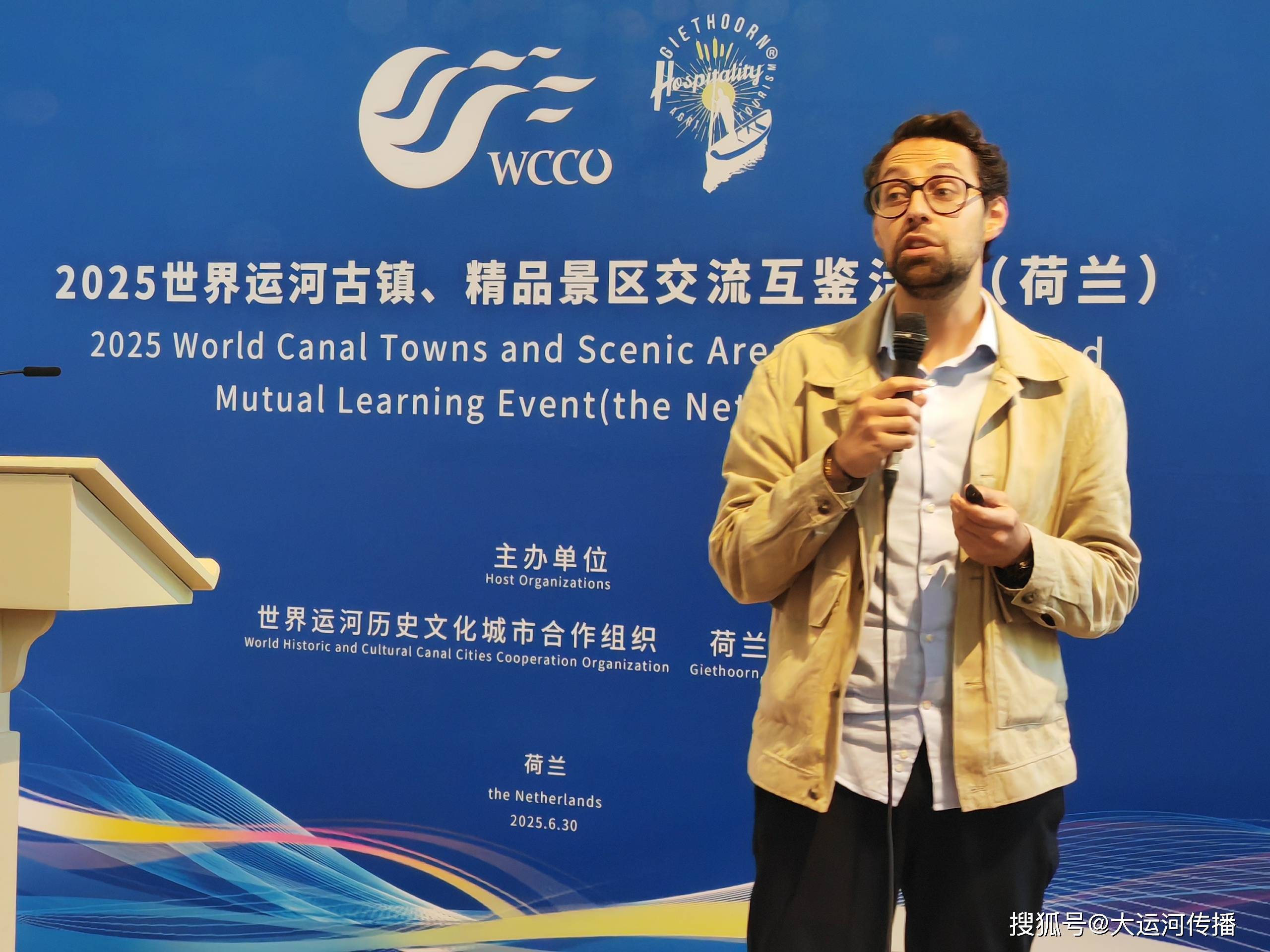
哈迪•埃尔•哈吉说,海牙通过建设相关合作平台,探索创新气候适应策略,重新构建城市与水域的关系。重点关注如何使水系统和城市肌理适应不可避免的气候变化影响,从而将其脆弱性转化为韧性。
UNESCO-IHE水教育学院建筑师米拉·阿韦拉尔·蒙特祖玛博士
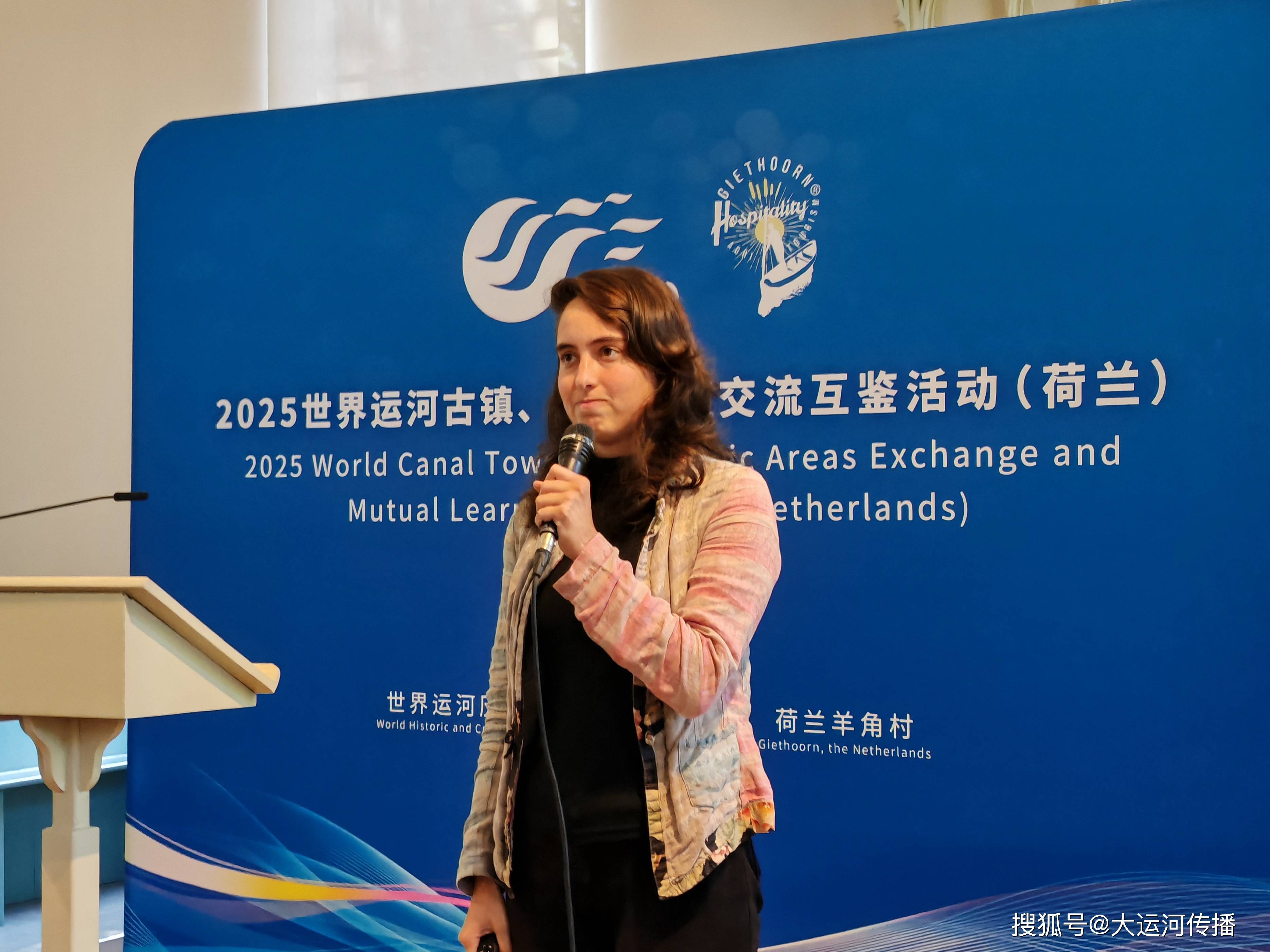
米拉•阿韦拉尔•蒙特祖玛表示,威尼斯作为一座与水共生的城市,始终在积极探索建设与水和谐共存的新未来。随着海平面上升和城市边缘的模糊,威尼斯既是一个警告,也是一个邀请——去想象与水共存的新未来,不仅是保护遗产,更是重新思考遗产。
第三阶段 项目签约 会旗交接
签约仪式
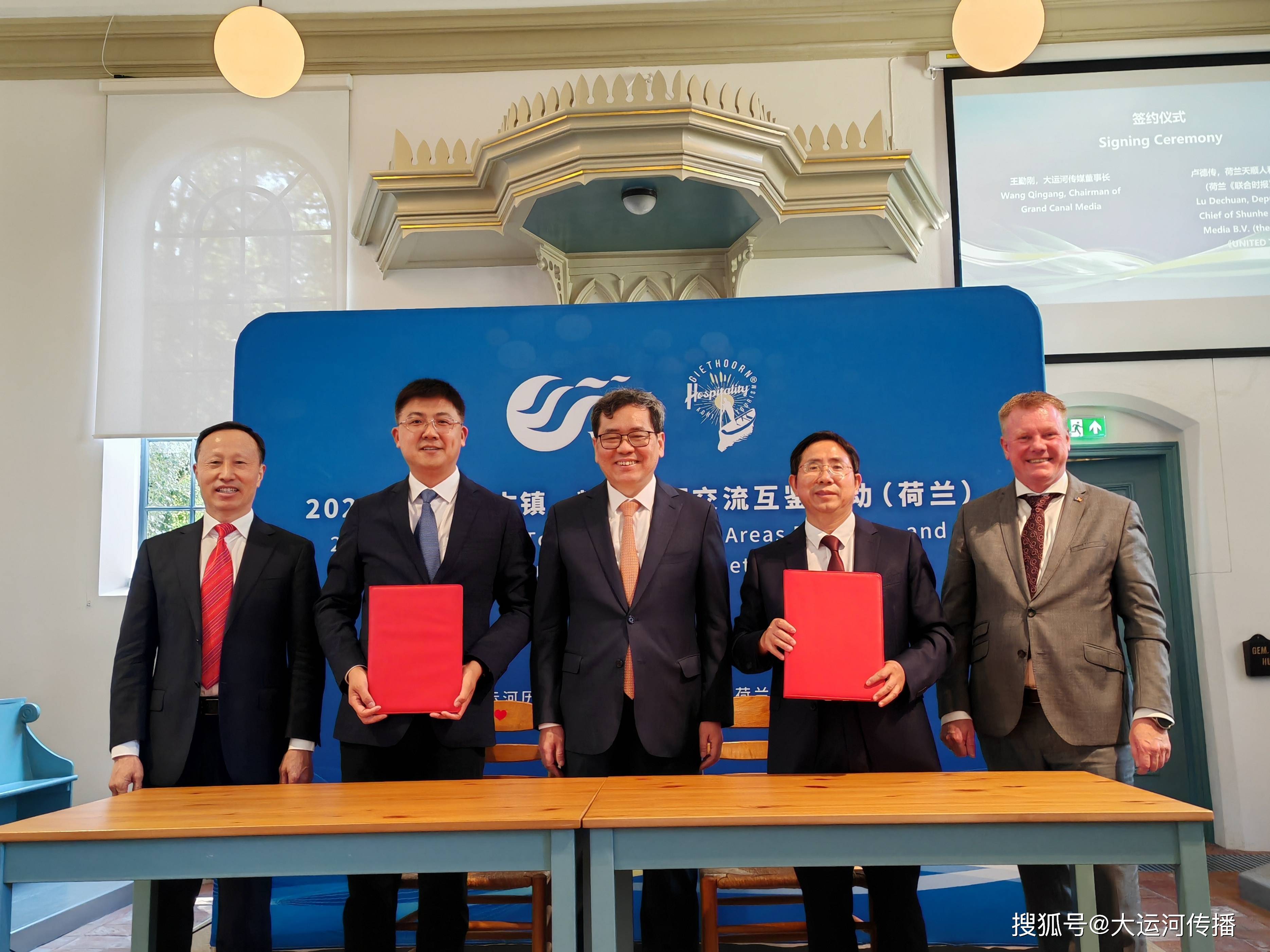
大运河传媒董事长王勤刚,与《荷兰联合时报》副总编卢德传签定战略合作协议,未来将围绕媒体内容生产、重大活动联动、经济文化交流、运河文化国际传播等方面携手共进。
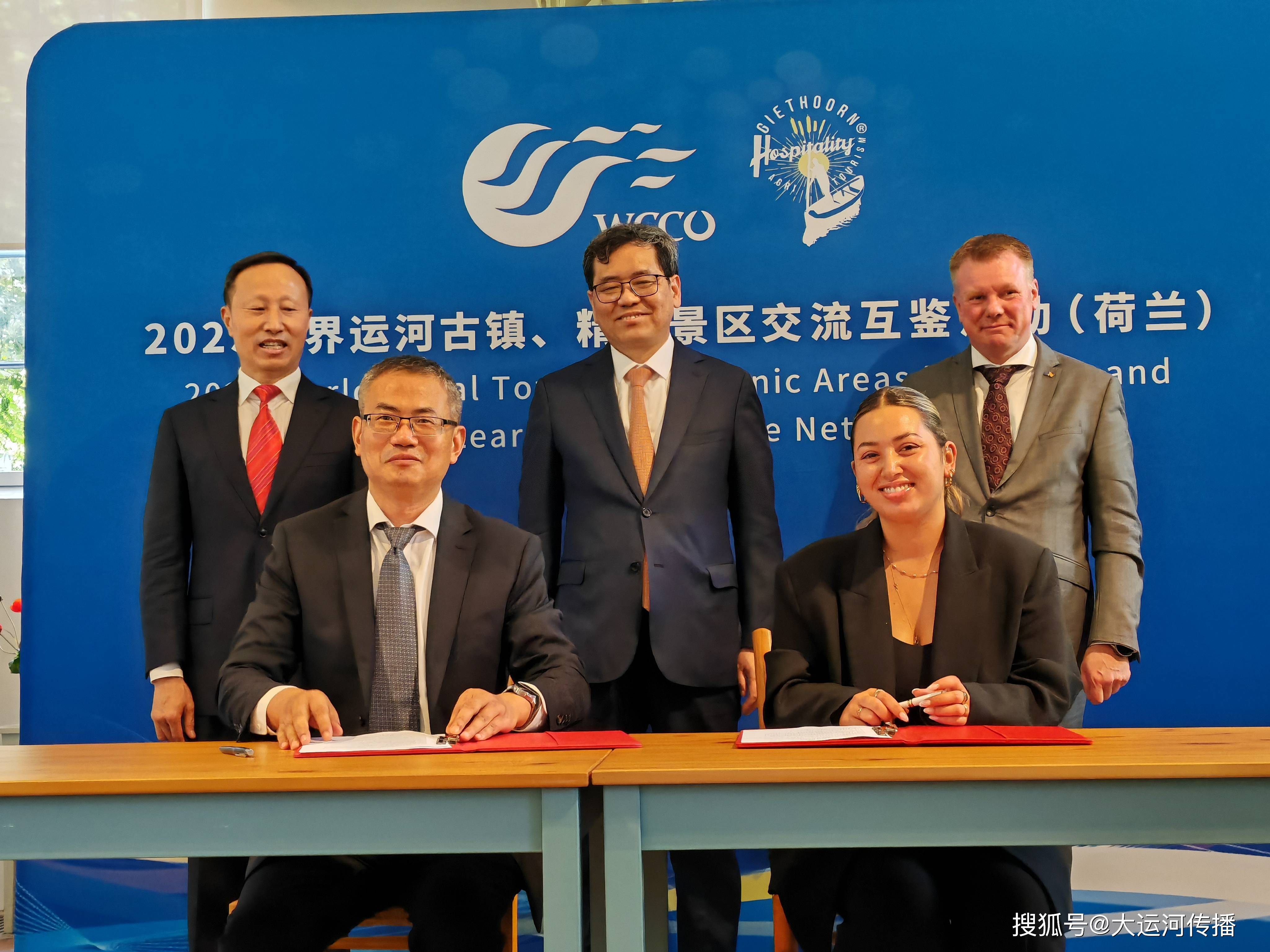
中国扬州瘦西湖风景区管理处主任徐树强和欧通集团商旅部经理艾瑞丝女士签约,为世界著名景区间的国际交流合作搭建新桥梁。
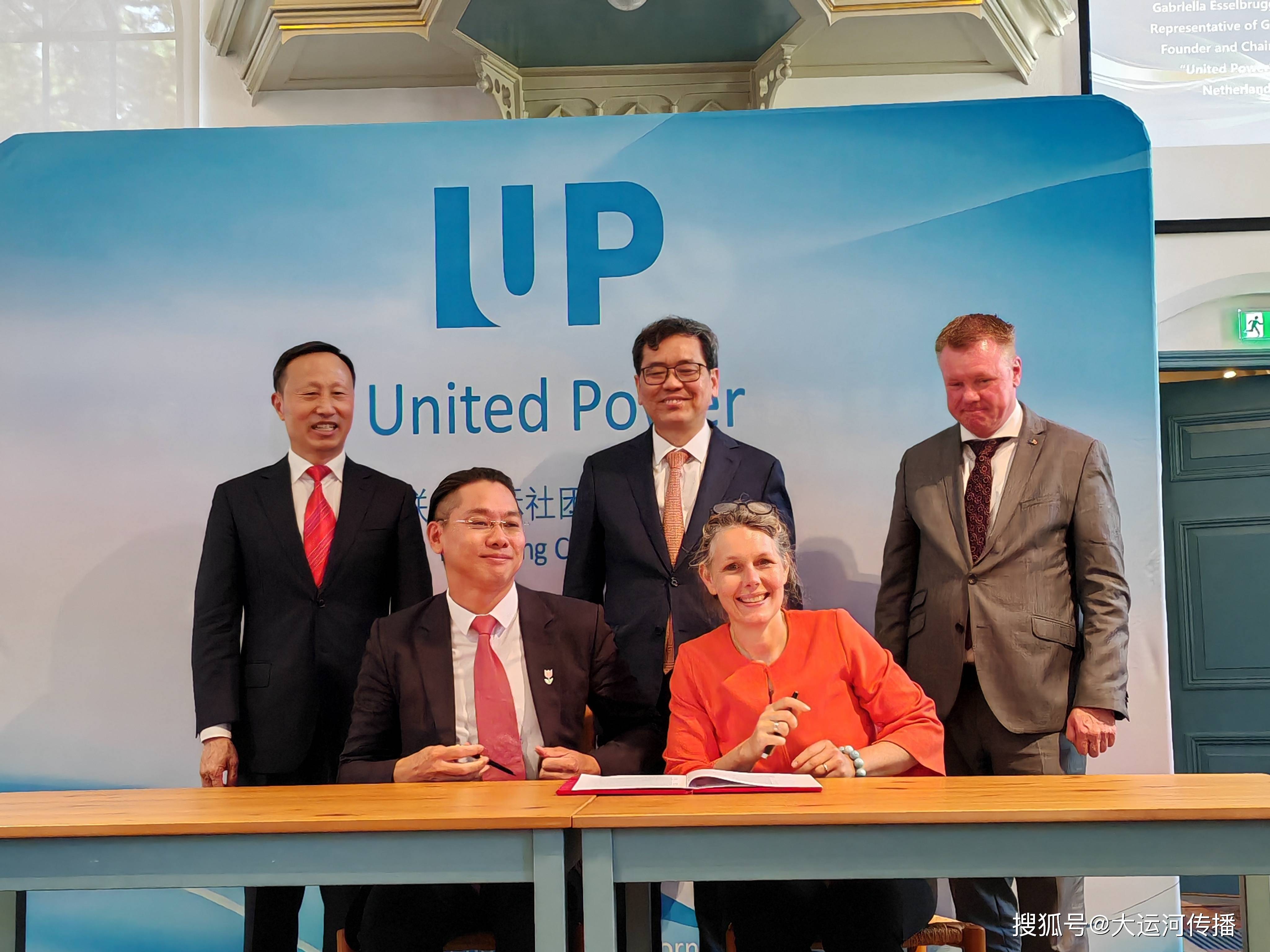
羊角村首席代表、顶力联合社团创始人及荷兰主席盖比·爱圣博格女士和顶力联合社团创始人及中国主席庄少峰签约,助力世界青年力量在运河领域的积极参与和贡献,为运河事业注入新鲜活力。
颁发证书 传递会旗
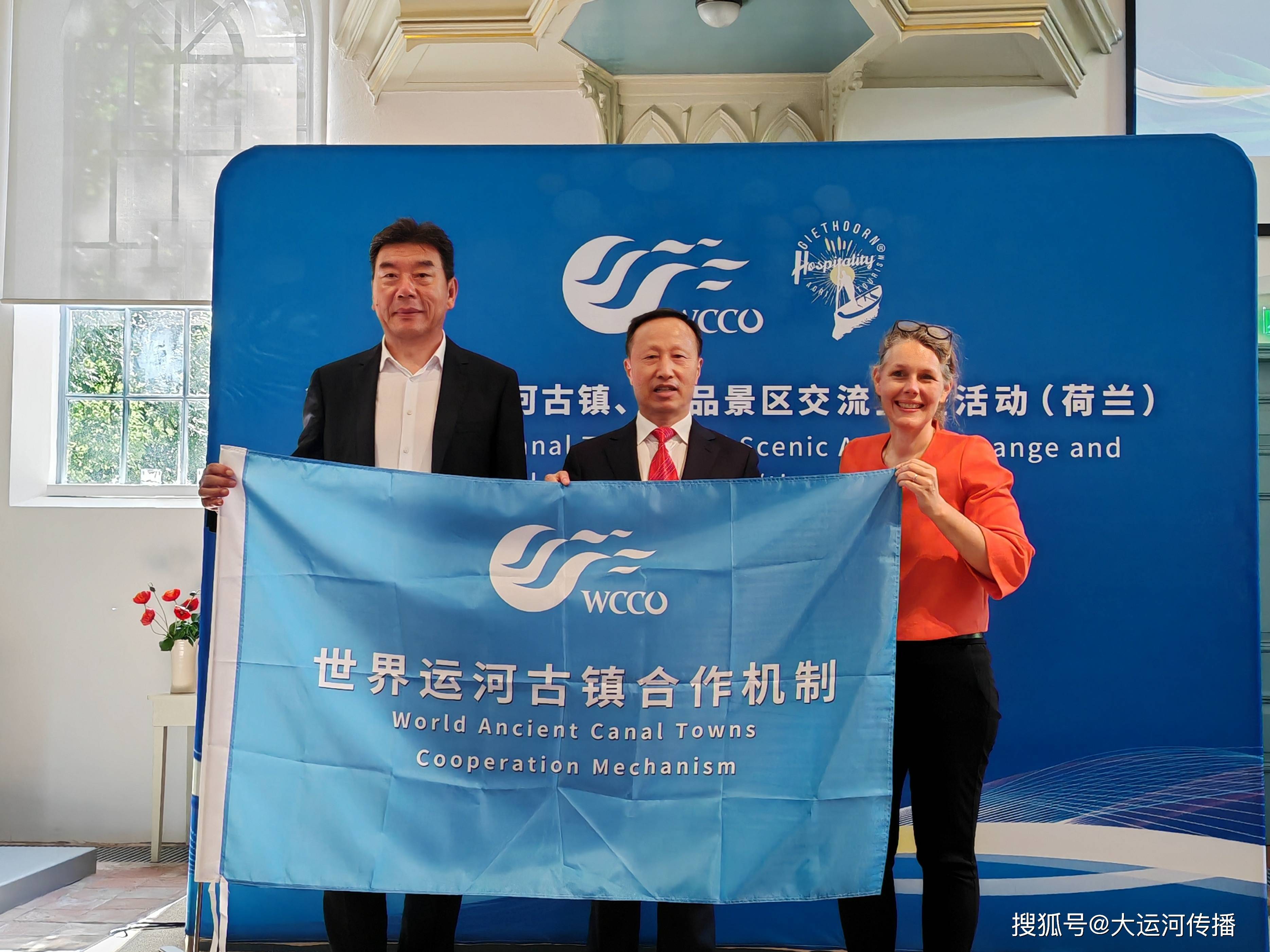
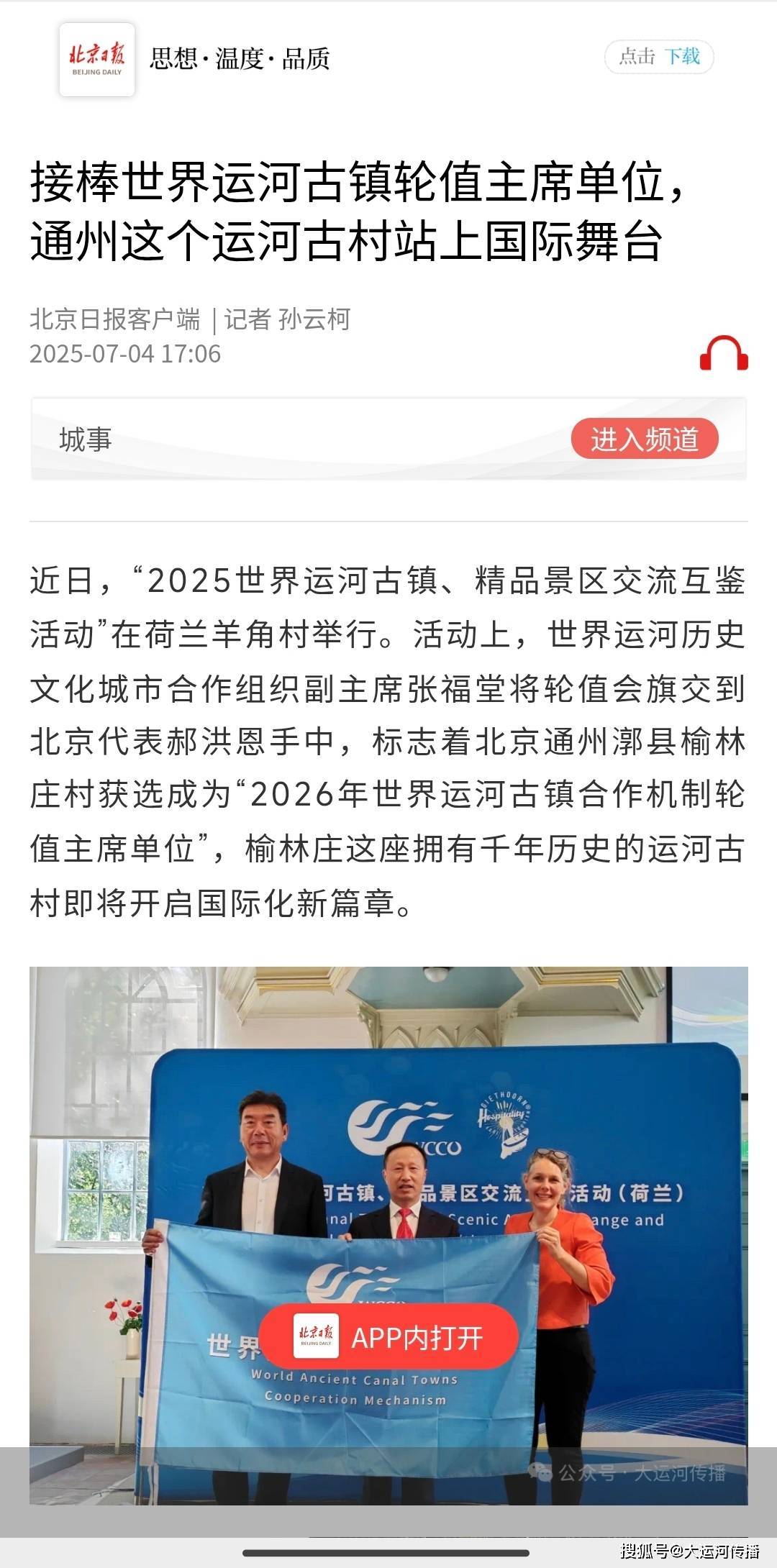
大会推选出新一届2026年世界运河古镇合作机制轮值主席单位北京通州漷县镇榆林庄,榆林庄将承办2026 年世界运河古镇会议。
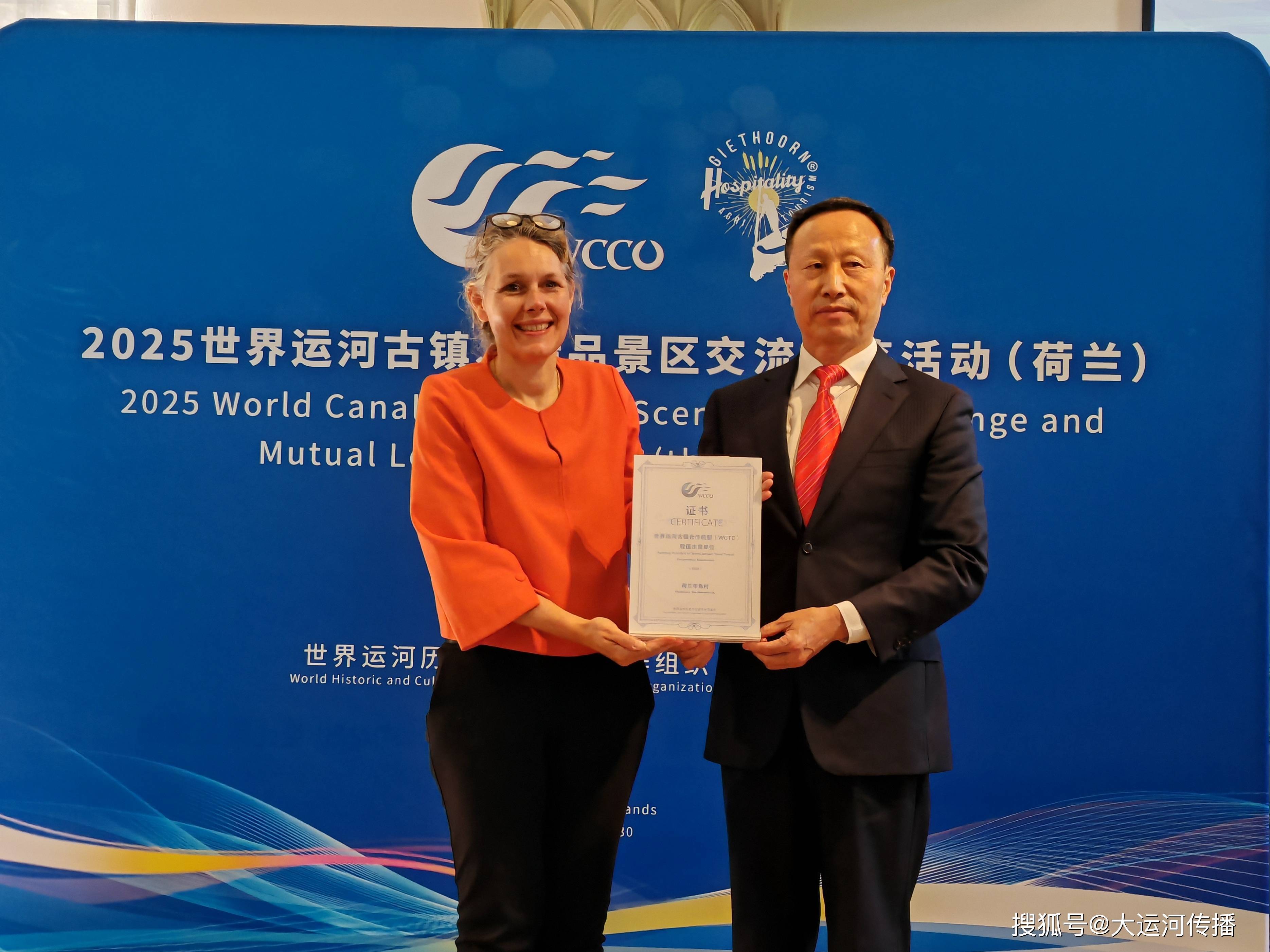
WCCO 副主席张福堂向羊角村首席代表盖比女士颁发 “2025 年世界运河古镇合作机制轮值主席”证书,接受盖比女士传回的世界运河古镇会议会旗,并向北京通州漷县镇榆林庄转授会旗。
大会接受两个新成员中国河北省衡水市衡水湖旅游景区、中国河南省新乡市宝泉旅游区加入运河城市精品景区合作机制。
WCCO副秘书长杨为民、平志明,代尔夫特理工大学朱恺奕博士共同主持了这场国际活动。
报道
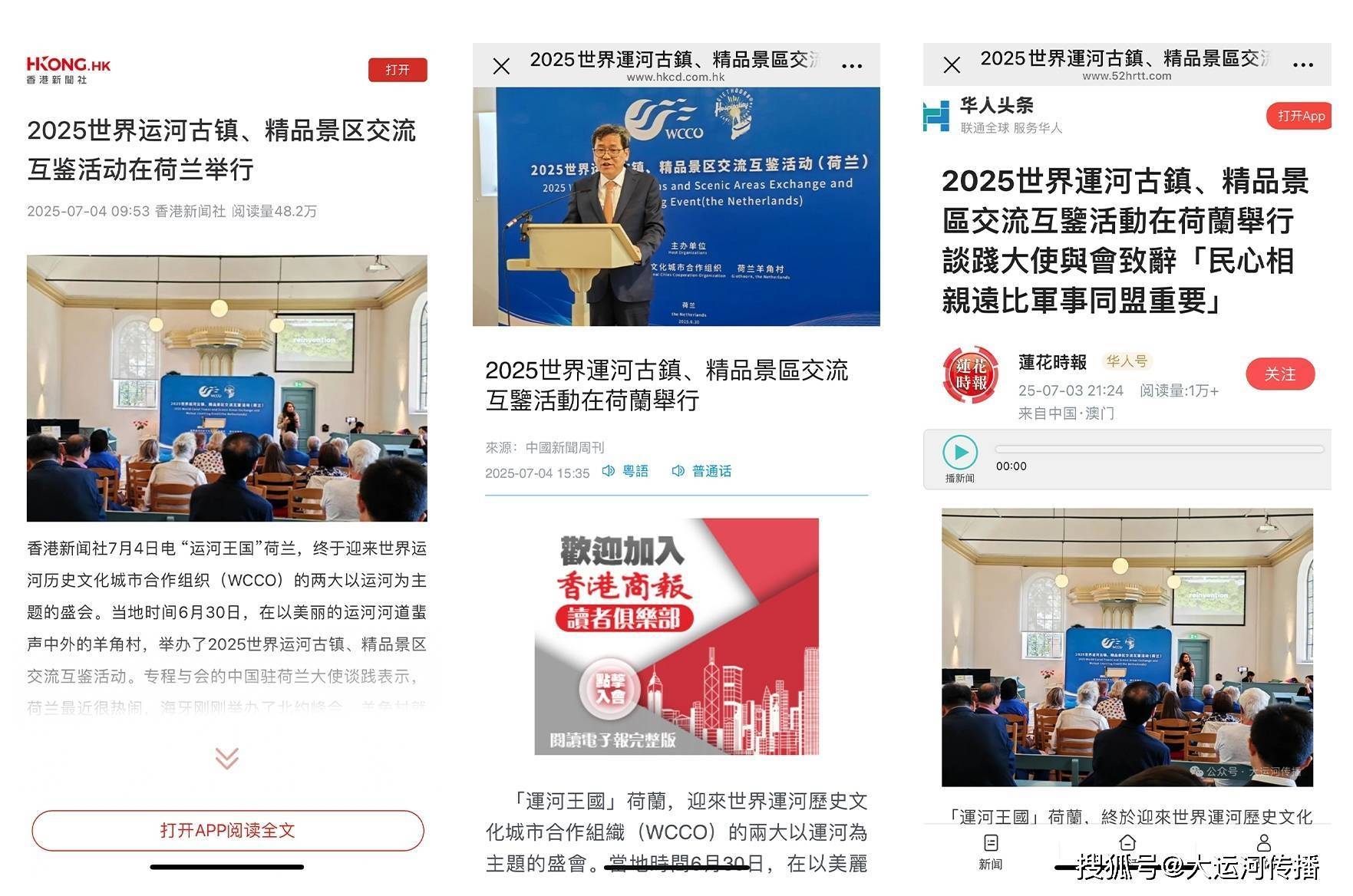
中国驻荷兰王国大使馆以及境外媒体、港澳媒体报道
中国驻荷兰王国大使馆
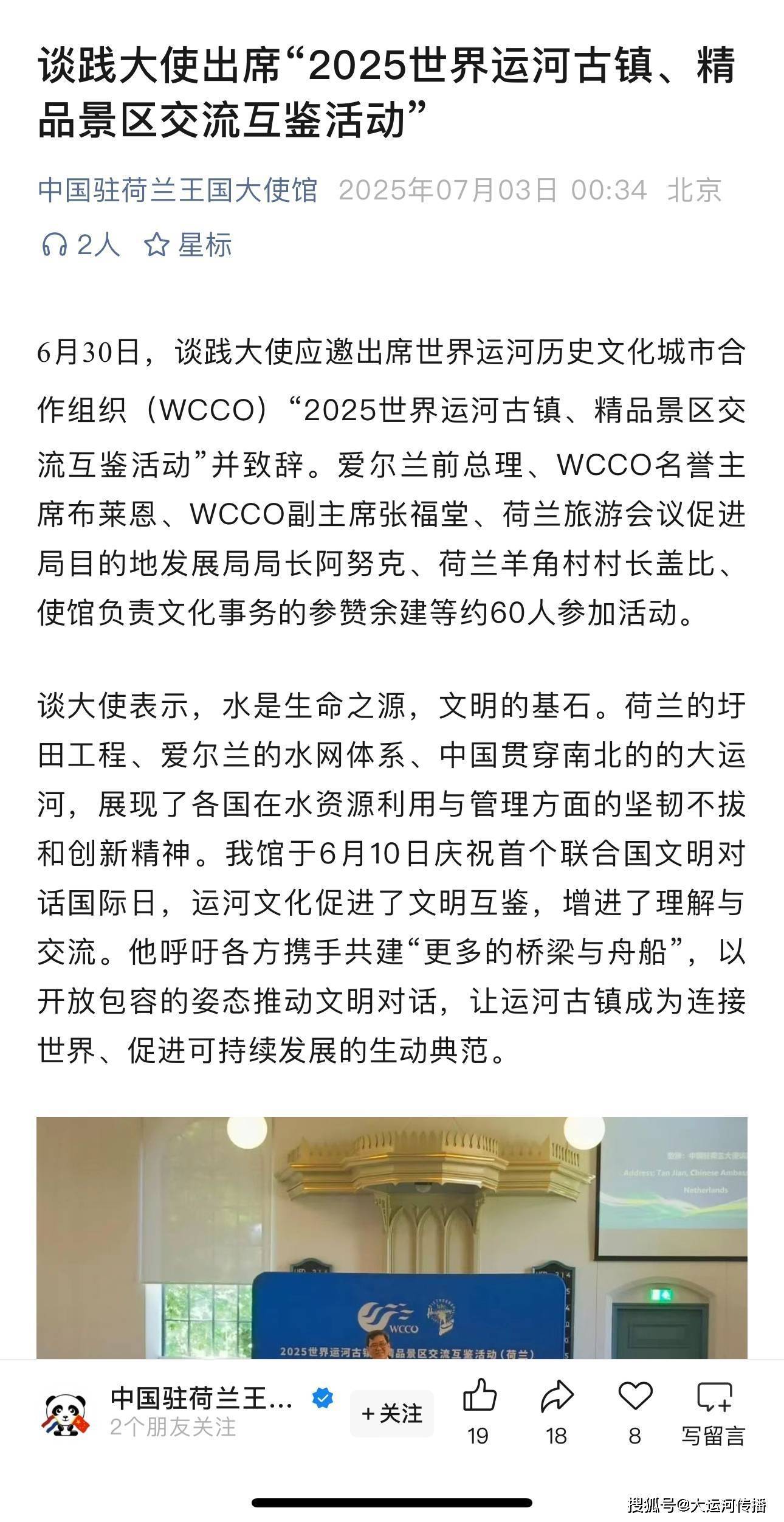
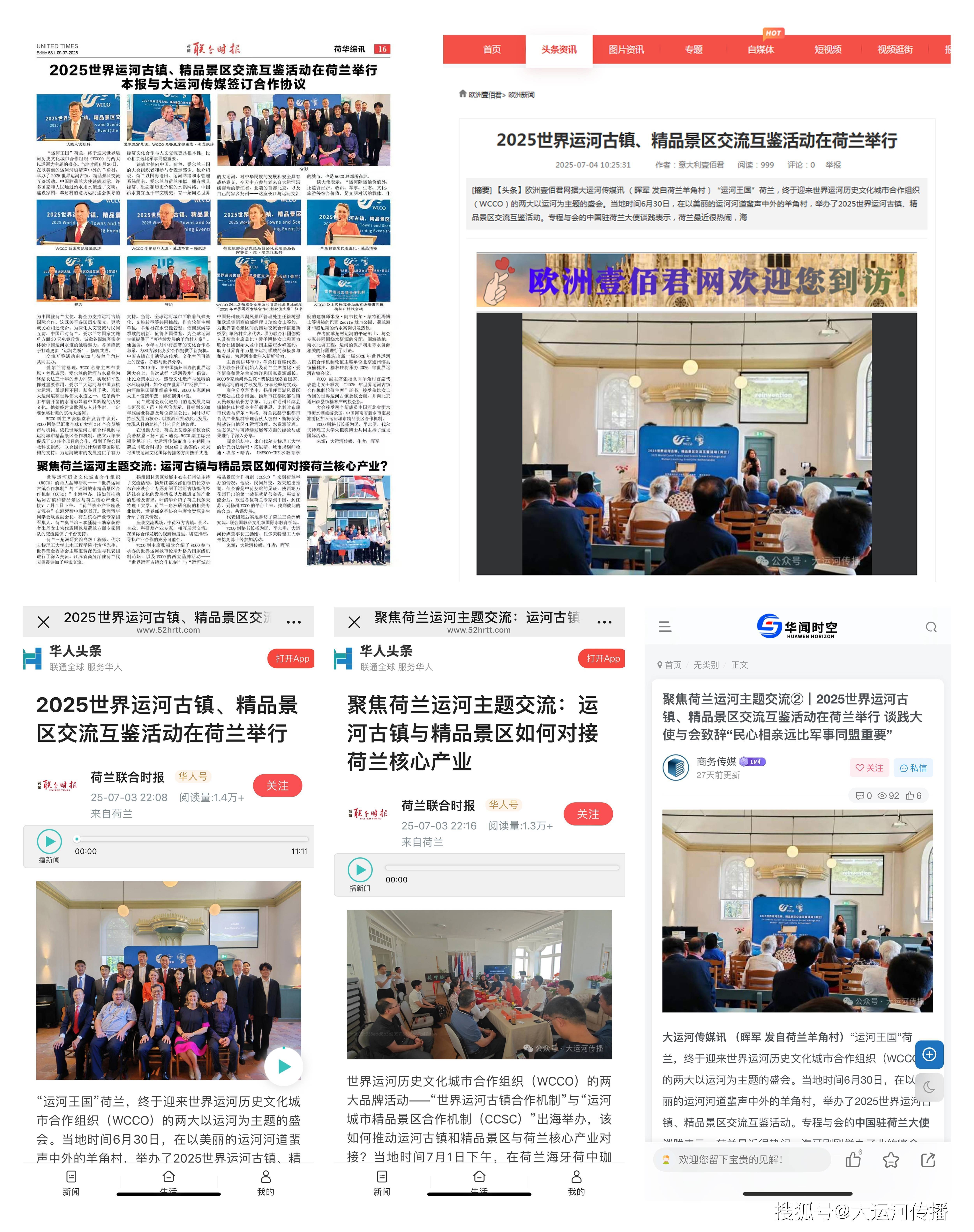
境外媒体:荷兰联合时报、美国华闻时空、意大利华文媒体欧洲壹佰君
港澳媒体:香港新闻社、香港商报、莲花时报
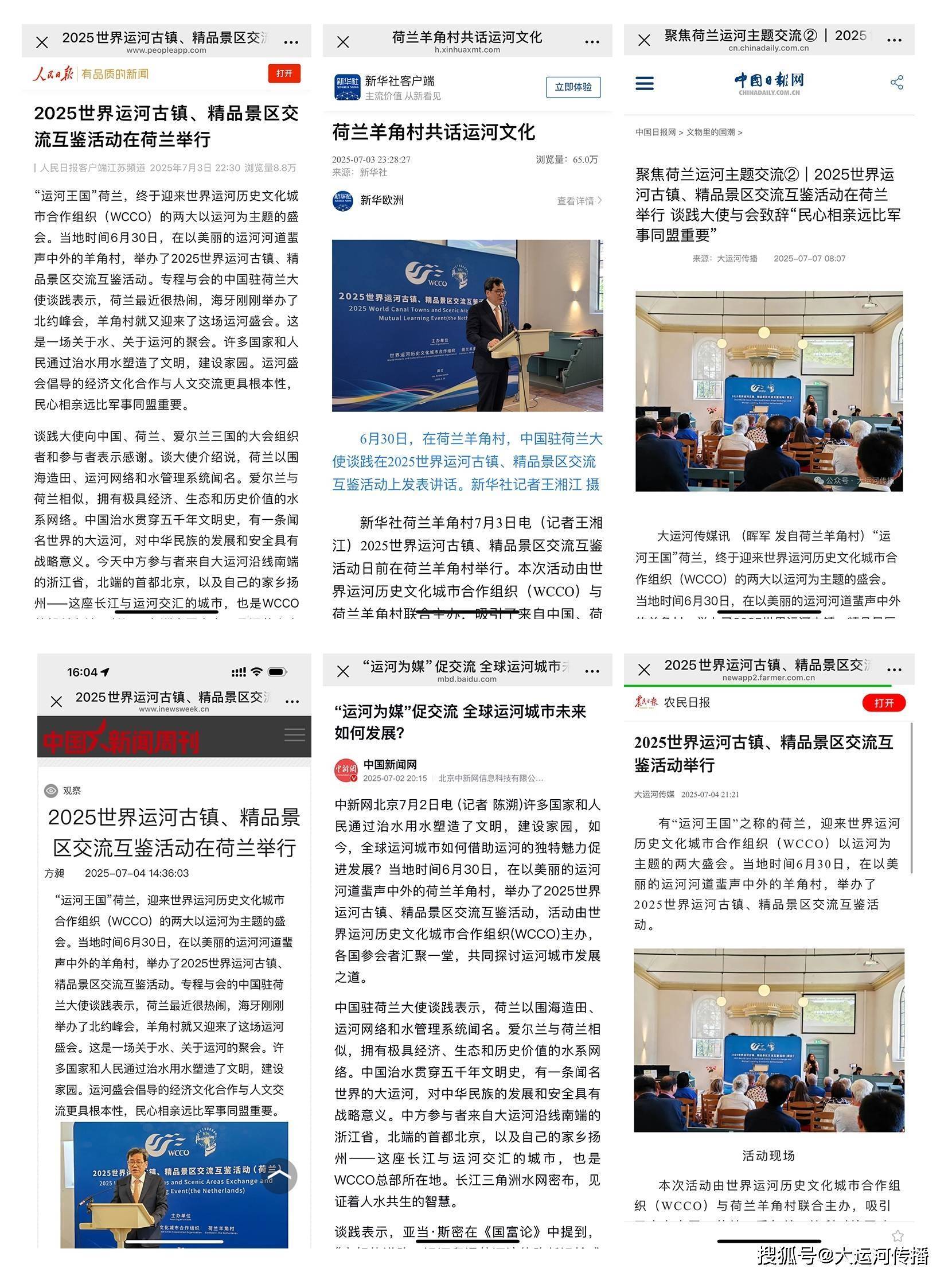
中央媒体报道
人民日报、新华社、央视频、中国日报、中国新闻社、中国新闻网、农民日报对大会进行现场直击:
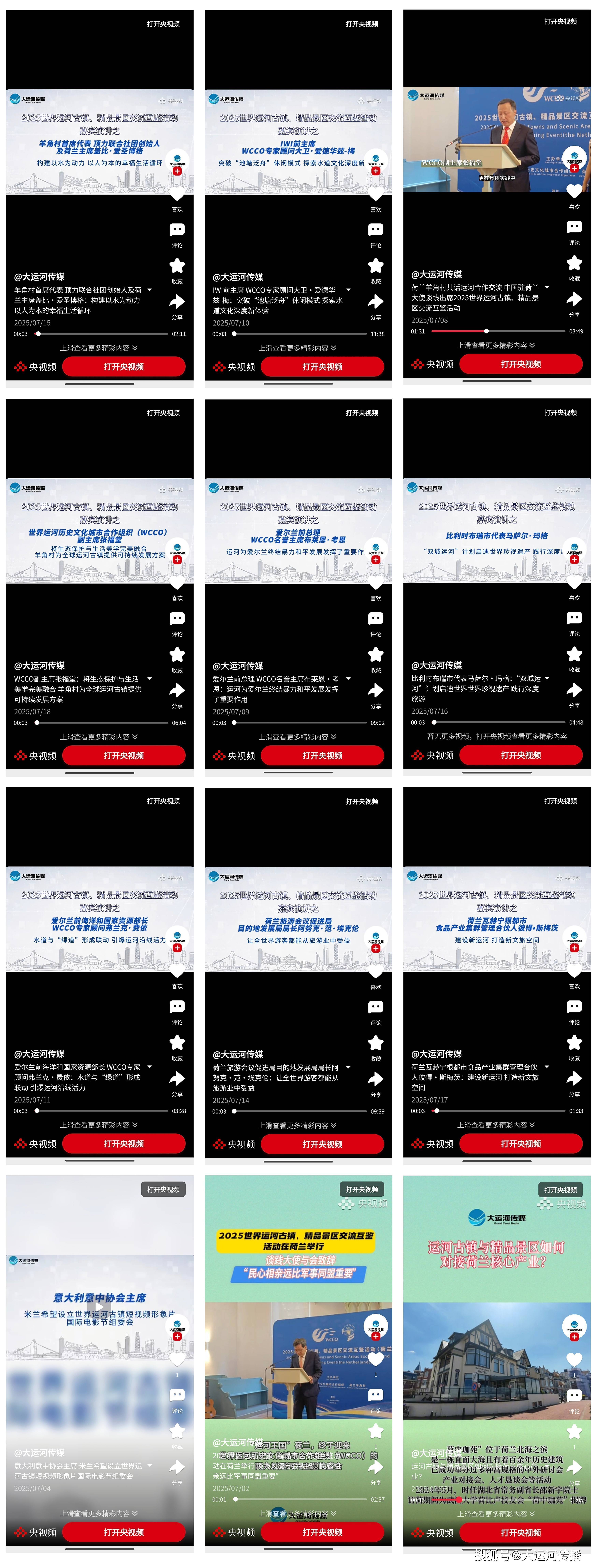
大运河传媒融媒体矩阵报道
大运河传媒作为WCCO的官方媒体平台,拥有多端融媒体矩阵,WCCO副秘书长、大运河传媒总编辑王晖军赴荷兰现场报道,以现场直播、视频、文图新闻等多形式对会议进行全方位报道。并陆续推出重要嘉宾访谈等内容。
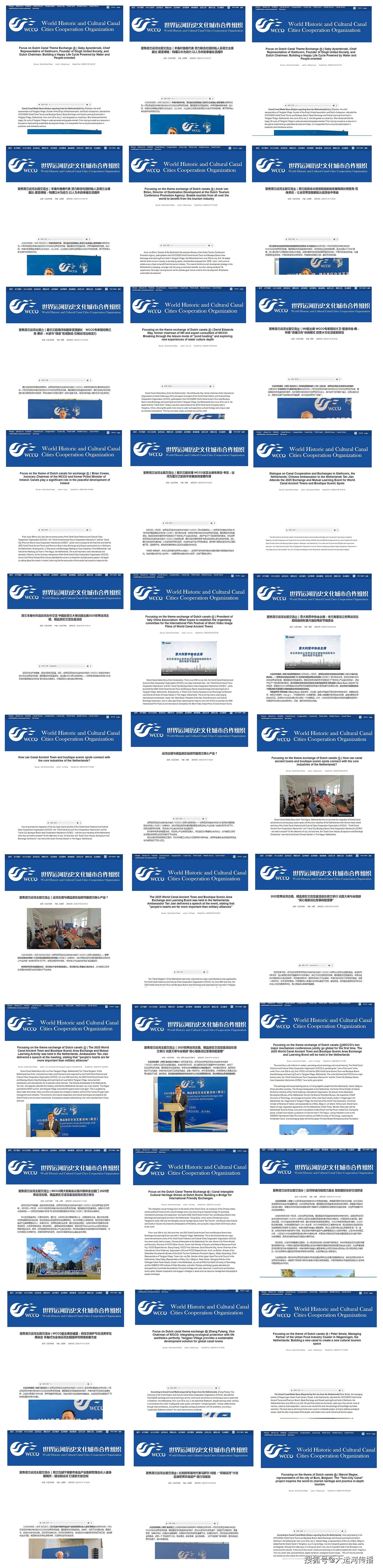
WCCO中英文网站、中英文客户端双语发布新闻:
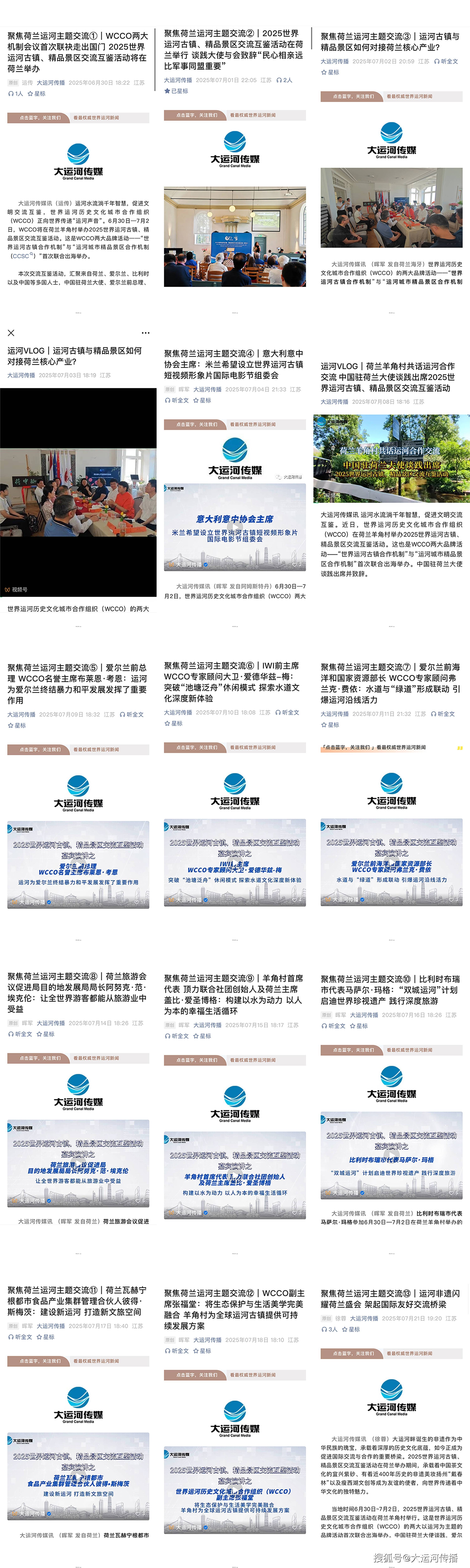
大运河传播微信公众号:
聚焦荷兰运河主题交流① | WCCO两大机制会议首次联袂走出国门 2025世界运河古镇、精品景区交流互鉴活动将在荷兰举办
聚焦荷兰运河主题交流②|2025世界运河古镇、精品景区交流互鉴活动在荷兰举行 谈践大使与会致辞“民心相亲远比军事同盟重要”
运河VLOG | 2025世界运河古镇、精品景区交流互鉴活动在荷兰举行 谈践大使与会致辞“民心相亲远比军事同盟重要”
聚焦荷兰运河主题交流③|运河古镇与精品景区如何对接荷兰核心产业?
运河VLOG |运河古镇与精品景区如何对接荷兰核心产业?
聚焦荷兰运河主题交流④|意大利意中协会主席:米兰希望设立世界运河古镇短视频形象片国际电影节组委会
运河VLOG | 荷兰羊角村共话运河合作交流 中国驻荷兰大使谈践出席2025世界运河古镇、精品景区交流互鉴活动
聚焦荷兰运河主题交流⑤|爱尔兰前总理 WCCO名誉主席布莱恩·考恩:运河为爱尔兰的和平发展发挥重要作用
聚焦荷兰运河主题交流⑥|IWI前主席 WCCO专家顾问大卫·爱德华兹-梅:突破“池塘泛舟”休闲模式 探索水文化深度新体验
聚焦荷兰运河主题⑦|爱尔兰前海洋和国家资源部长 WCCO专家顾问弗兰克·费依:水道与“绿道”形成联动 引爆运河沿线活力
聚焦荷兰运河主题交流⑧|荷兰旅游会议促进局目的地发展局局长阿努克·范·埃克伦:让全世界游客都能从旅游业中受益
聚焦荷兰运河主题交流⑨|羊角村首席代表 顶力联合社团创始人及荷兰主席盖比·爱圣博格:构建以水为动力 以人为本的幸福生活循环
聚焦荷兰运河主题交流⑩|比利时布瑞市代表马萨尔·玛格:“双城运河”计划启迪世界世界珍视遗产 践行深度旅游
聚焦荷兰运河主题交流⑪|荷兰瓦赫宁根都市食品产业集群管理合伙人彼得·斯梅茨:建设新运河 打造新文旅空间
"聚焦荷兰运河主题交流⑫|WCCO副主席张福堂:将生态保护与生活美学完美融合 羊角村为全球运河古镇提供可持续发展方案"
聚焦荷兰运河主题交流⑬|运河非遗闪耀荷兰盛会 架起国际友好交流桥梁
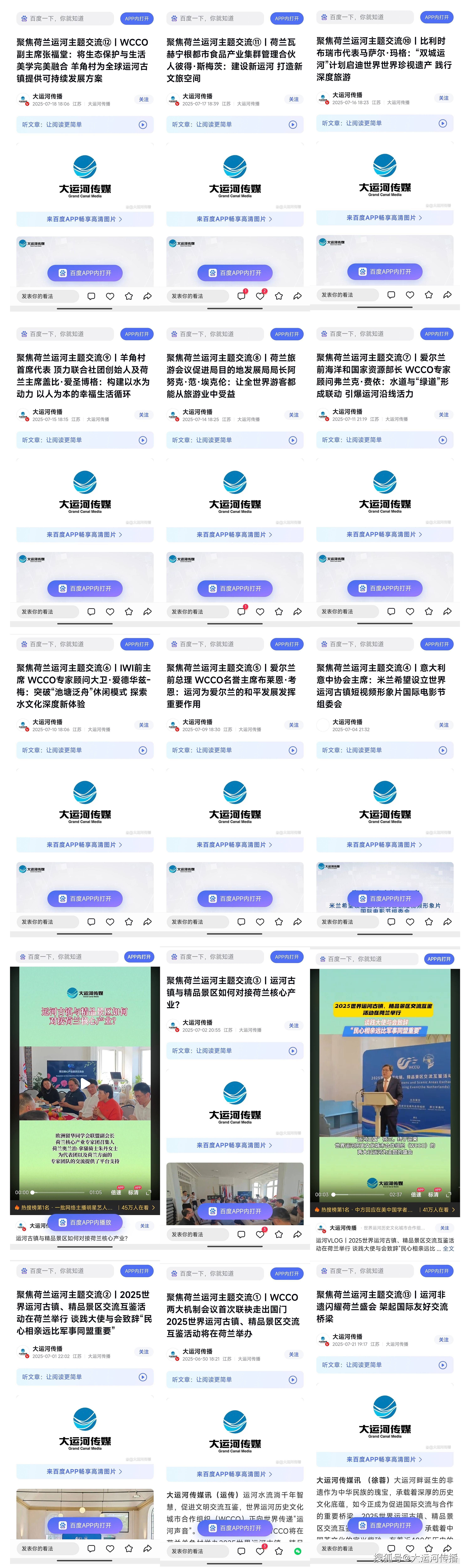
百度、搜狐、凤凰、今日头条、知乎、微博、抖音等新媒体平台同步发布新闻内容:
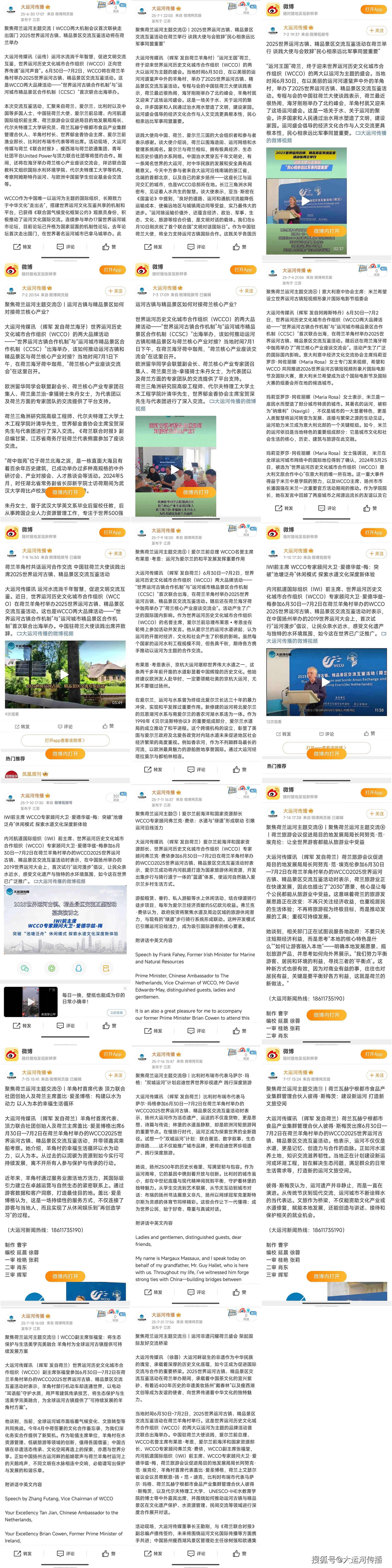
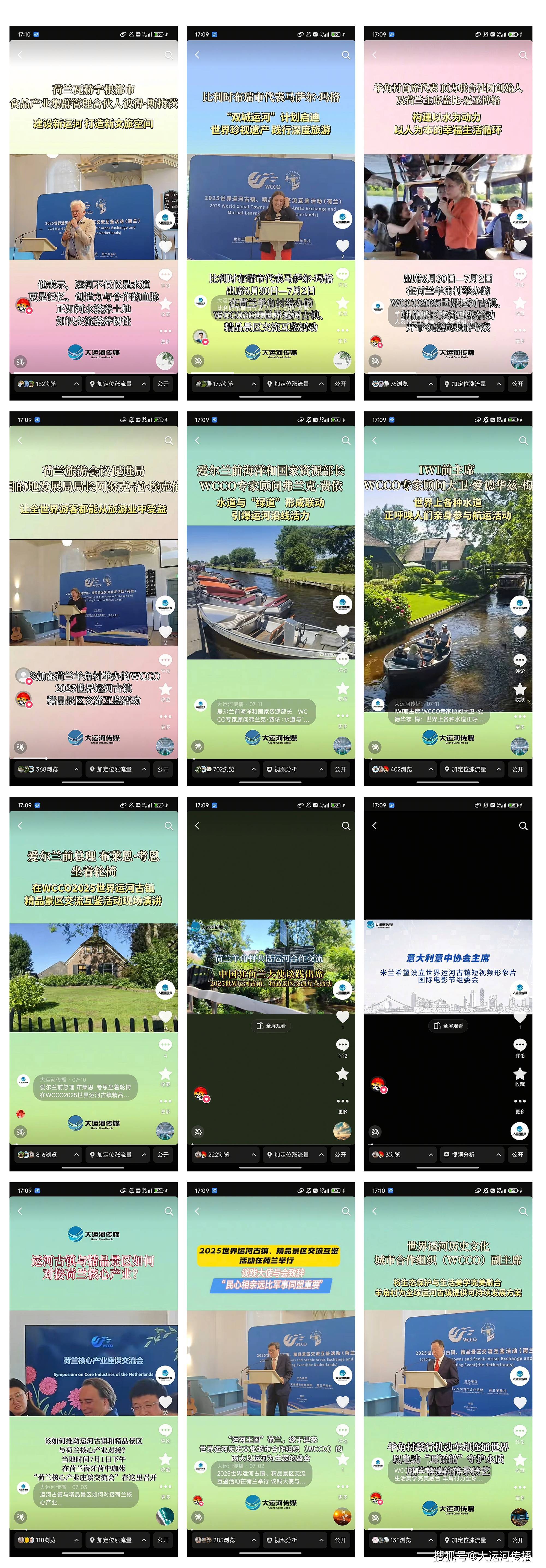
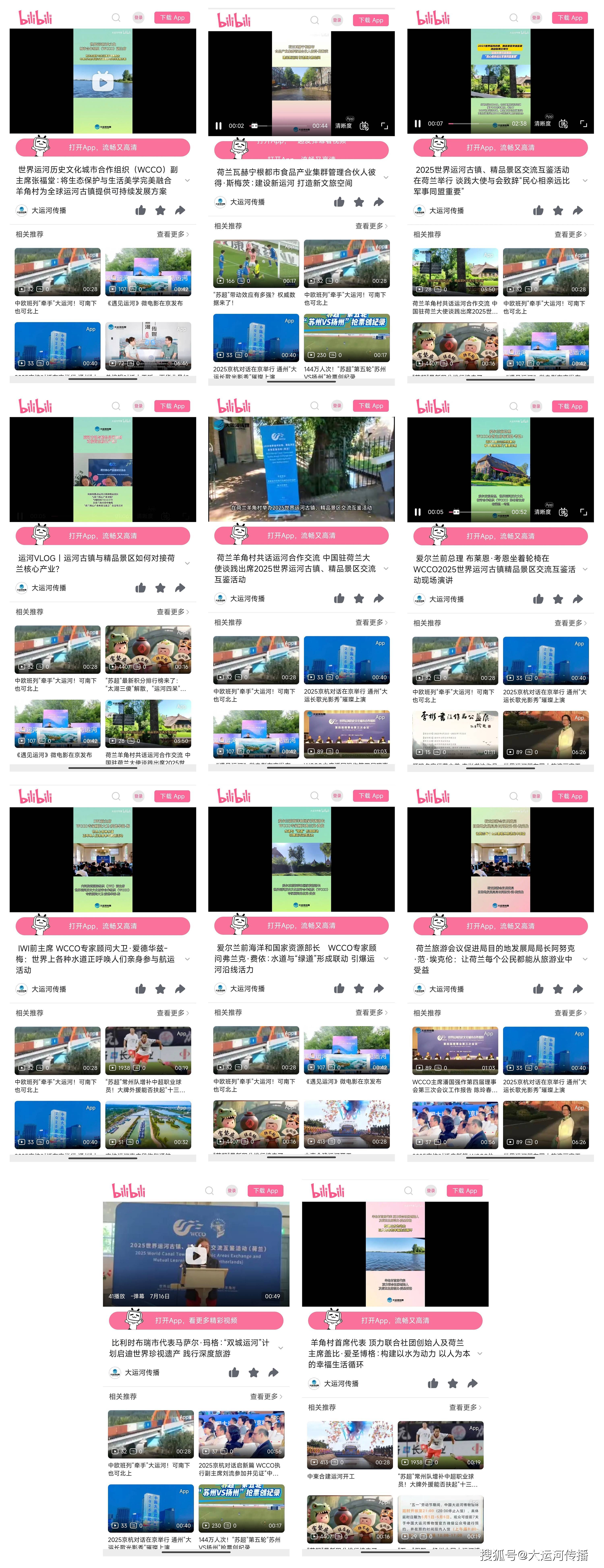
省市媒体报道
北京日报:
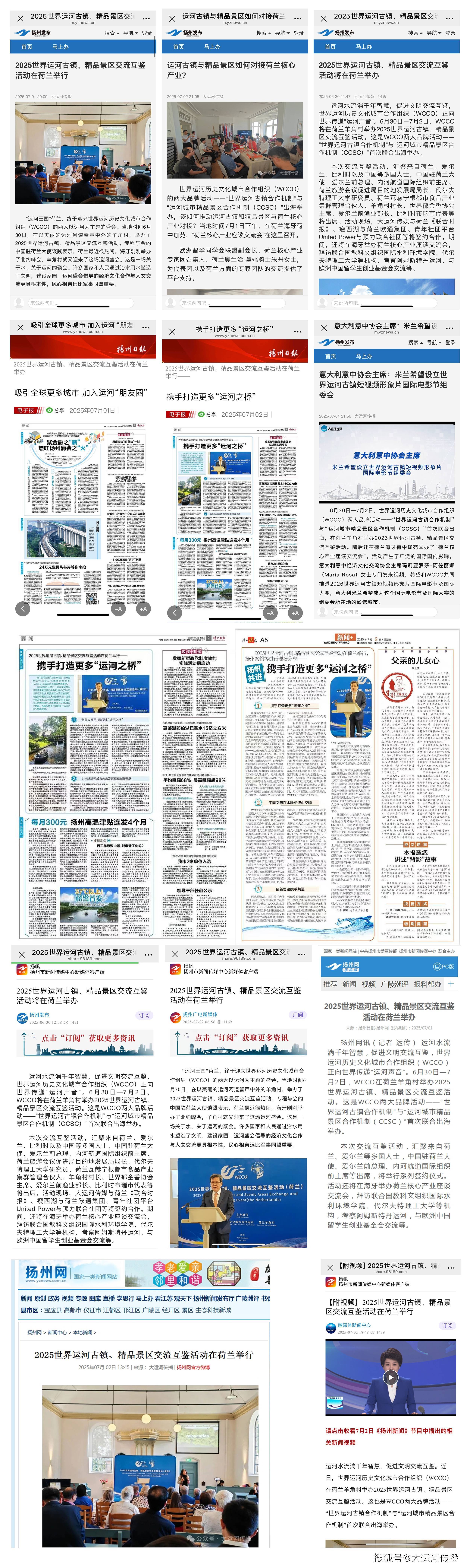
扬州新闻传媒中心(传媒集团)旗下《扬州日报》、《扬州晚报》、扬州电视台、扬州网、扬州发布、扬帆联动报道:
活动影响
意大利意中经济文化交流协会主席玛莉亚罗莎·阿佐丽娜(Maria Rosa)女士专门发来视频,希望和WCCO共同推进2026世界运河古镇合作机制会议以及2026世界运河古镇短视频形象片国际电影节及大赛,意大利米兰希望成为这个国际电影节及国际大赛的组委会所在地的候选城市。
(聚焦荷兰运河主题交流④|意大利意中协会主席:米兰希望设立世界运河古镇短视频形象片国际电影节组委会)
制作 曹宇
编校 延晨 徐蓉
一审 桂艳 张莉
二审 肖东
三审 晖军