
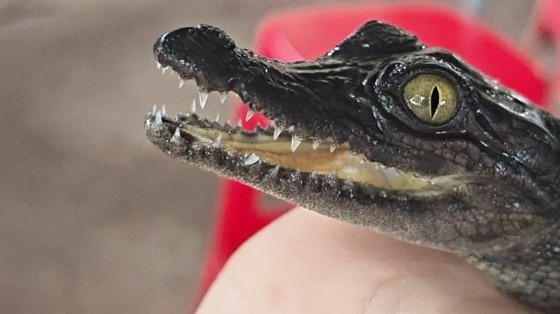
A 1-month-old baby crocodile. Photo: Joseph Zhou
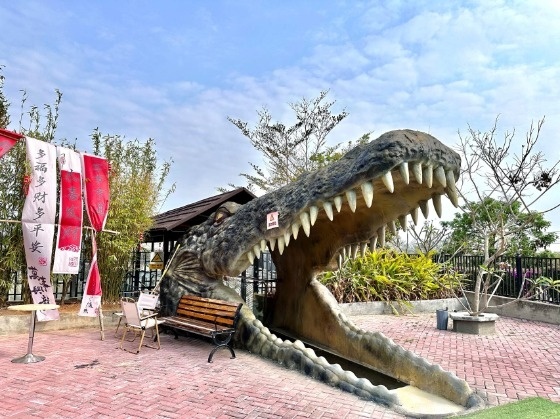
The entrance to the glass walk at the Crocodile Village. Photo: Crocodile Village
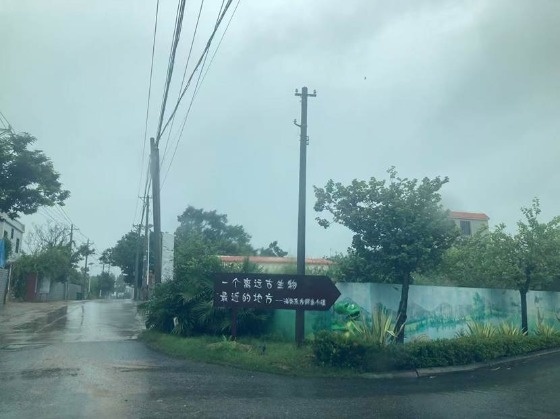
A sign showing the motto of the village “The nearest place to ancient life”. Photo: Eva Molaro
On a rainy day in Dongfang, Hainan, I found myself sitting in a small local diner, staring at a plate of freshly cooked crocodile meat. It was not quite how I had imagined my first visit to the island’s famous “Crocodile Village” would begin. But after one bite, I was already beginning to understand why this unusual industry has become such a distinctive part of life in the area. Located in Hongcao Village in Sanjia Town, Dongfang, the area has grown from an ordinary farming village into one of China’s largest crocodile breeding centers. What began with the arrival of the village’s first crocodile farm in 2015 has developed into an industry encompassing breeding, processing, tourism, catering and retail. By 2024, the town had more than 30 crocodile enterprises and a reported stock of around 380,000 crocodiles. Having been brought up on a farm as a child, surrounded by animals of every kind, I thought I could easily decode this particular form of farming. My children, meanwhile, had been asking to see the crocodiles for a long while. So, to satisfy both my curiosity and theirs, I had to see the village for myself.
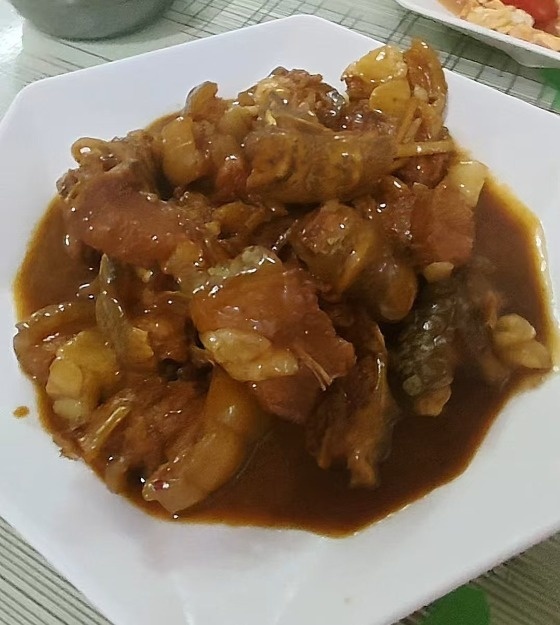
A plate of hongshao crocodile meat. Photo: Eva Molaro
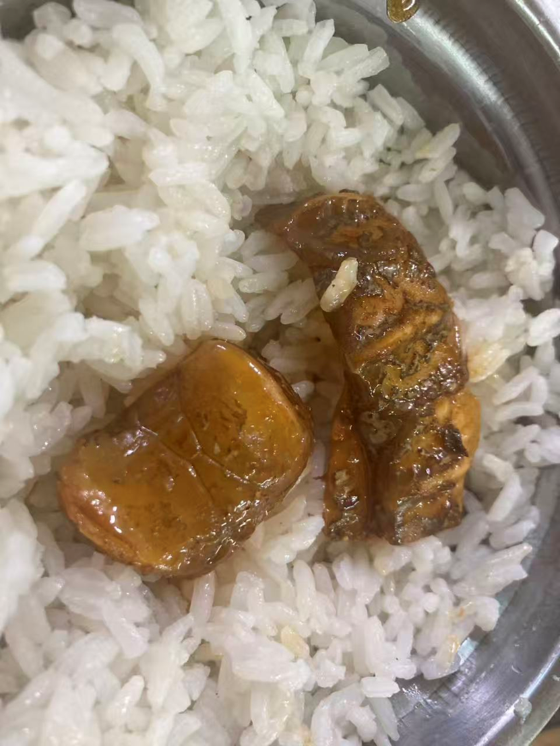
Hongshao crocodile meat on rice. Photo: Eva Molaro
A surprisingly tasty introduction
The owner of the diner recommended that, as a first-timer, I try *hongshao* crocodile meat — crocodile braised in a rich, savory sauce. It was, she assured me, one of the easiest preparations for newcomers to appreciate. She was right. The meat was surprisingly delicious. If I had to describe it, I would say it tasted somewhere between pork and beef, with a distinctive texture of its own. Even the skin, famous for its durability, had been cooked until soft, with a pleasantly gummy, almost jelly-like texture. It was one of those foods that makes you pause after the first bite and think: Well, I certainly didn’t expect to like this so much.
At lunch, we also met our friend Mr. Du, owner of Dongfang Guan Crocodile Technology Co., Ltd. His farm began operating in 2020. Before that, his family raised bullfrogs and crayfish. As crocodile farming took root in Hongcao, they decided to make the switch. Today, Mr. Du runs the family business together with his parents and young wife, raising crocodiles in an industry that has attracted both local farmers and investors from elsewhere in China.
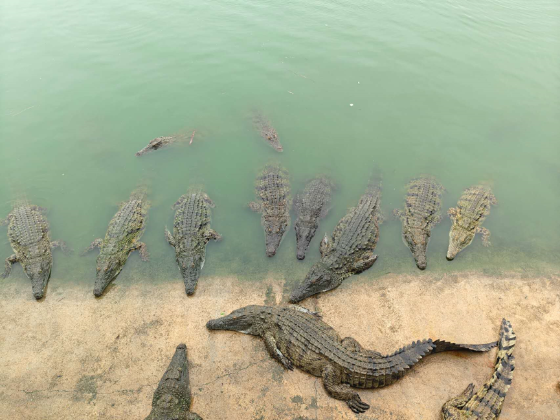
A group of crocodiles on the shores of the crocodile village pond. Photo: Joseph Zhou
A new kind of farming
Dongfang has been supporting the development of a crocodile-centered industrial chain covering breeding, processing, tourism and related businesses for the past 11 years. For potential investors and farmers, this has created different ways to enter the industry, from renting ponds to obtaining land and building their own facilities. A contract-farming program launched in Sanjia Town has also begun connecting companies with individual farmers, with companies providing young crocodiles, technical guidance and guaranteed purchasing, while the local government assists with land coordination, training and other support. This means that the crocodile business is open to anyone willing to put in an investment and some effort. Indeed, many of the present farmers and investors are not from Hainan but come from all around China and export their products both at home and abroad. For Mr. Du, however, crocodile farming is more than an investment opportunity. After years of working with the animals, he has developed an obvious affection for them. He speaks about crocodiles with the familiarity of someone who has spent countless hours watching them grow and understanding their habits.
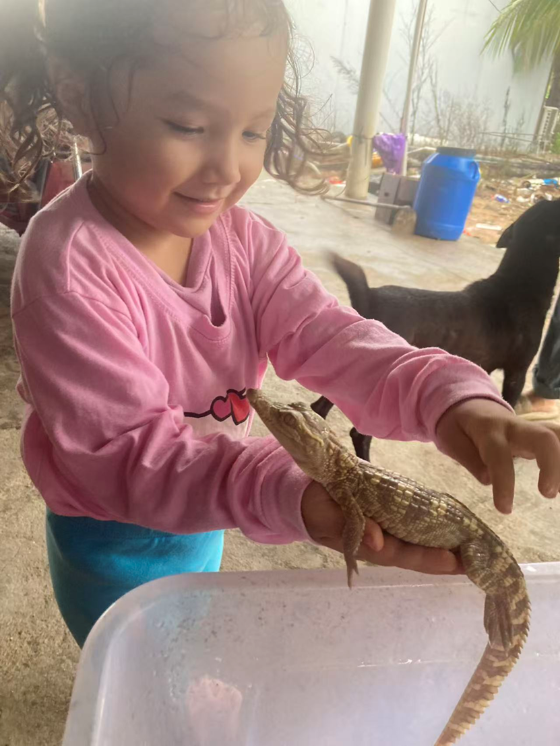
An encounter with the albino baby crocodile. Photo: Eva Molaro
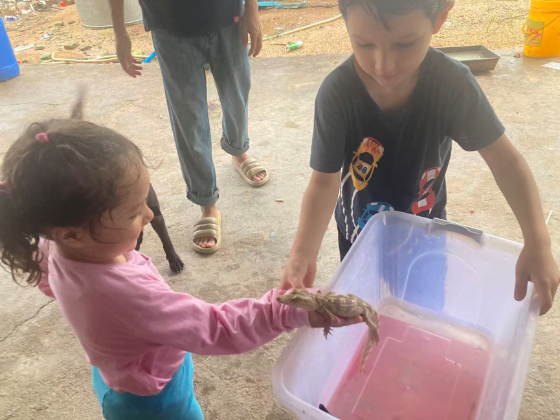
An encounter with the albino baby crocodile. Photo: Eva Molaro
Crocodile cuteness
While I was admiring the sheer scale of the business and struggling to imagine how they took care of so many large reptiles, my children were having the time of their lives. They were particularly fascinated by the baby crocodiles. We were shown tiny crocodiles only about a month old, as well as eggs and hatchlings emerging from them. Then we met one that looked very different from the others. “This is my favorite,” Mr. Du said. “He’s an albino crocodile. It’s a fascinating genetic mutation. He’s special, and I’m going to keep him as my pet.” My children were instantly in love. They spent some time observing and interacting with the baby crocodiles, carefully following the instructions not to touch their snouts. Even at that tiny size, crocodiles are capable of delivering a surprisingly impressive bite. As children, we used to sing a song that goes: “What does a crocodile sound like? Nobody knows.” Well, now we know for sure. My children learned first-hand what baby crocodiles sound like and immediately tried to imitate them.
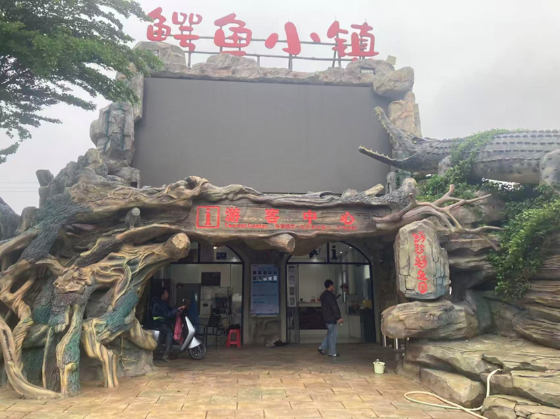
The tourist information point and entrance to the Crocodile Village
Welcome to the Crocodile Village
The local crocodile park offers designated visitor areas, viewing platforms and controlled feeding zones, allowing visitors to get surprisingly close to the animals while staying safe.
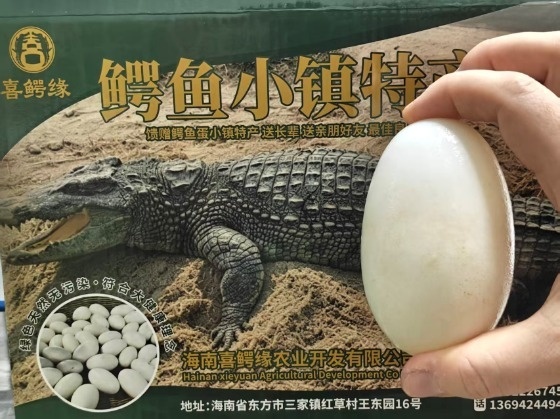
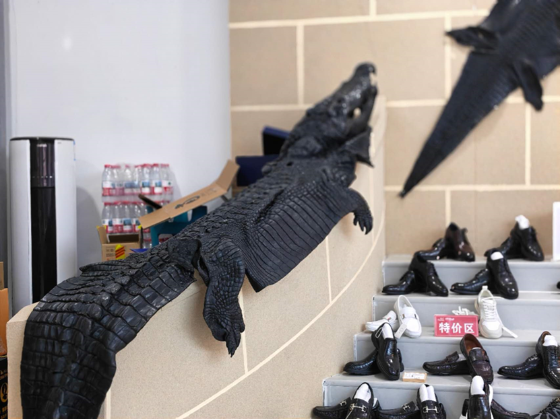
Crocodile eggs and crocodile leather products on offer. Photo: Joseph Zhou
The visitor center is almost a miniature crocodile universe. There is a restaurant, gift shop and displays of products made from or inspired by crocodiles, from crocodile leather goods to protein powder and other wellness-related products. Crocodile meat and eggs are also part of the experience. “Crocodiles are said to be largely immune to cancer, so many believe that eating crocodile eggs and meat may be very healthy and it is certainly very nutritious” explained Mrs. Du.
Outside, pools contain crocodiles of different species, ages and sizes. Some lie in the sun, while others glide through the water with only their eyes and snouts visible.Here visitors can feed fish to the crocodiles, explore a maze and take photographs at a variety of crocodile-themed installations. There is even a livestreaming center, where the animals and their products have become part of the rapidly expanding world of online commerce.
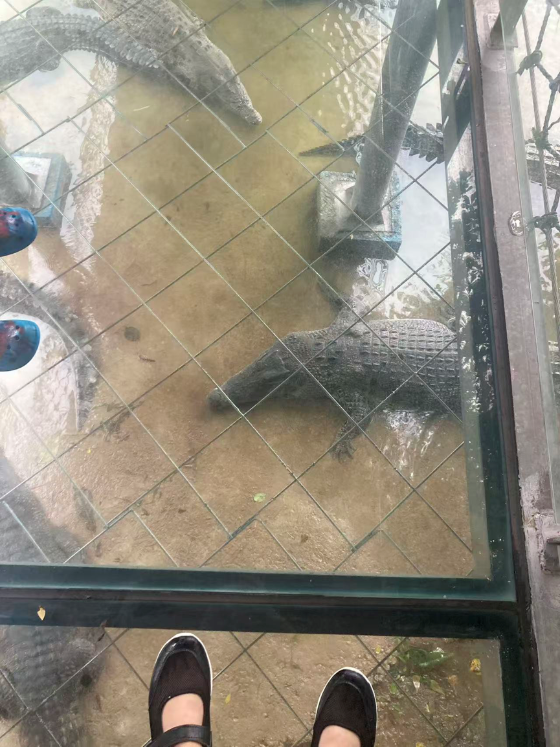
The glass corridor above the giant crocodiles. Photo: Eva Molaro
For us, one of the most memorable attractions was a glass corridor that takes visitors above the crocodiles below. Walking over transparent panels while enormous reptiles move underneath is a wonderfully surreal experience. A much larger building designed in the shape of a crocodile is also planned, with the aim of welcoming more visitors and attracting additional investment.
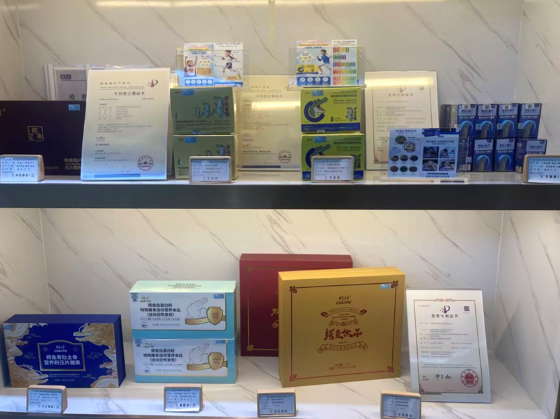
Crocodile-based healthcare products on offer. Photo: Eva Molaro
A little bit of Jurassic Park
Crocodiles look as though they have wandered into the present from another geological age, which explains the slogan at the entrance: “The nearest place to ancient life.”
There is also one particular story that makes the Jurassic Park comparison almost impossible to resist. When Typhoon Yagi struck Hainan in 2024, strong winds damaged fences and some walls at crocodile farms in the area, allowing a number of crocodiles to escape. With the help of local authorities, the animals were eventually captured and brought back safely.
The village walls reinforce the theme, covered with colorful crocodile paintings and information about dinosaurs, evolution and their modern-day relatives. Unlike a museum display, however, the “specimens” here are very much alive: swimming, basking in the sun and eating.
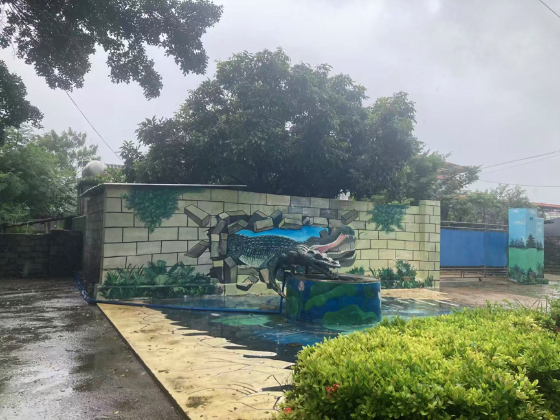
The village walls decorated with crocodile-themed paintings and statues. Photo: Eva Molaro
What I found most interesting was that behind the novelty is a real story of rural transformation: farmers who have turned an unusual idea into a livelihood, a family business built around years of experience, and a growing tourism industry finding new ways to bring visitors closer to these remarkable animals. I would recommend a visit to Mr. Du’s farm and the Crocodile Village center with an open mind and plenty of curiosity. Follow the safety rules, look down from the glass corridor, feed the crocodiles, wander through the maze, admire the babies — and, if you are feeling adventurous, try the local crocodile cuisine. You may come for the crocodiles. You may stay for the Jurassic Park feeling.
作者: Eva Molaro
责任编辑: 李想